Grazing Club Session 2 Recap: Virtual Fencing in Practice and Peer-to-Peer Learning
The second session of the Grazing Club brought another strong turnout, with producers gathering for an evening focused on fencing, both traditional and virtual, and learning from each other’s real-world experiences.
Virtual fencing from research to real life
The evening kicked off with a presentation by Thomas Alexander from Gallagher eShepherd, who shared his journey into virtual fencing. Thomas explained how his work began during his university thesis, which focused on virtual fencing research. Through that project, he became increasingly involved in applied trials and producer demonstrations, eventually leading him to his current role as Customer Engagement Representative for Canada with eShepherd.
Rather than focusing on theory alone, Thomas walked participants through real use case scenarios using photos and examples from producer operations and research sites he has visited and worked on across the country. These examples helped ground the technology in practical, on-farm decision-making.
One story that stood out was how a producer uses virtual fencing to separate bulls from cows at the end of the breeding season, reducing labour and stress on both cattle and people. Thomas also shared a memorable experience from the field where, while working alone in steep and challenging terrain, he discovered how virtual fencing could be used to guide cattle up a mountain hillside. What began as a necessity turned into a valuable learning moment, showing how cattle respond to cues and how virtual fencing can be used as a practical management tool. Beyond replacing physical fence, the technology can also support tasks such as moving cattle, with ongoing work exploring its potential for health monitoring, estrus detection, and pregnancy detection.
Participants had the chance to see and handle the virtual fencing collar as it was passed around the room. This sparked plenty of one-on-one conversations, with questions continuing well after supper and even after the formal program had wrapped up.
From supper to small-group discussion
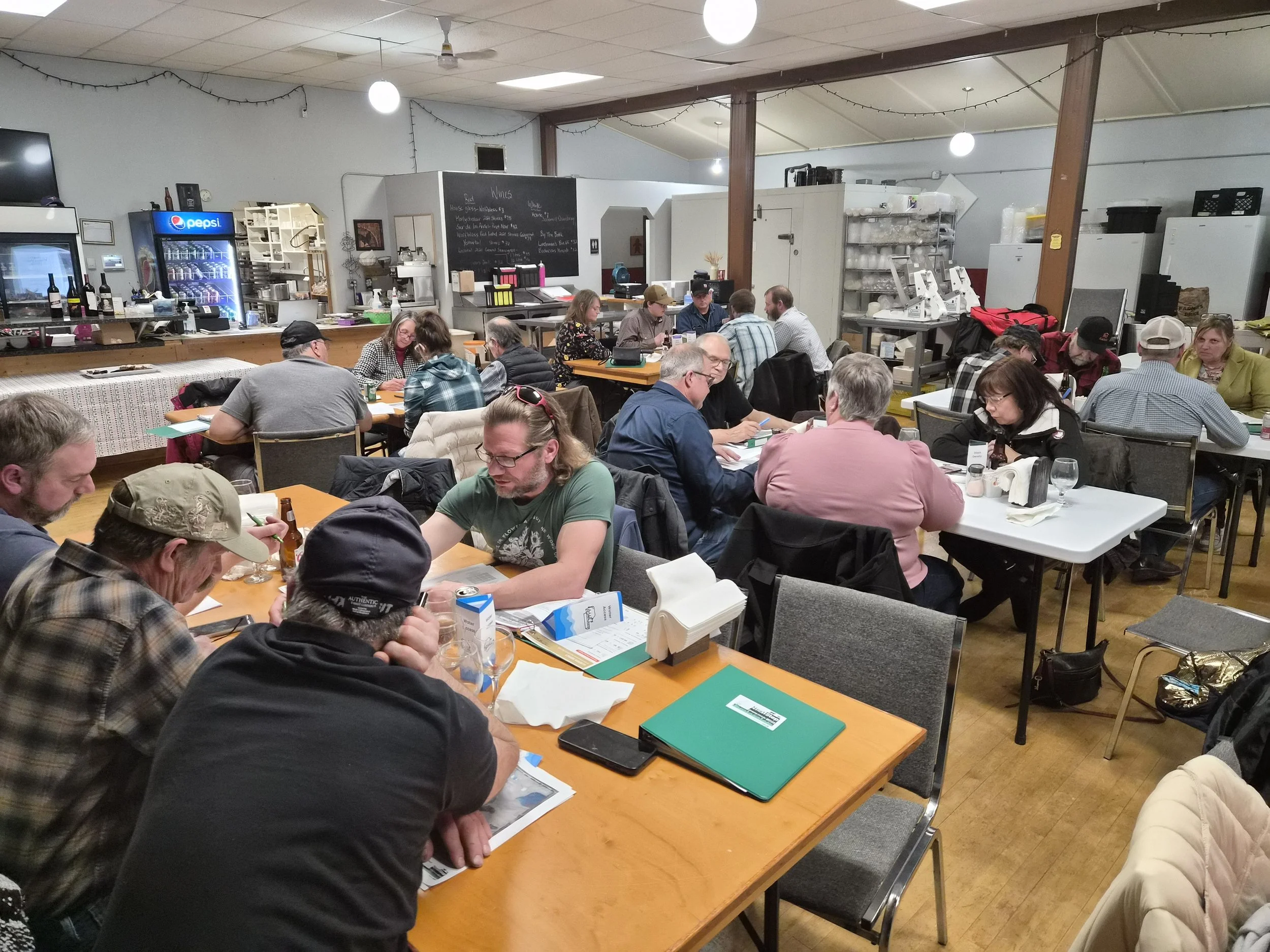
Following a buffet supper catered by Jaded Chef, the group shifted into the interactive portion of the evening. Dini from Farming Forward opened the small-group fencing design exercise with a short introduction.
She recapped key ideas shared by Bluesette during the first Grazing Club session and emphasized an important reminder. Regardless of background, operation size, or experience level, every producer brings unique insights to the table. Often, one comment or decision shared in a group can spark a new way of thinking for someone else.
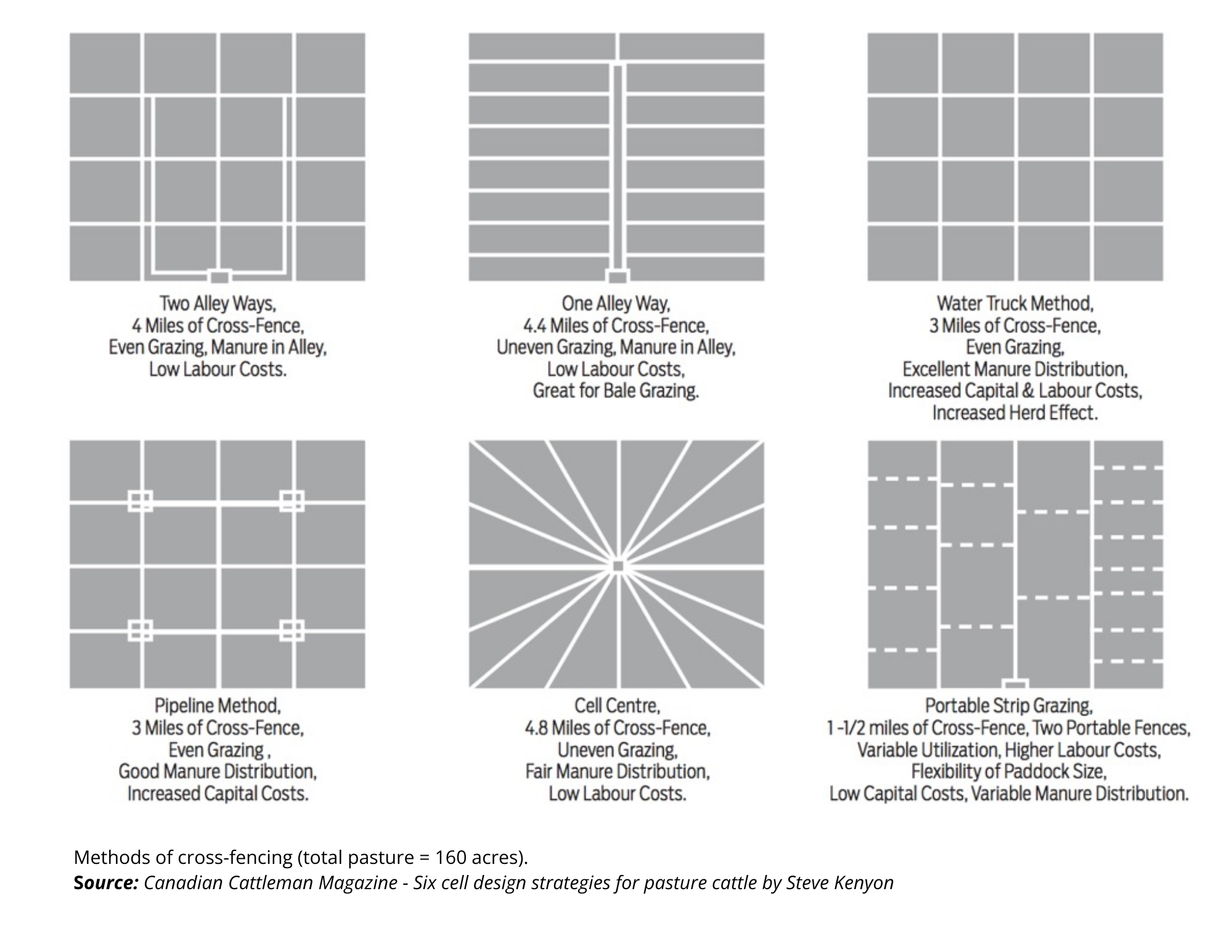
With that mindset, participants broke into small groups and were tasked with designing a grazing cell layout of 14 paddocks on a selected quarter. Producers worked through real constraints and trade-offs, drawing layouts, debating options, and explaining the reasoning behind their decisions. Many shared techniques they use at home, from fencing strategies to how water access influences paddock design.
Sharing takeaways and looking ahead
The evening wrapped up with each group sharing a key takeaway from their discussion. Participants were also encouraged to share photos or ideas ahead of the next session, which will focus on livestock watering systems. That upcoming discussion will look at water quality, access, and practical designs that support animal health and grazing efficiency. The topic of the final Grazing Club session will be planned soon, shaped by the questions, ideas, and interests raised by those attending.
The Grazing Club continues to build on peer-to-peer learning, hands-on discussion, and real-world examples that producers can take home and adapt to their own operations.
The Grazing Club is supported by the Canadian Forage and Grassland Association.