By: Graham Gilchrist
It has been a good summer and fall here at BCC.
There were grass tours, new protocols announced for manure, and a few sticky wicket questions.
A few years ago, the commercial industry did good work on reduced feed intake (RFI) in our feedlots. Similar work has resurfaced, all aimed at good production practices and desired net cost gains for animal owners.

Sire and dam testing to identify these genetic traits continues, and these traits pass on to our commercial animals. Work is ongoing on this science and draft protocols.
The last time we attempted this type of protocol, the pilot failed. The protocol required direct ownership line-of-sight from the base pair to the commercial steer or heifer. If theranch operation was direct to packer, and all the bulls/cows were RFI certified, then the protocol worked reasonably well.
The bail fell off the wicket when the slaughter animal was commercially traded. The bar code/RDIF number was not on any manifest or sales invoice. As a result, the requirement for unique ownership is lost.
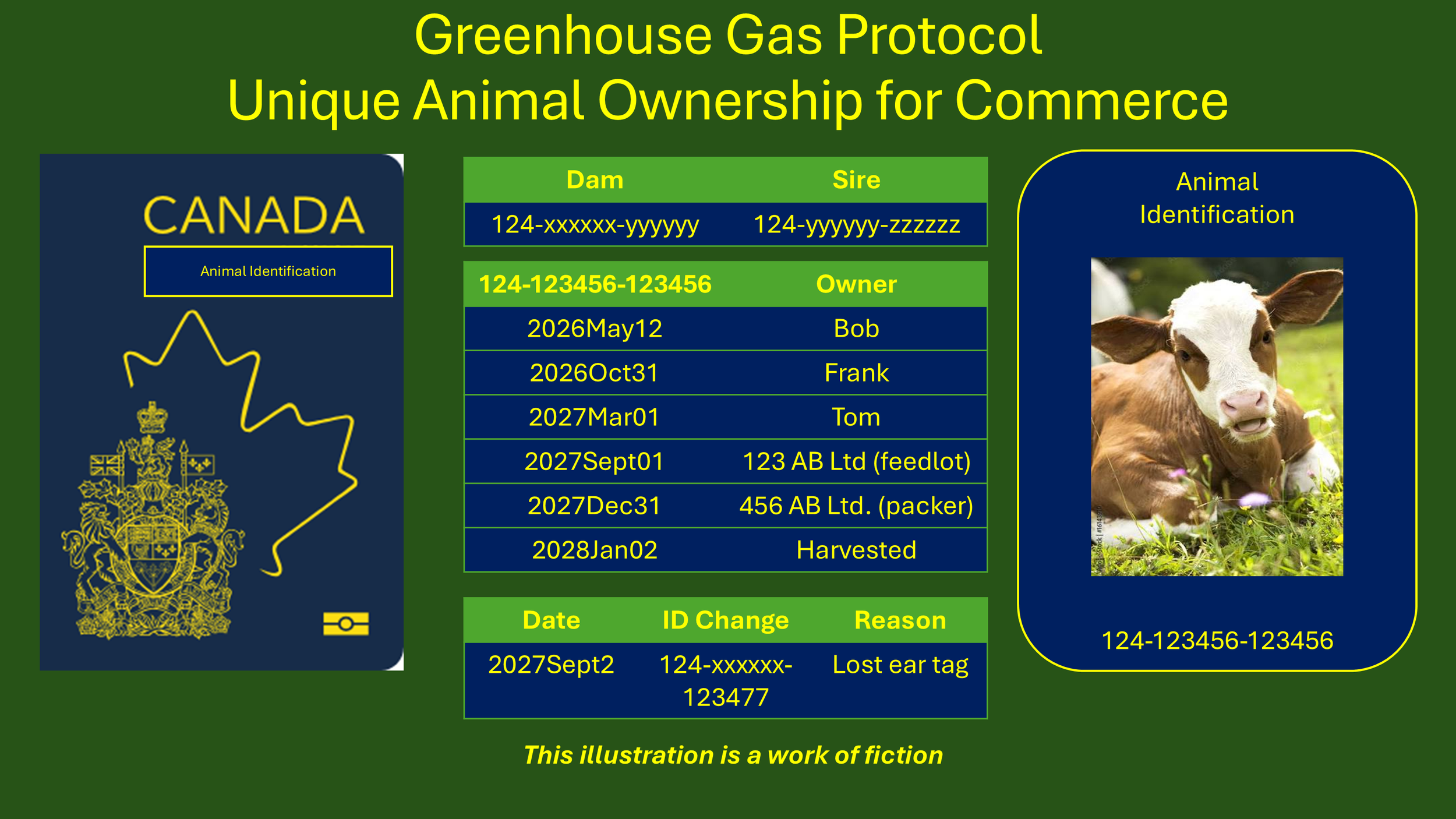
The ID I created below is a work of fiction (but borrowed ideas from other countries). It also has items needed to create a unique identifier of the RFI slaughter animal.The key here is the audit trail. If this animal is in a GHG project, attesting that this animalis RFI is not enough. The genetic traits rest with the parents. The commercial transactions must be viable and facilitate tracing this project animal back to the basegenetics.
The science is here.
The paperwork needs a small nudge.