

Funding & Support Programs
for Alberta Producers
Note: Funding programs, intake windows, eligibility rules, and available amounts change regularly. Always check the official program links below for the most up-to-date information before applying.
Funding Search Tools & Program Databases
Finding the right funding or support program can be overwhelming. With provincial, federal and local programs available, it is not always clear what applies to your operation.
The following search tools and databases may help you find relevant programs:
-
A searchable federal tool that helps producers find agriculture programs and services based on topic and location.
-
Browse all current federal agriculture programs and services.
-
A searchable tool for land stewards in Alberta, Saskatchewan and Manitoba to help identify conservation incentive programs that match your land and stewardship goals.
Grant Programs
Sustainable Canadian Agricultural Partnership (SCAP)
The Sustainable Canadian Agricultural Partnership (SCAP) is a five-year (2023 to 2028) federal-provincial funding framework supporting innovation, sustainability, competitiveness and resilience in Alberta agriculture.
Most current Alberta producer grant programs fall under SCAP.
Alberta Programs under the Sustainable Canadian Agricultural Partnership:
-
Supports on-farm water supply and management improvements, including projects that enhance agricultural water efficiency and environmental stewardship.
-
Supports adoption of equipment and technology that improves farm efficiency and environmental performance.
Note: Technology supports that were previously under the Farm Technology Program are now delivered through OFEP.
-
Supports producers processing or adding value to agricultural products.
-
Supports beneficial management practices that improve soil health, biodiversity and environmental resilience.
-
Supports the growth and expansion of controlled environment agriculture in Alberta, including greenhouse production and related infrastructure.
-
Supports projects that strengthen consumer confidence and public trust in Alberta agriculture. Funding may support initiatives related to food safety, animal care, environmental stewardship, traceability and industry assurance systems.
-
Supports new and emerging market opportunities that enhance competitiveness and growth in Alberta’s agriculture and agri-food sector. Funding may support pilot projects, market development initiatives and sector innovation.
-
Provides cost-shared rebates to Alberta beef producers who complete VBP+ training or achieve VBP+ audit certification. Eligible expenses may include audits, biosecurity improvements and livestock handling equipment.
Most cost-share programs under SCAP require a current Environmental Farm Plan (EFP).
Business Risk Management (Delivered by AFSC)
Alberta’s Business Risk Management programs help producers manage income declines, production losses and disaster recovery. These programs are delivered in Alberta by Agriculture Financial Services Corporation (AFSC).
-
Provides crop insurance coverage against production losses caused by weather and other natural hazards.
-
A savings account program that helps producers manage small income declines through matched government contributions.
-
Provides protection against large income declines that threaten the viability of a farm operation.
-
A disaster relief framework that helps producers recover from extraordinary costs following natural disaster events.
-
Allows livestock producers to purchase price insurance to protect against unexpected market price declines for cattle and hogs.
These programs are not grants but provide income protection, insurance and risk coverage.
On-Farm Climate Action Fund (OFCAF)
Supports adoption of climate-smart agricultural practices that reduce emissions and improve soil health.
Eligible practice areas may include:
Nitrogen management
Cover cropping
Rotational grazing
This program is federally funded and delivered through approved organizations in Alberta. Intake windows and delivery partners may change.
Alberta Delivery Partners:
-
Delivers Alberta OFCAF programming in areas of improving nitrogen management, increasing adoption of cover cropping and expanding the adoption of rotational grazing.
-
Delivers rotational grazing funding through OFCAF.
Additional Federal Grant Programs
The following federal programs may be relevant to some producers, processors or agricultural businesses. These programs operate separately from Alberta’s SCAP framework.
-
Supports market development and export expansion activities for Canadian agriculture and agri-food businesses.
Often relevant to:
Value-added operations
Producer groups
Export-focused businesses
-
Supports development and adoption of industry assurance systems, food safety and traceability programs.
Often relevant to:
Associations
Processors
Businesses seeking certification or market access
-
Supports adoption and development of clean technologies that reduce greenhouse gas emissions and improve energy efficiency in agriculture and agri-food operations.
-
Supports processors in supply-managed sectors, including dairy, poultry and eggs, to improve productivity and modernize processing facilities. Funding is primarily geared toward processing operations rather than primary producers.
-
Various federal initiatives support women in agriculture through funding, leadership development and business growth programming. Opportunities may vary by intake and delivery partner.
Explore All Federal Agriculture Programs
For a complete list of federal agriculture funding and services:
-
The Producer Research and Evaluation Program (PREP) supports producer-led on-farm research and innovation projects in Alberta. Funding may support trials, demonstrations and evaluation of new practices or technologies with practical application to farm operations.
-
RDAR offers additional funding calls that support applied research, innovation, technology development and sector advancement in Alberta’s agriculture industry. Calls vary by theme, eligibility and intake period.
Results Driven Agriculture Research (RDAR)
RDAR funds applied research, innovation and demonstration projects that support Alberta producers. Funding calls vary by topic and intake period.
Research & Innovation Funding
Alberta Innovates
Supports research, innovation and technology development across Alberta, including agriculture and agri-food. Programs are typically geared toward companies, researchers and industry partnerships.
Genome Canada
Funds large-scale genomics research and innovation projects across Canada, including agriculture and livestock genetics. Programs are typically delivered through research institutions and industry partnerships rather than individual producer applications.
Local programs in our region
Many municipalities and Agricultural Service Boards (ASBs) across Alberta offer local programs that support producers and rural residents.
Programs vary by county and may change annually. Producers are encouraged to contact their local county office or Agricultural Service Board for the most current information.
What Counties May Offer
Depending on the municipality, support may include for example:
Weed control programs (e.g. Fenceline spraying along county roads, Custom herbicide application services)
Low-cost equipment rentals
Horticultural services (weed and plant identification, tree disease and pest identification, pruning advice)
Basic soil sampling support
Water development assistance
Riparian or environmental improvement cost-share
Community agricultural grants
Agricultural bursaries for students pursuing agriculture or environmental studies
Some counties also provide grants to community groups delivering agricultural services or rural programming.
Because programs differ by region, contacting your local county office directly is often the best first step.
Local County & Municipal Programs
The following municipalities are key partners of Farming Forward. Producers in these counties are encouraged to connect with their local Agricultural Service Board or agriculture department to learn about available programs and services.
ALUS (Alternative Land Use Services)
ALUS is a producer-led program that provides annual payments to farmers and ranchers who establish and maintain environmental projects on their land.
Projects may include:
Wetland restoration
Riparian buffers
Pollinator habitat
Shelterbelts
Erosion control
Marginal land conversion
Unlike one-time cost-share grants, ALUS provides ongoing annual payments for maintaining environmental projects.
ALUS in West-Central Alberta
ALUS programs, in our region, are currently active in:
Availability may change, and enrollment is often limited. Producers should contact their local county office or ALUS coordinator to confirm current participation and intake details.
Watershed Stewardship Programs
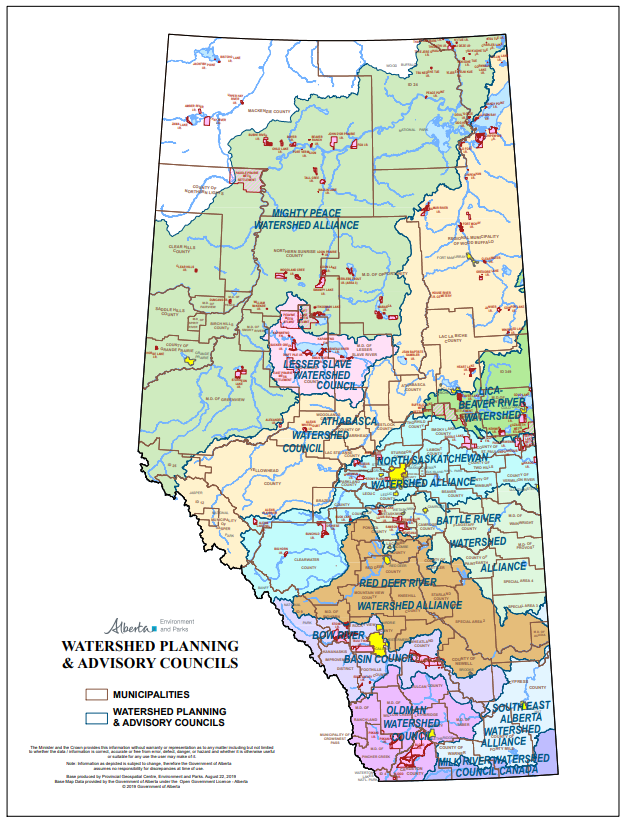
Watershed stewardship organizations also support producers and rural landowners with projects that improve water quality, riparian health, and landscape resilience. These organizations often provide educational resources, technical guidance, and occasionally cost-share or incentive programs for beneficial management practices.
Two watershed organizations active in the Farming Forward region include:
-
A regional watershed planning and advisory council focused on improving and protecting the Athabasca River watershed through research, partnerships, and stewardship initiatives.
Learn more here
-
A watershed planning and advisory council that works with municipalities, producers, industry, and community groups to support sustainable water management in the North Saskatchewan River watershed.
Conservation & Stewardship Programs
-
ALUS provides annual payments to producers who establish and maintain environmental projects on their land, such as wetlands, riparian buffers, pollinator habitat and marginal land conversion.
In West-Central Alberta, ALUS programs are active in select municipalities. Participation depends on local enrollment and funding availability.
See previous section above for more information.
-
Ducks Unlimited Canada works with landowners to conserve and restore wetlands and upland habitat. Projects may include wetland restoration, conservation agreements and habitat enhancement on agricultural lands.
Some projects may involve cost-share or partnership agreements.
-
Cows and Fish provides education, technical support and stewardship programming to improve riparian area management. While not typically a direct funding program, they offer planning assistance, assessments and resources to help producers manage streambanks, wetlands and grazing impacts.
-
The Alberta Conservation Association works with landowners and partners on habitat enhancement and conservation projects, including riparian protection and ecosystem stewardship initiatives.
Program availability may vary by region.
-
A partnership focused on conserving wetlands and grasslands across the Prairie region. Projects are often delivered through conservation organizations and may involve private land partnerships.
In addition to agricultural grant programs, producers may be eligible for conservation and stewardship initiatives that support habitat protection, riparian health, wetland restoration and biodiversity on working lands. Many of these programs are delivered through conservation organizations or regional partnerships.
Availability and eligibility vary by region and year. Producers are encouraged to contact the organization directly for current opportunities.
Conservation Easements
-
The Edmonton & Area Land Trust works with landowners to establish voluntary conservation easements that permanently protect natural features such as wetlands, riparian areas, forests and native grasslands while allowing compatible agricultural uses like grazing and haying to continue. Landowners retain ownership of their land and are compensated for the fair market value of the easement through a cash payment, charitable tax receipt or a combination.
-
Legacy Land Trust Society works with landowners in Alberta to establish voluntary conservation easements that permanently protect ecologically significant lands, including grasslands, riparian areas and wildlife habitat. Landowners retain ownership and may continue compatible agricultural activities such as grazing, while receiving compensation through a cash payment, charitable tax receipt or a combination.
-
Western Sky Land Trust works with Alberta landowners to establish voluntary conservation easements that permanently protect lands with ecological, agricultural, scenic or heritage value. Landowners retain ownership and may continue compatible agricultural uses such as grazing, while receiving compensation through a cash payment, charitable tax receipt or a combination.
-
Ducks Unlimited Canada works with landowners to protect wetlands, grasslands and wildlife habitat through voluntary conservation easements and habitat agreements. Agricultural activities such as grazing and haying may continue where compatible with conservation objectives.