Grazing Club Session 3 Recap
Last night’s Grazing Club session in Sangudo focused on a critical piece of grazing infrastructure: reliable livestock water.
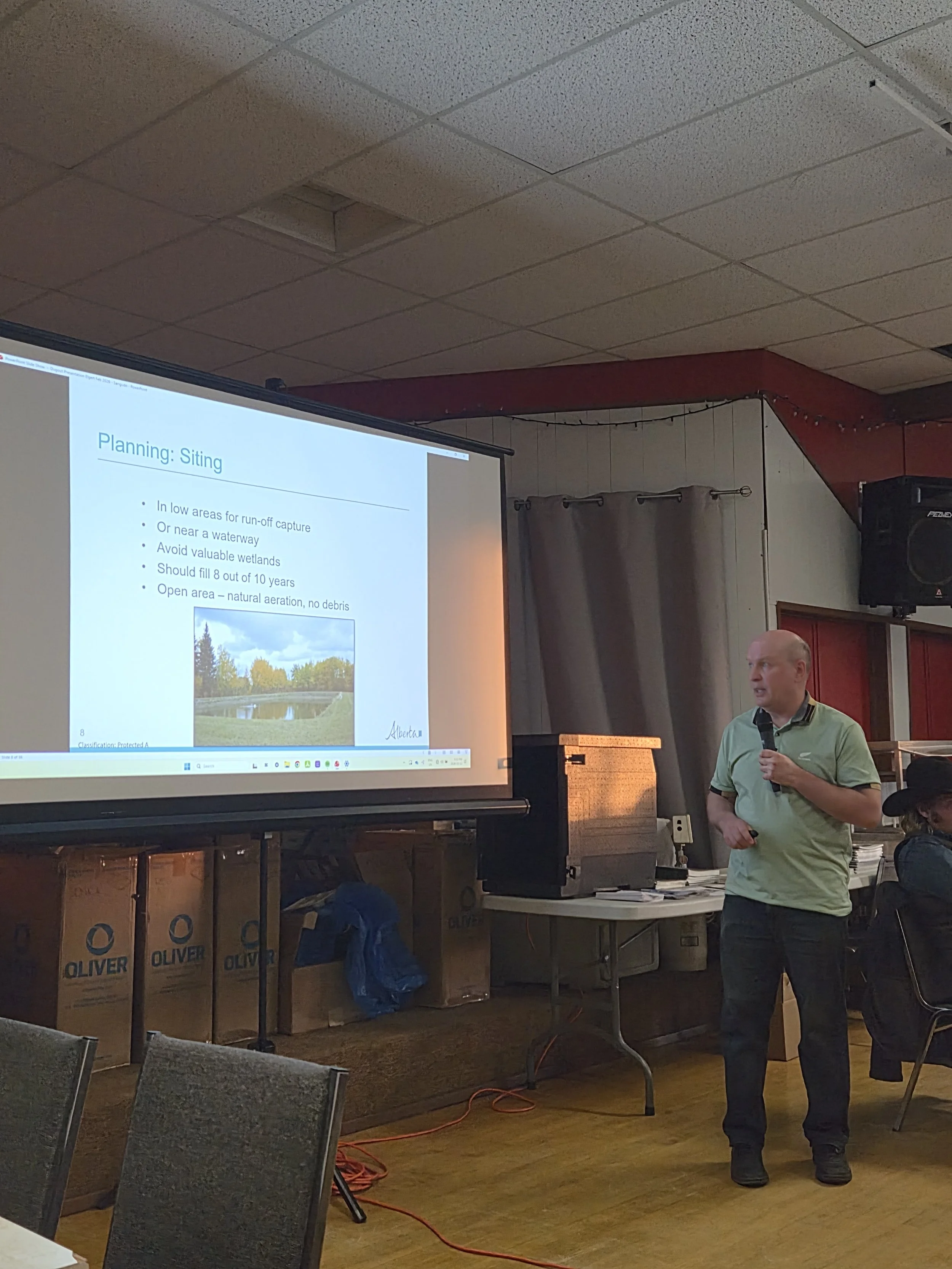
Agricultural Water Engineer Shawn Elgert joined us to walk through dugout planning, drought sizing, regulatory considerations, water quality risks, and treatment options. His key message was clear: a dugout is not just a hole in the ground. Proper siting, design, and management prevent many of the costly problems producers run into later.
Planning and Regulations
Shawn reviewed when approvals are required under Alberta Environment and Protected Areas, including:
Dugouts over 7,500 m³
Projects located in watercourses, lakes, or wetlands
Situations requiring a Water Act approval or license
We also discussed wetland classifications and why careful siting matters, especially when working near higher-value wetlands.
Drought Sizing and Design
One of the most practical parts of the presentation was drought sizing. Many producers underestimate how large a dugout must be to supply water through a two-year drought once evaporation and dead storage are accounted for.
Using tools such as the Average Daily and Annual Water Requirements calculator and the updated Quality Farm Dugouts Manual, producers can calculate realistic storage needs before construction.
Slope ratios, spoil placement, watershed runoff, and soil type were also emphasized. Steeper slopes can reduce evaporation and weed growth, but must be stable in your soil conditions. Proper spoil placement helps prevent sloughing and protects the structure long term.
Off-Source Watering and Winter Systems
Direct livestock access shortens the lifespan of dugouts and reduces water quality. Off-source watering systems help protect both water and pasture health.
Shawn reviewed:
Solar and wind-powered pumping systems
Gravity-fed systems
Nose pumps and pipelines
Winter watering considerations such as insulated tanks and geothermal approaches
The Off-Source Watering Systems for Livestock factsheet provides practical design guidance.
Water Quality and Treatment
Water testing should always come before treatment. Without identifying the issue, producers risk applying the wrong product and creating new problems.
Common challenges discussed included:
Blue-green algae (cyanobacteria)
Filamentous algae
High salts in groundwater
Nutrient buildup and turbidity
The Rural Water Quality Information Tool helps interpret lab results for livestock suitability. Shawn also reviewed hydrated lime, aluminum sulfate, and copper products, emphasizing that there are no magic bullets. Prevention through good siting, exclusion fencing, buffer strips, and runoff control remains the most effective long-term strategy.
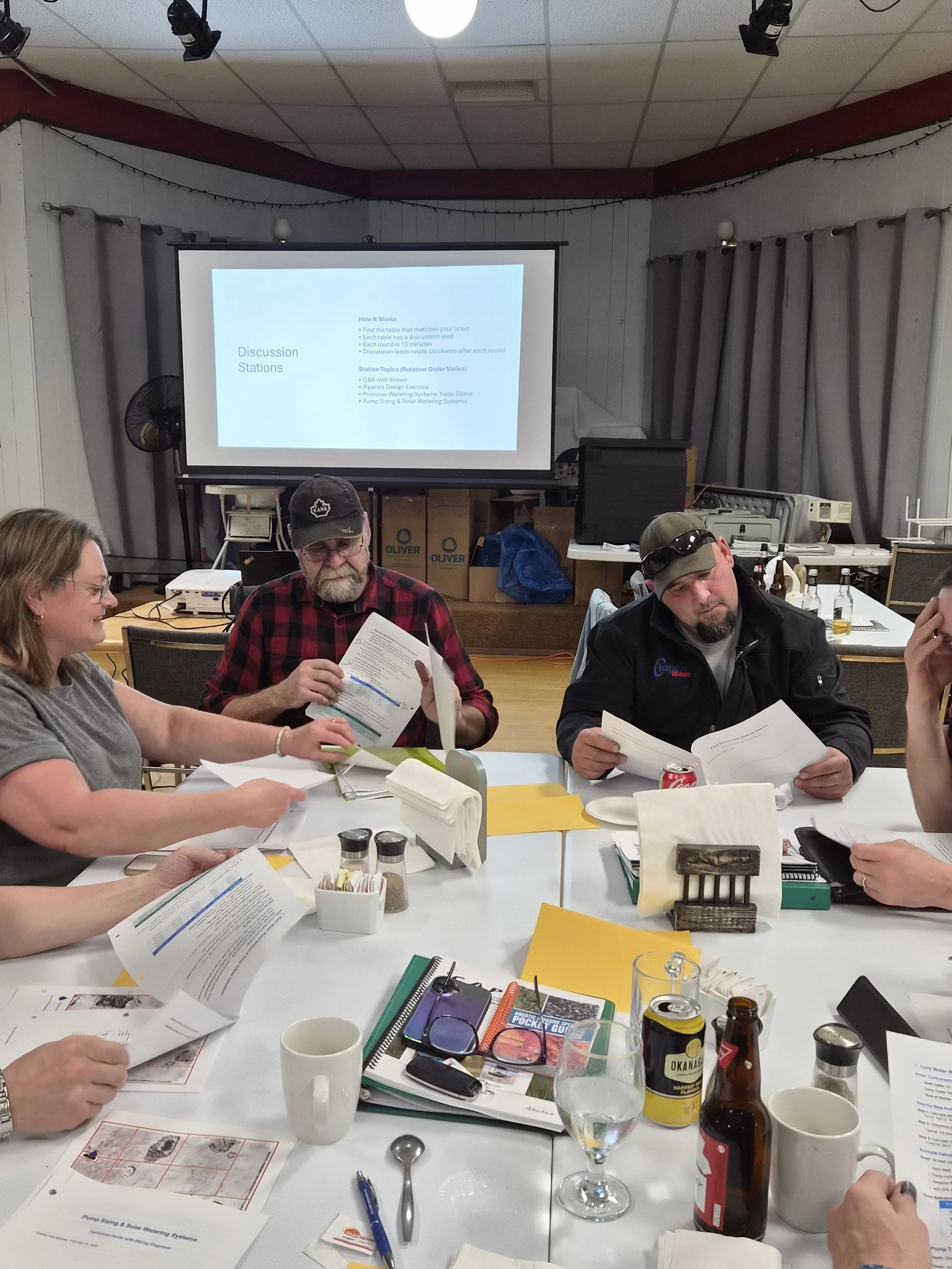
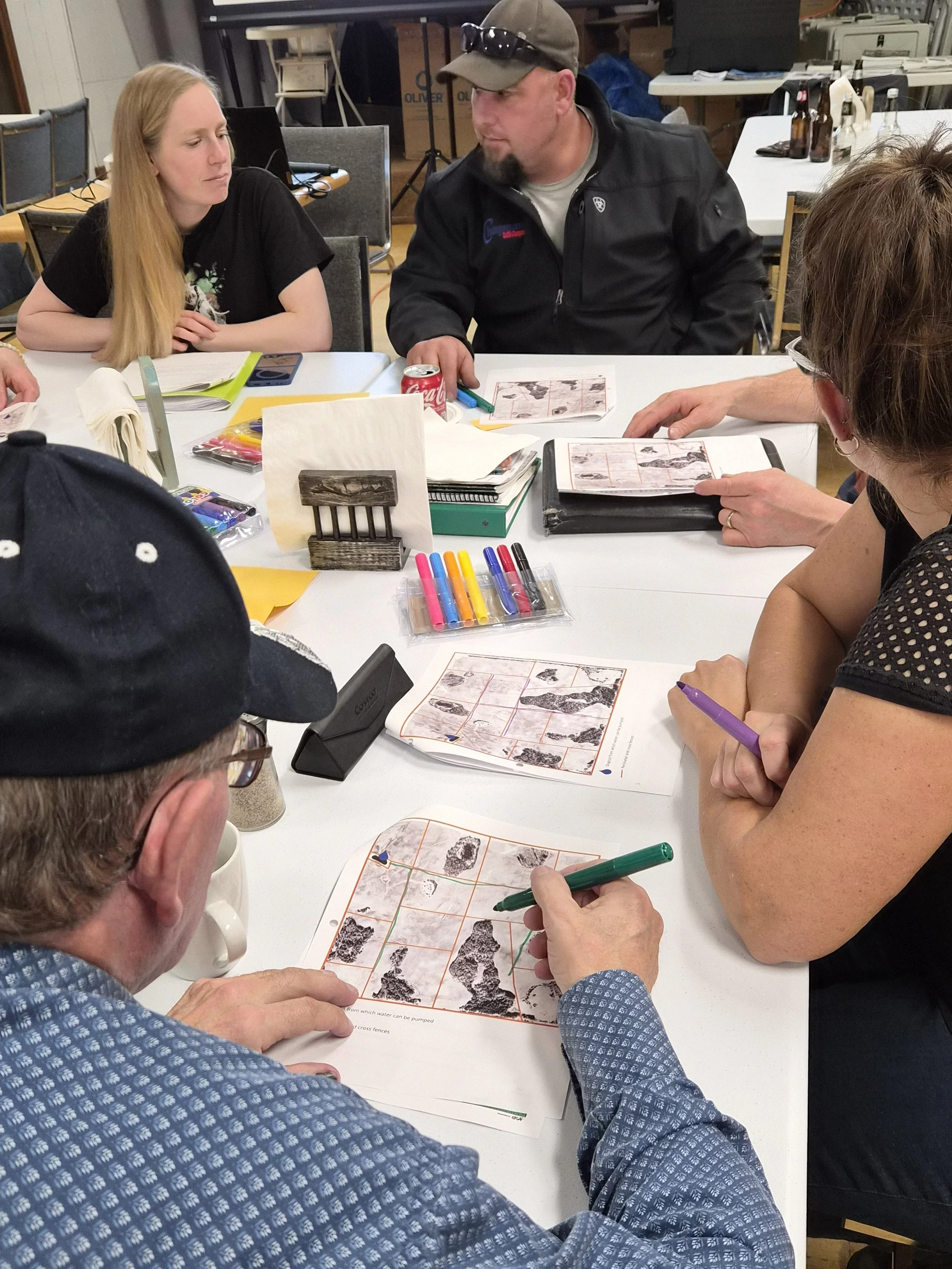
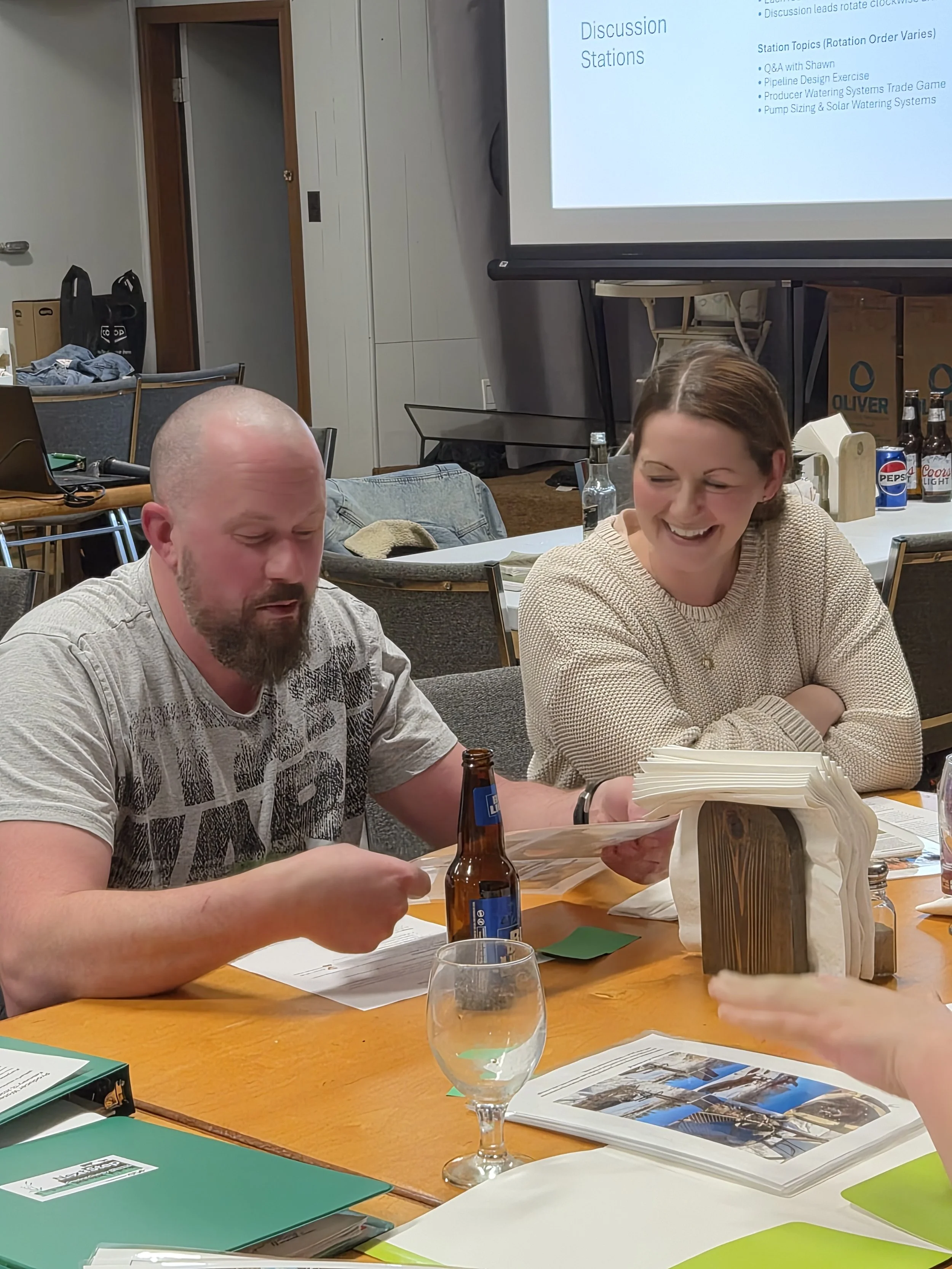

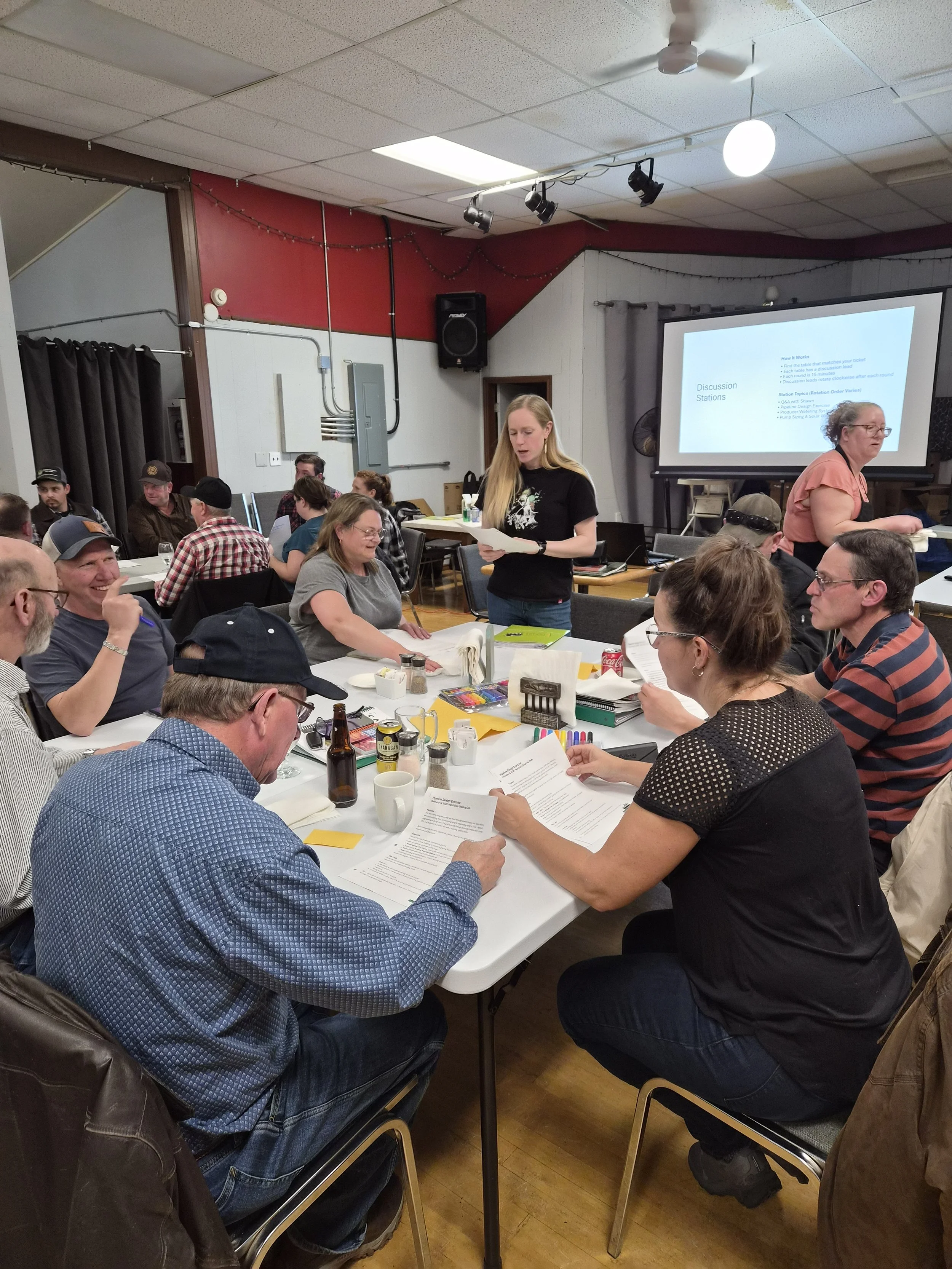
After Supper: Interactive Discussion Stations
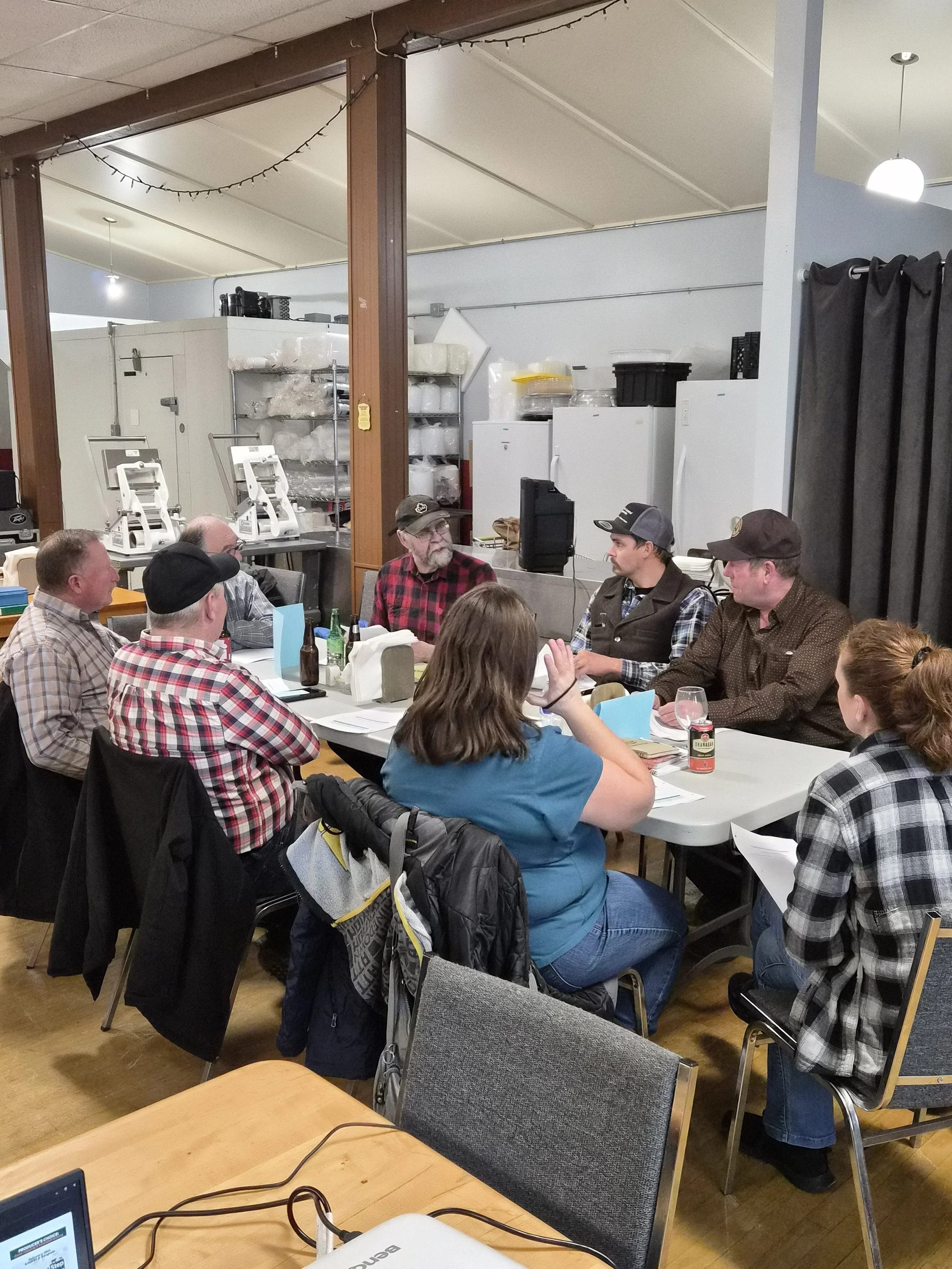
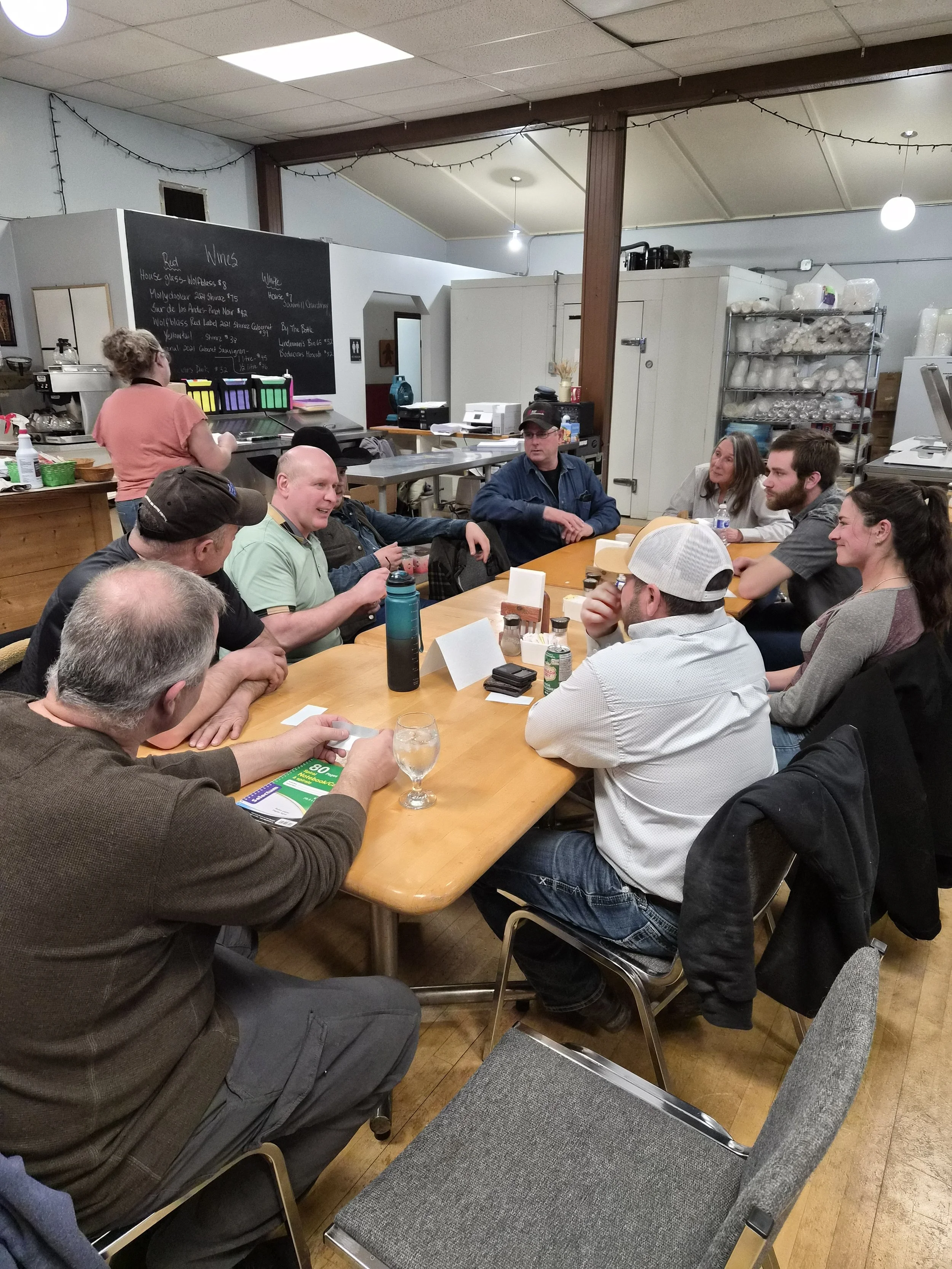
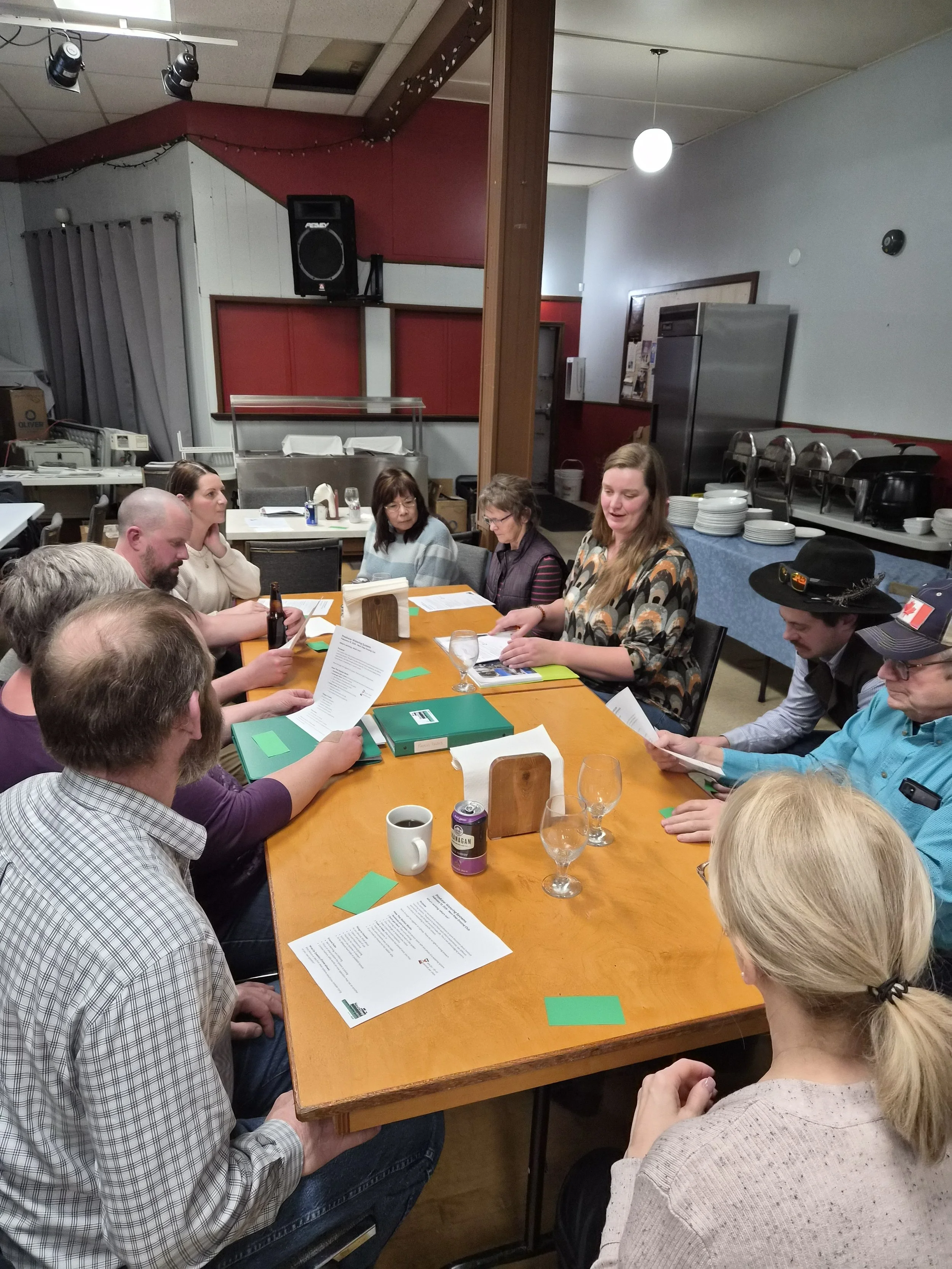
Following the presentation and a shared meal, producers rotated through four discussion stations:
Q and A with Shawn
Producers asked site-specific questions about seepage, algae management, sediment clean-outs, and drought planning.
Pump and Solar Sizing with Ian Kidd
Ian led a hands-on exercise exploring flow rates, elevation change, and solar panel sizing. Accurate calculations upfront can prevent undersized systems and costly upgrades later.
Pipeline Design with Jessica
Jessica guided participants through layout considerations for a 14-paddock rotational grazing system. The group discussed mainlines, branch lines, pressure loss, and planning for future expansion.
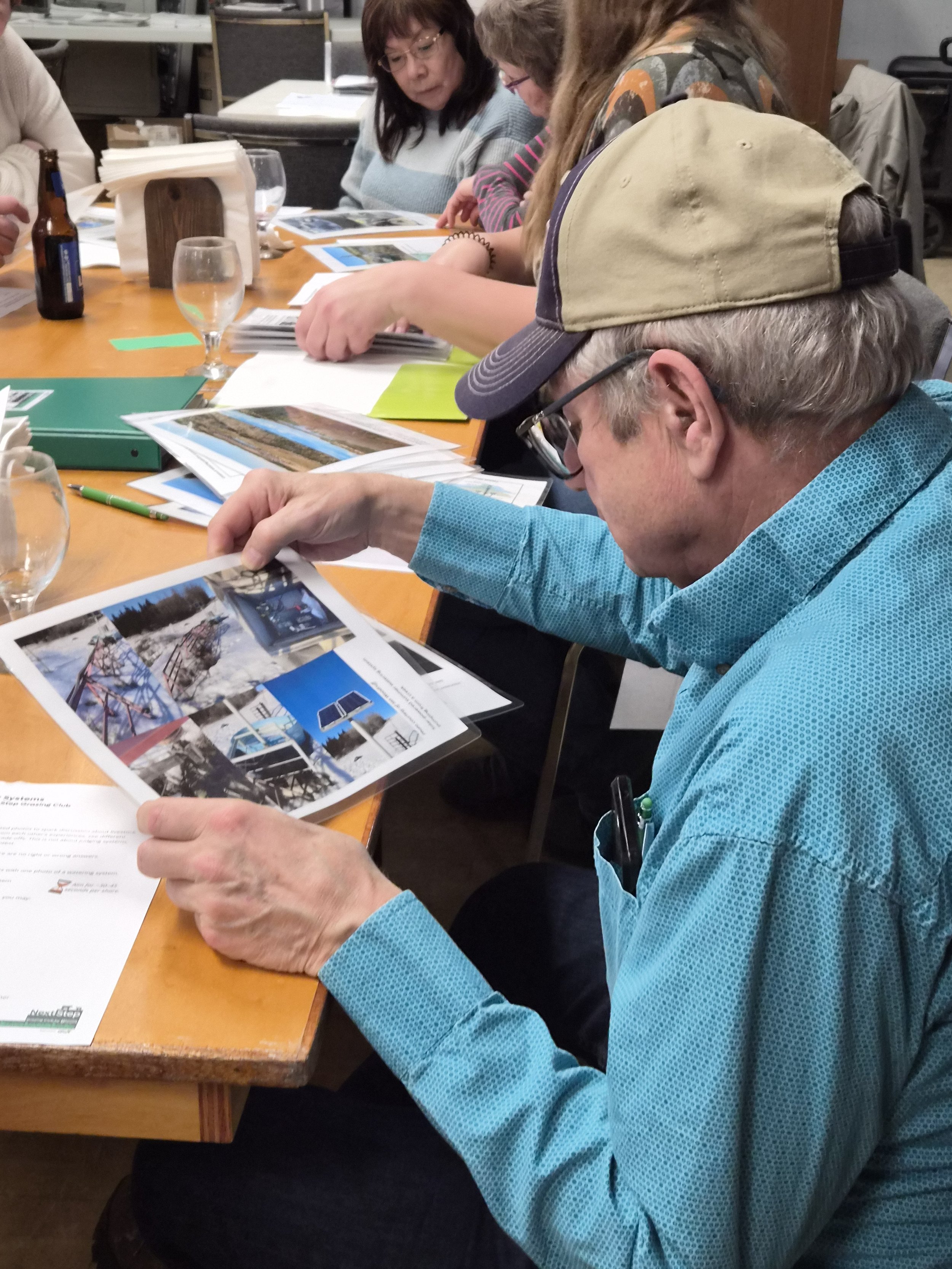
Producer Watering Systems with Dini
Using real producer-submitted photos, this station sparked conversation around solar pumping from dugouts, gravity-fed systems, mobile troughs, and practical winter setups seen across West-Central Alberta.
The strength of the evening was not just the technical information, but the shared experience in the room.
Water Planning Resources
Below are the resources shared during the session:
Farm water resources (Click on the “Dugouts and Dams” section)