Alberta Pasture Quality Project Report
We’re pleased to share the full Alberta Pasture Nutrient Analysis (2021–2024) report, led by Abby-Ann Redman, Courtney Lundy, Kristen Ritson-Bennett, and Lee Eddy, in collaboration with regional forage associations across the province. This project was funded by RDAR and supported by partner organizations including Farming Forward.
This multi-year study evaluated pasture samples from nine regions across Alberta, analyzing forage energy, protein, macro-minerals, and trace minerals from May through October. The goal was to better understand how well pasture alone meets beef cow requirements throughout the grazing season, and how nutrient supply shifts regionally and seasonally.
Below is the Barrhead-region summary prepared by Abby-Ann Redman, highlighting what the results mean for local grazing management decisions.
Understanding Nutrient Supply in Barrhead Pastures
Producers across the Barrhead region can take some confidence from recent multi-year pasture sampling results, which show local forages generally rank among the stronger nutritional profiles in Alberta. The findings come from a province-wide pasture nutrient analysis conducted across nine regions from 2021–2024. The regions were: La Crete, Manning, St. Paul, Mayerthorpe/Barrhead, Red Deer, Rocky Mountain House, Hanna, Medicine Hat, and Nanton.
The study evaluated forage energy, protein, macro- and trace-minerals from May through October to determine how well pasture alone meets beef cow requirements throughout the grazing season.
Energy (TDN):
Barrhead-area pastures showed solid energy levels throughout the season. In May, total digestible nutrients (TDN) averaged about 65%, placing the region among the higher-energy forages in Alberta. By August, TDN declined to roughly 60.6%, still competitive with most central and northern regions.
As expected, energy dropped further into fall, averaging about 56–57% by October. This remains near the requirement for mid-gestation beef cows (55%), but supplementation may be required late in the grazing season if cows are thin or lactating.
Crude Protein:
Barrhead-area forage ranked among the highest protein in spring, averaging 16% crude protein in May, one of the top regional values in the province.
Protein declined through summer and fall, averaging roughly 14% in August and 9–10% by October. While this still exceeds minimum requirements for mid-gestation cows, the sharper late-season drop compared to some northern regions suggests monitoring cow body condition and considering protein supplementation for young or high-producing cows late in the season.
Fibre (NDF):
Neutral detergent fibre, which influences intake and digestibility, remained moderate compared to many regions. Barrhead-area pastures stayed in the mid-50% range through most of the season and rose into the high-50s by fall.
This indicates forage quality and intake potential remain relatively favourable compared with more mature or drought-stressed southern regions, where fibre climbed significantly higher.
Calcium and Magnesium:
Barrhead-area pastures stood out positively for macro-minerals. Calcium levels were consistently moderate to high and increased through the season, likely reflecting the region’s higher proportion of tame and legume-containing stands.
Magnesium levels averaged about 0.14% dry matter. Adequate for beef cows and comparable to most central Alberta regions. This reduces risk of subclinical magnesium deficiency relative to southern Alberta sites.
Phosphorus:
Early-season phosphorus levels were strong (around 0.30%), but concentrations declined steadily through summer and fall.
By October, phosphorus averaged about 0.14%, right at the minimum requirement for mid-gestation cows. Many individual pasture samples fell below that threshold, indicating a clear need for phosphorus supplementation during fall grazing.
This seasonal drop was consistent across nearly all regions and is considered one of the most predictable nutritional gaps in Alberta grazing systems.
Trace Minerals:
A final area worth highlighting for Barrhead-area producers is trace mineral status. Across the province, copper, zinc, and selenium were frequently below beef cattle requirements, reinforcing the importance of a well-formulated free-choice mineral program. Copper levels in forage were deficient when compared to animal requirements and can be further compromised by antagonists such as molybdenum, sulphur, and iron, all commonly present in Alberta soils and forages. Zinc followed a similar pattern, with concentrations frequently below recommended dietary levels for immune function, hoof integrity, and reproductive performance. Selenium remained one of the most consistently deficient nutrients across nearly all regions sampled, reflecting the well-documented low selenium status of Western Canadian soils. Even where forage selenium was detectable, levels were rarely sufficient to meet cow requirements without supplementation.
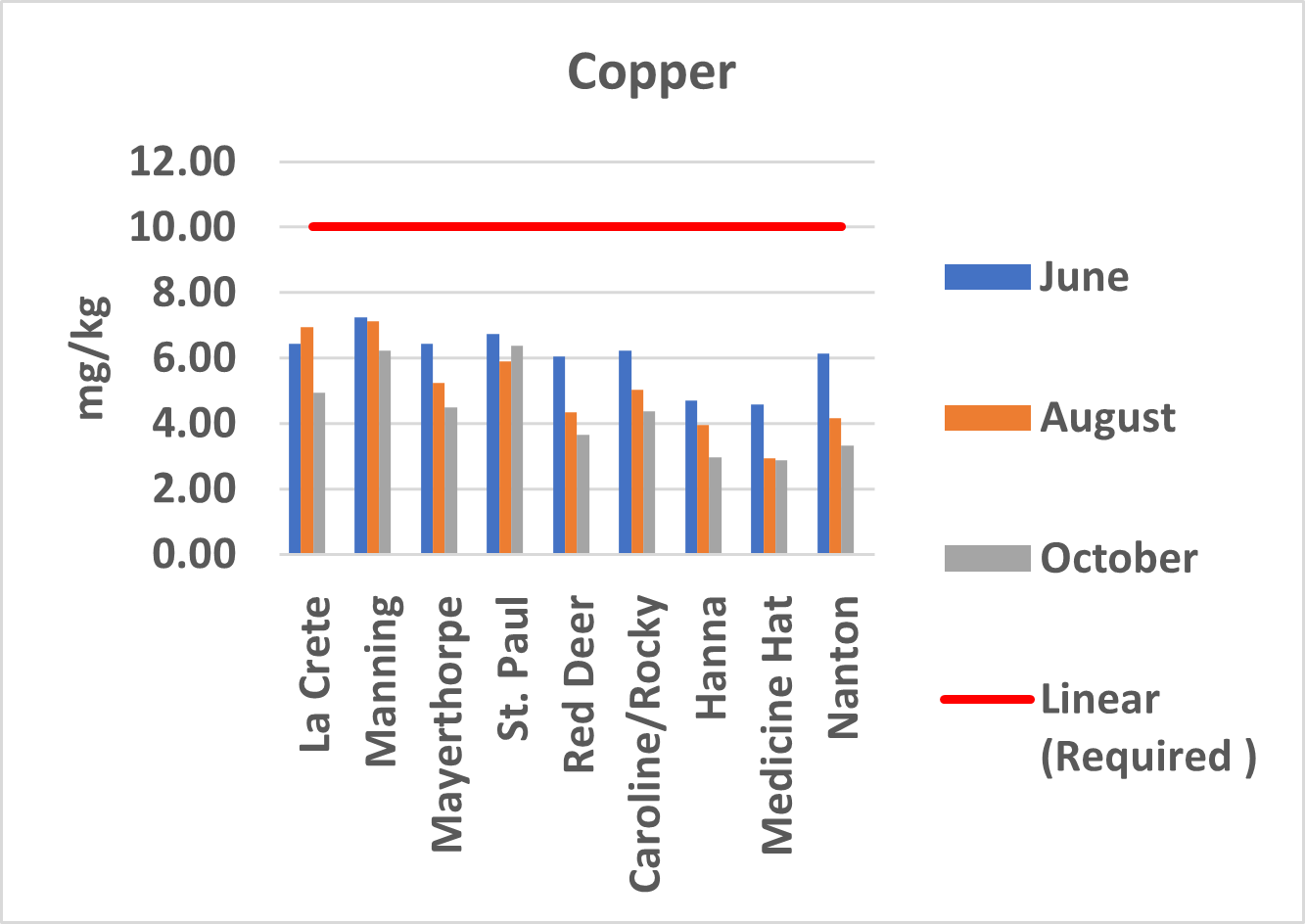
Molybdenum levels in the Barrhead area fall into the mid-range provincially, averaging about 2.3 mg/kg. Lower than the highest regions like Rocky Mountain House and St. Paul, but still high enough to influence copper availability in cattle. Molybdenum binds with sulphur in the rumen to form thiomolybdates, which tie up copper and reduce its absorption, meaning even when copper appears adequate on paper, cattle may still experience a deficiency. Barrhead area producers face a moderate risk of copper antagonism and should ensure their mineral programs include sufficient, highly bioavailable copper to offset these interactions.
For Barrhead producers, this means that while macro-mineral supply from pasture is generally strong, trace mineral supplementation should be viewed as non-negotiable in any grazing mineral program to support fertility, calf vigor, and vaccine response.
What It Means for Producers
Overall, pastures in the Barrhead region rank as nutritionally strong within Alberta, particularly for energy and protein. The region benefits from a higher proportion of tame and mixed pastures, which typically carry better mineral density and more stable forage quality through summer.
However, three management takeaways stand out:
Phosphorus supplementation is almost always required by fall
Energy and protein may need support late season, especially for thin cows or young females
Trace minerals are required throughout the entire grazing season
Routine forage testing and region-specific mineral programs remain the most effective way to capture the full value of Barrhead’s pasture resources while preventing hidden deficiencies that impact reproduction and calf performance.