Farming Forward's Silage Systems Trial explores how different forage crops and intercropping combinations influence the amount of protein, energy, fibre and other nutrients harvested per acre, and what those differences could mean for cow-calf production.
When evaluating silage crops, yield is often the first number producers look at. After all, more tonnes per acre means more feed in the yard. But does harvesting more forage necessarily mean harvesting more nutrition?
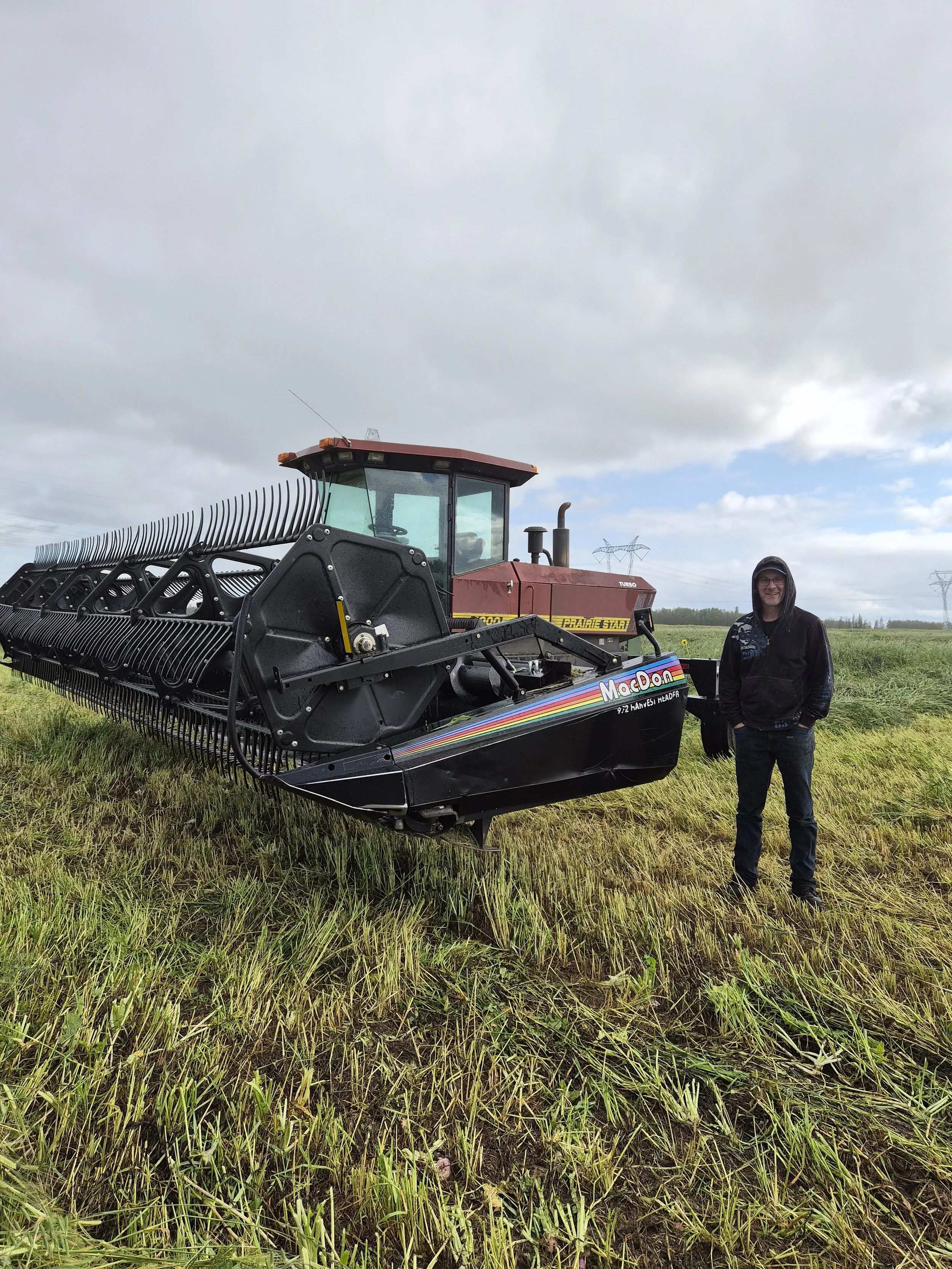
That is one of the questions Farming Forward is exploring through its Silage Systems Trial near Barrhead, in collaboration with producer Byron Long. The project compares five forage production systems, alongside two corn hybrids, to better understand how crop selection influences forage production, nutritional value and winter feeding opportunities for cow-calf operations.
While forage tests typically report nutrient concentrations as percentages, those percentages only tell part of the story. A crop with excellent nutritional quality may produce relatively little biomass, while a higher-yielding crop with moderate nutrient concentrations could deliver more total nutrients from the same acre.
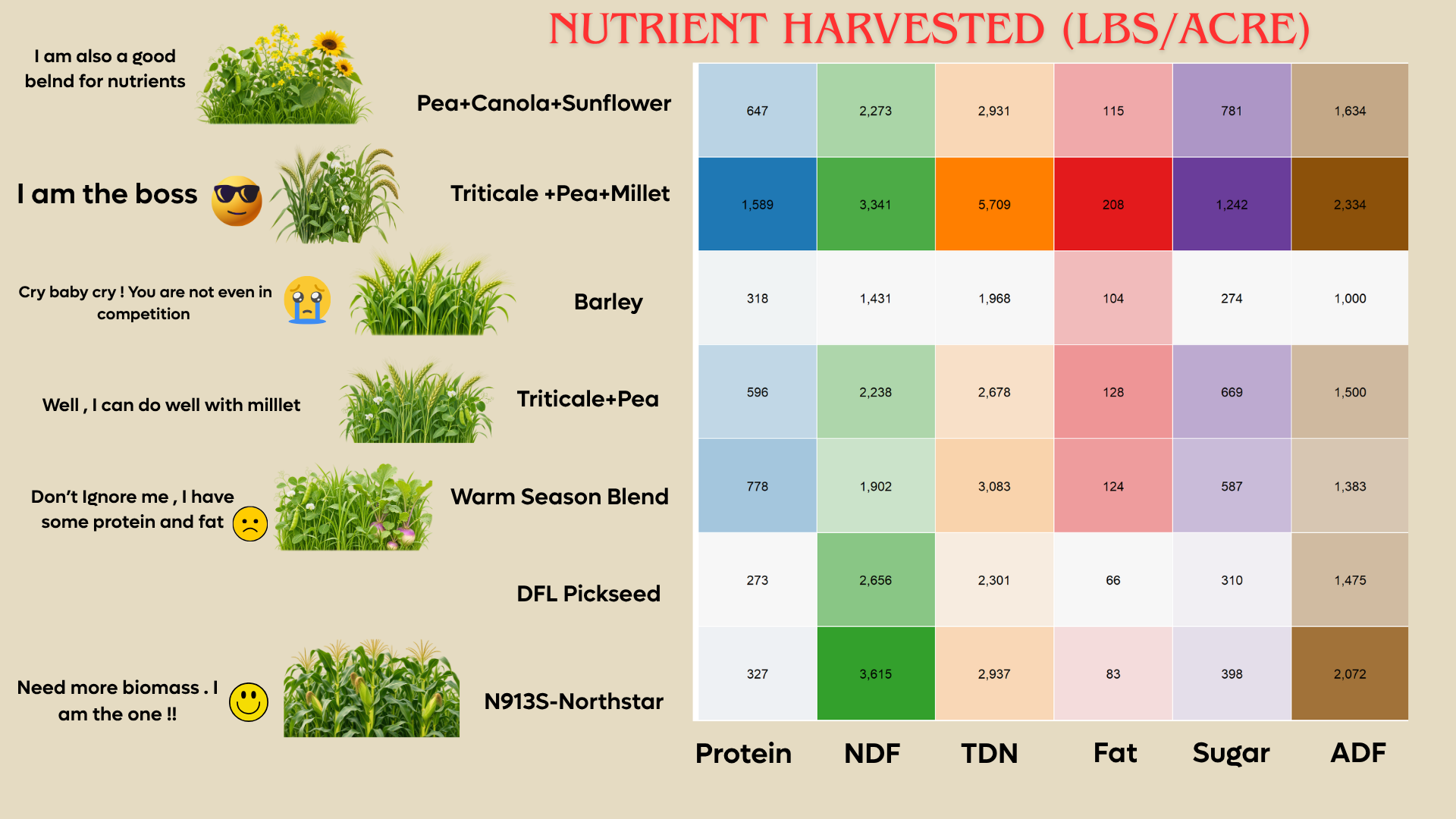
To explore this relationship, the accompanying heatmap presents the total pounds of six nutritional components harvested per acre: crude protein, neutral detergent fibre (NDF), total digestible nutrients (TDN), fat, sugar and acid detergent fibre (ADF).
Each nutrient has its own colour scale, with darker shades indicating greater quantities harvested per acre. This allows producers to compare how the cropping systems perform for each nutritional component rather than focusing on yield alone.
Triticale, Peas and Millet: A Strong Performer
Among the five forage production systems evaluated, the triticale, pea and millet intercrop stood out, producing the greatest total quantity of all six measured nutritional components.
Most notably, the mixture yielded 1,589 lbs of crude protein and 5,709 lbs of total digestible nutrients (TDN) per acre, compared with 318 lbs of protein and 1,968 lbs of TDN from the barley treatment.
That represents approximately five times more harvested protein and 2.9 times more TDN per acre than barley.
The intercrop also produced 1,242 lbs of sugar, 208 lbs of fat and 3,341 lbs of NDF per acre, exceeding the other four forage systems in each category.
These findings highlight the potential of combining cereals, legumes and warm-season grasses to increase total nutrient production from a given land area.
However, producing more nutrients per acre does not automatically mean a crop provides a more balanced or digestible feed. Nutrient concentration, forage digestibility, animal intake and silage fermentation quality remain critical when determining its suitability for cattle.
What Do These Nutrients Mean for Cow-Calf Production?
Understanding the nutritional components in harvested forage helps connect crop production with the practical decisions producers make when developing winter feeding programs.
Crude Protein: Supporting Cattle Performance
Protein plays an essential role in tissue development, reproduction, meat production and overall animal performance. It also supplies nitrogen required by rumen microorganisms to break down and utilize forage.
Protein requirements increase during late gestation and early lactation, making adequate dietary protein particularly important for pregnant and nursing cows.
The triticale, pea and millet mixture produced the greatest protein yield at 1,589 lbs/acre, followed by the warm-season blend at 778 lbs/acre and the pea, canola and sunflower mixture at 647 lbs/acre.
For producers, greater protein production per acre may create opportunities to reduce purchased protein supplements or increase the amount of homegrown protein available for winter feeding.
However, these benefits depend on the protein concentration and availability in the harvested feed, as well as the nutritional requirements of the herd.
Total Digestible Nutrients (TDN): Fuel for the Herd
Energy is one of the most important considerations in winter feeding. Cattle require adequate energy to maintain body condition, regulate body temperature, support pregnancy and produce milk.
TDN is a commonly used estimate of the digestible nutrient content of forage and helps indicate its potential energy value.
In this trial, the triticale, pea and millet mixture produced 5,709 lbs of TDN per acre, substantially more than the warm-season blend at 3,083 lbs and the pea, canola and sunflower mixture at 2,931 lbs.
Barley produced the lowest TDN yield among the five forage systems at 1,968 lbs/acre.
This difference is particularly relevant when considering how much energy can be produced from a limited land base.
For cow-calf producers, greater TDN production per acre may translate into more potential cow-feeding days, provided cattle can consume and digest the forage effectively and storage and feeding losses are managed.
A forage's TDN concentration remains important because cattle must consume sufficient energy each day, regardless of how much total TDN was harvested from the field.
Neutral Detergent Fibre (NDF): Balancing Fibre and Intake
Fibre is essential for maintaining normal rumen function, supporting rumination and allowing cattle to utilize forage-based diets effectively.
NDF represents the structural components of plants, primarily hemicellulose, cellulose and lignin.
Although adequate physically effective fibre is necessary for rumen health, high NDF concentrations can restrict dry matter intake by increasing rumen fill and slowing feed passage.
The triticale, pea and millet mixture produced 3,341 lbs of NDF per acre, compared with 1,431 lbs from barley and 2,238 lbs from the triticale and pea mixture.
Interestingly, the N913S-Northstar corn hybrid produced the greatest NDF yield across all seven treatments, at 3,615 lbs/acre.
But here is where interpreting the heatmap requires some caution.
More NDF harvested per acre does not necessarily mean better forage quality. It may simply reflect greater biomass production. What matters when feeding cattle is the concentration of NDF, its digestibility and whether animals can consume enough feed to meet their requirements.
Acid Detergent Fibre (ADF): Looking Beyond Fibre Quantity
ADF represents a less digestible fraction of plant fibre, consisting primarily of cellulose and lignin.
Higher ADF concentrations are generally associated with reduced forage digestibility and lower available energy.
The triticale, pea and millet mixture produced the greatest ADF yield at 2,334 lbs/acre, followed by the N913S-Northstar corn hybrid at 2,072 lbs/acre and the pea, canola and sunflower mixture at 1,634 lbs/acre.
Barley produced 1,000 lbs of ADF per acre.
While these differences reflect the total amount of fibre harvested, they do not establish which forage is more digestible.
A high-yielding crop can produce more total ADF per acre while still having an acceptable ADF concentration. For this reason, ADF percentage, NDF digestibility and overall energy concentration should be evaluated alongside nutrient yield when comparing silage systems.
Sugar: Energy for Rumen Microbes and Silage Fermentation
Sugars provide readily fermentable energy for rumen microorganisms and can contribute to the energy available in cattle diets.
They also play an important role in silage preservation. During ensiling, lactic acid bacteria use fermentable carbohydrates to produce acids that lower silage pH and help preserve the harvested forage.
Among the treatments, the triticale, pea and millet mixture produced the greatest sugar yield at 1,242 lbs/acre, followed by the pea, canola and sunflower mixture at 781 lbs/acre.
Barley produced the lowest sugar yield at 274 lbs/acre.
Higher sugar production per acre indicates a greater total quantity of sugars harvested, but it does not necessarily mean the crop will ferment more successfully.
Sugar concentration, moisture content, buffering capacity, packing density and oxygen exclusion all influence silage fermentation.
For producers, this reinforces the importance of combining forage test results with proper harvest timing and silage management.
Fat: A Concentrated Source of Energy
Fat contributes to the energy value of forage and is an important component of overall cattle nutrition.
The triticale, pea and millet mixture produced the highest fat yield at 208 lbs/acre, followed by triticale and peas at 128 lbs/acre and the warm-season blend at 124 lbs/acre.
The two corn hybrids produced comparatively lower total fat yields, at 66 lbs/acre for DFL Pickseed and 83 lbs/acre for N913S-Northstar.
Although fat is an energy-dense nutrient, more is not always better. Excessive fat concentrations in the total ration can interfere with fibre digestion and rumen microbial activity.
As with the other nutritional components, the total amount harvested per acre provides useful production information, but the concentration in the complete diet ultimately determines its nutritional significance.
What About Corn Silage?
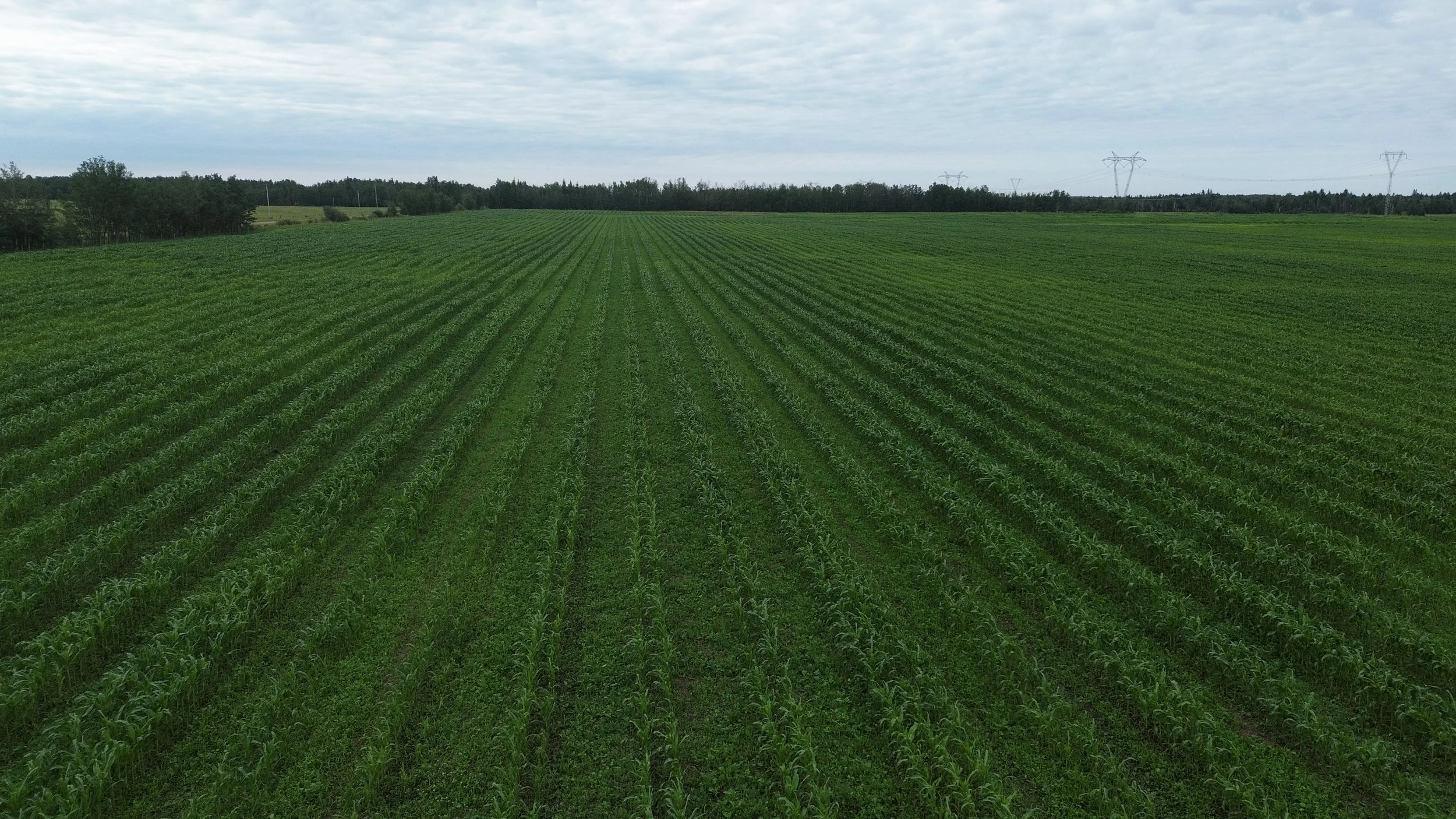
The trial also included two corn hybrids, DFL Pickseed and N913S-Northstar, providing an opportunity to compare corn silage with the five other forage production systems.
The N913S-Northstar hybrid produced greater nutrient yields per acre than DFL Pickseed across all six categories measured.
For example, N913S-Northstar produced 2,937 lbs of TDN, 3,615 lbs of NDF and 327 lbs of crude protein per acre, compared with 2,301 lbs of TDN, 2,656 lbs of NDF and 273 lbs of crude protein from DFL Pickseed.
However, the triticale, pea and millet intercrop exceeded both corn hybrids in total protein, TDN, sugar and fat harvested per acre.
One particularly interesting comparison is that N913S-Northstar produced more NDF per acre than the triticale, pea and millet mixture, but considerably less TDN.
This illustrates why producing more structural fibre is not the same as producing more digestible nutrients.
Corn silage remains an important feed option for cow-calf operations, particularly where it can produce consistent yields and adequate energy concentrations. However, its feeding value depends on several factors, including growing-season conditions, maturity at harvest, grain development, starch concentration and fibre digestibility.
The results also demonstrate that not all corn hybrids perform equally under the same production conditions.
Turning Field Results into Feeding Decisions
The Silage Systems Trial highlights an important distinction between forage yield, nutrient concentration and total nutrient production.
A crop with higher dry matter yield may harvest more total nutrients per acre, even if its nutrient concentrations are moderate. Conversely, a forage with a high protein or energy percentage may produce fewer total pounds of that nutrient if its biomass yield is lower.
The heatmap offers a valuable way to examine nutrient production, but it should not be interpreted as a ranking of overall forage quality.
For example, greater TDN or protein yield per acre may be advantageous when the goal is to maximize homegrown nutrients, while high NDF or ADF yields require additional consideration of fibre concentration and digestibility.
Producers can make better use of these results by considering three questions:
How much feed am I producing? Dry matter yield determines the total forage available from each acre.
What is the nutritional quality of that feed? Forage analysis helps determine whether the crop meets the protein, energy and fibre requirements of the herd.
How much usable nutrition am I producing for the cost? Nutrient yield, production costs, storage losses and supplementation requirements all influence the economic value of the crop.
For cow-calf operations, these considerations become especially important when planning winter feeding programs, where feed costs represent a substantial portion of annual production expenses.
The triticale, pea and millet intercrop demonstrated strong potential for producing large quantities of protein and digestible nutrients per acre in this trial. However, determining whether it is the most practical or economical option requires additional consideration of establishment costs, crop reliability, harvest management, feed quality and animal performance.
The Takeaway: Harvesting Nutrition, Not Just Tonnes
The most productive silage system is not necessarily the one that fills the pit the fastest.
It is the system that consistently produces the right combination of usable nutrients, sufficient forage yield and economic value for the cattle being fed.
By examining total nutrient production alongside conventional forage quality measurements, Farming Forward's Silage Systems Trial provides another perspective on how crop selection can influence winter feeding opportunities.
Because at the end of the day, the goal isn't just to grow more feed. It's to grow feed that works harder for the herd and the farm's bottom line.
As Farming Forward continues evaluating these cropping systems, the findings will help connect field-level production with practical, cost-effective feeding decisions for Alberta cow-calf producers.