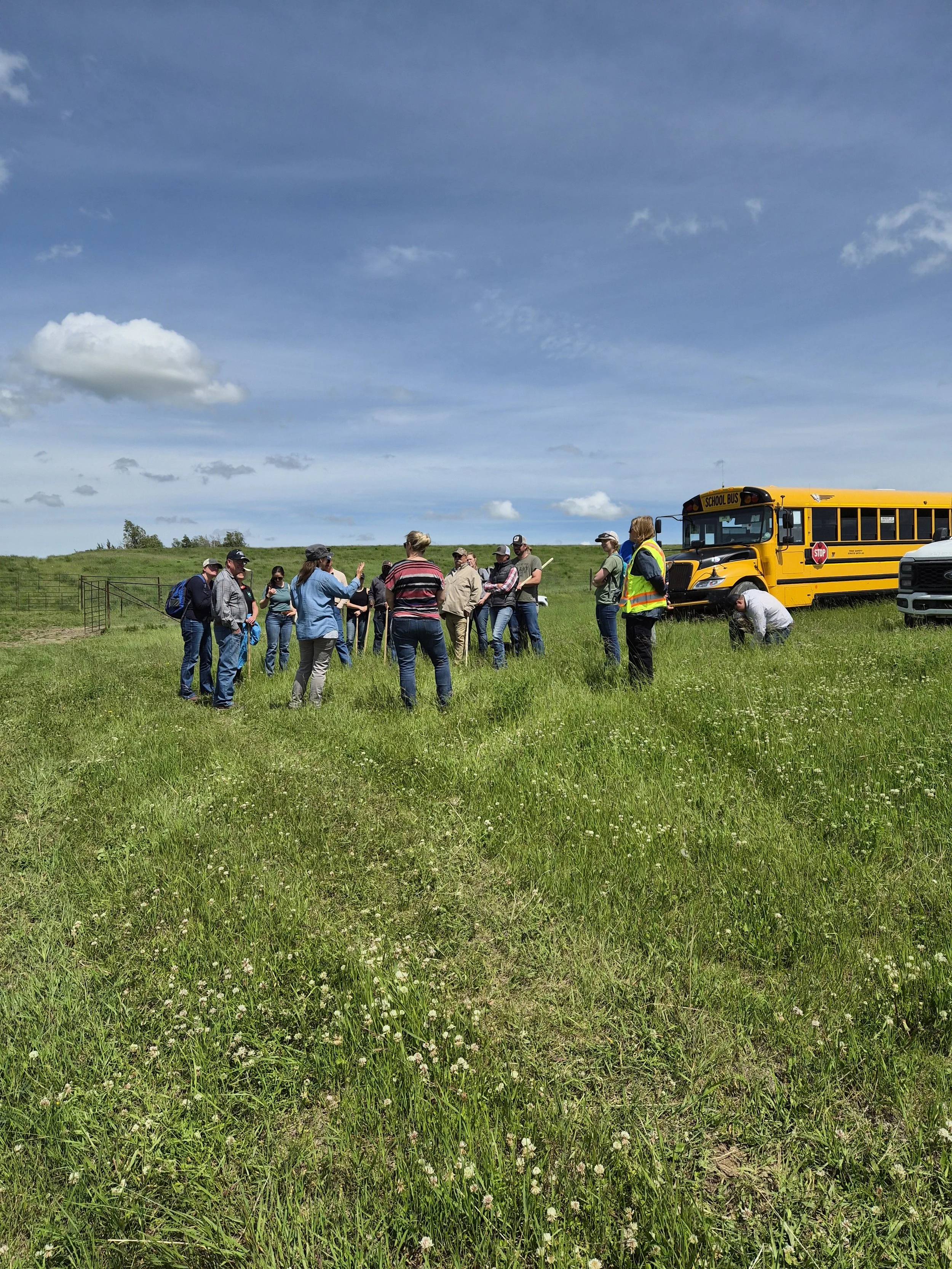
New Technologies, New Perspectives: Producers Explore the Future of Grazing Management
What happens when producers get together to see new technology in action, ask tough questions, and learn directly from other producers?
That was exactly the goal of Farming Forward's Next Step Grazing Tour. From virtual fencing and targeted goat grazing to ecological monitoring and rangeland health, participants spent the day exploring practical tools that can improve grazing management while increasing pasture productivity and resilience.
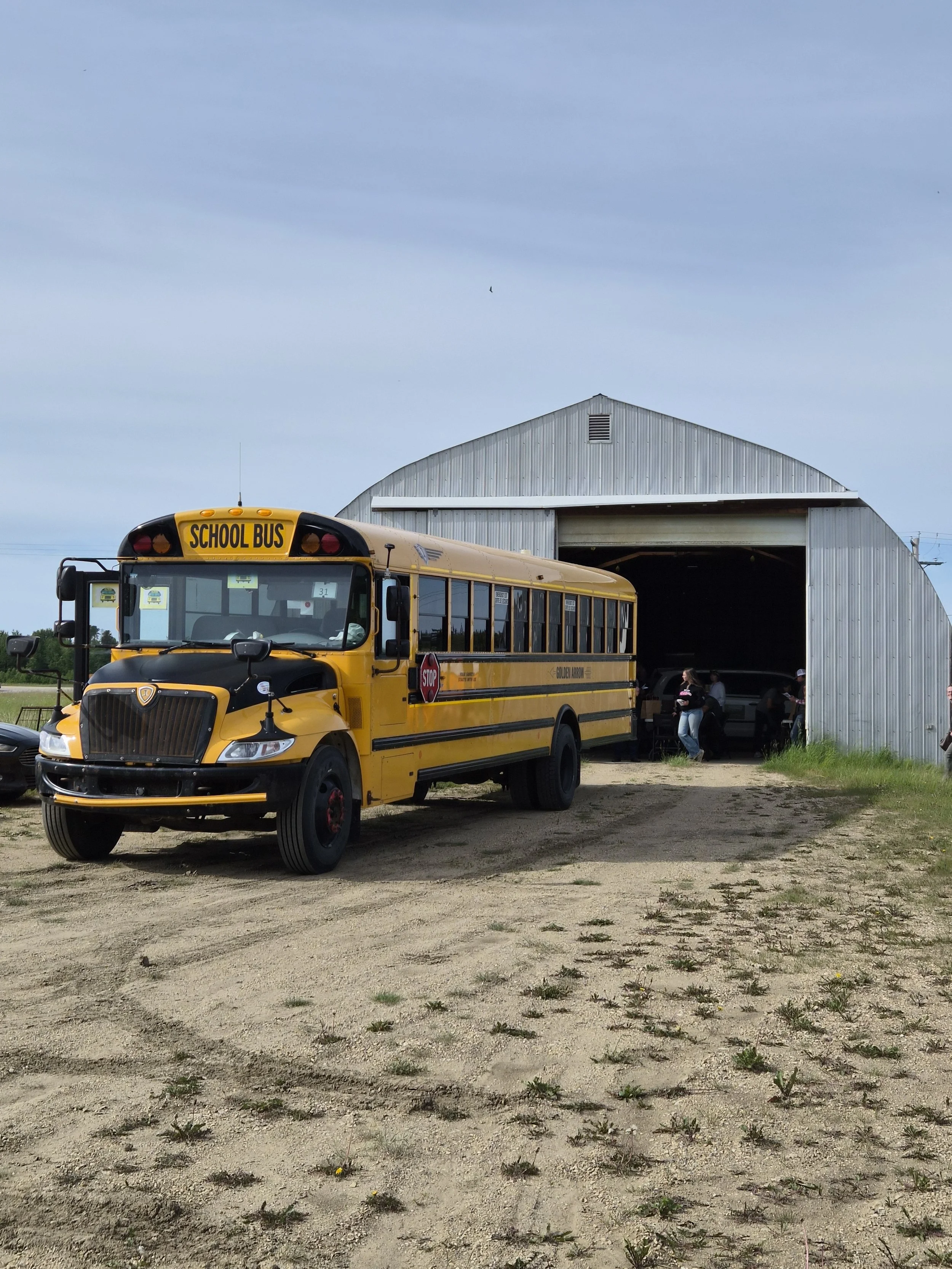
Virtual Fencing: Learning from Producers Already Using It
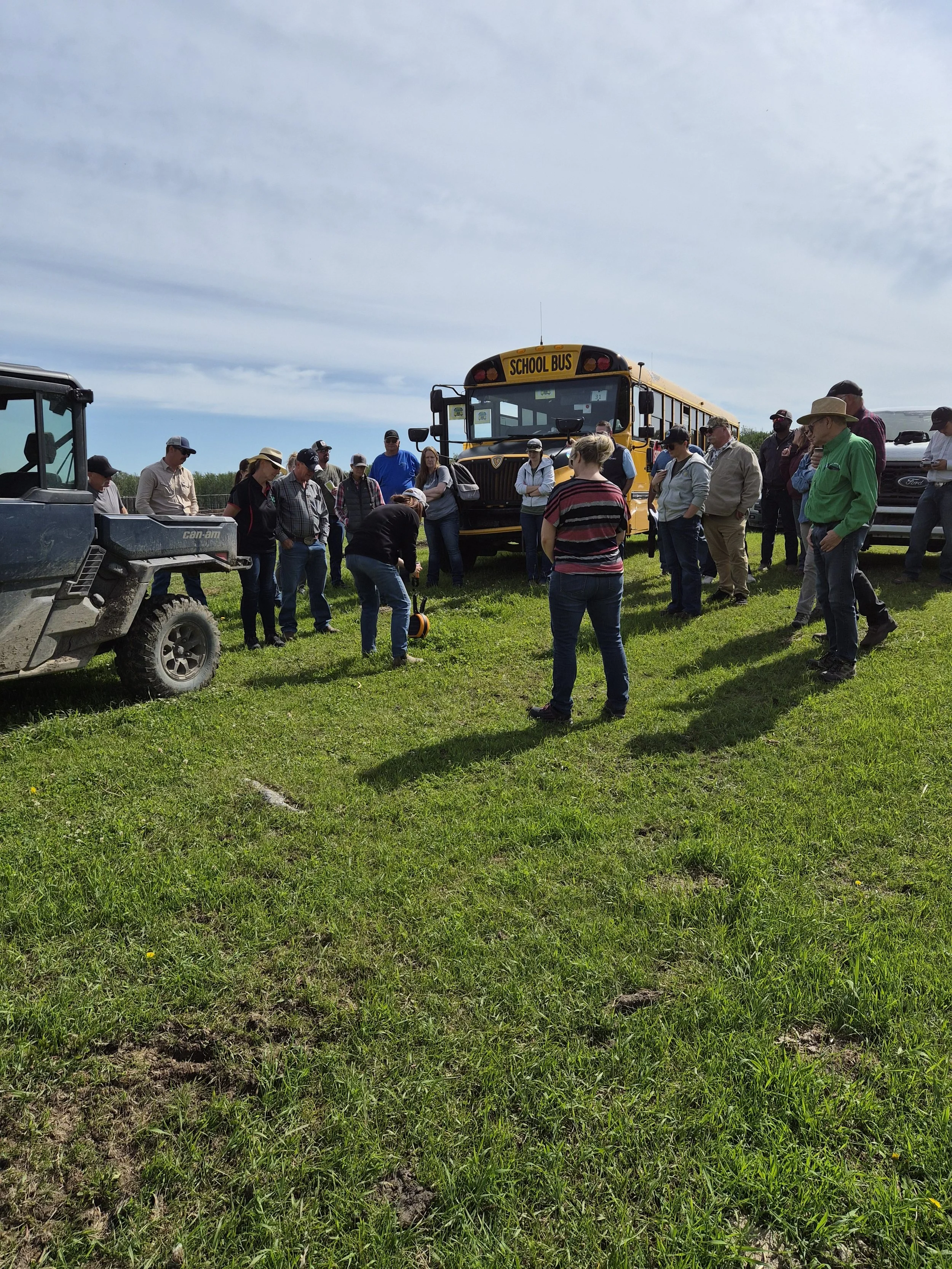
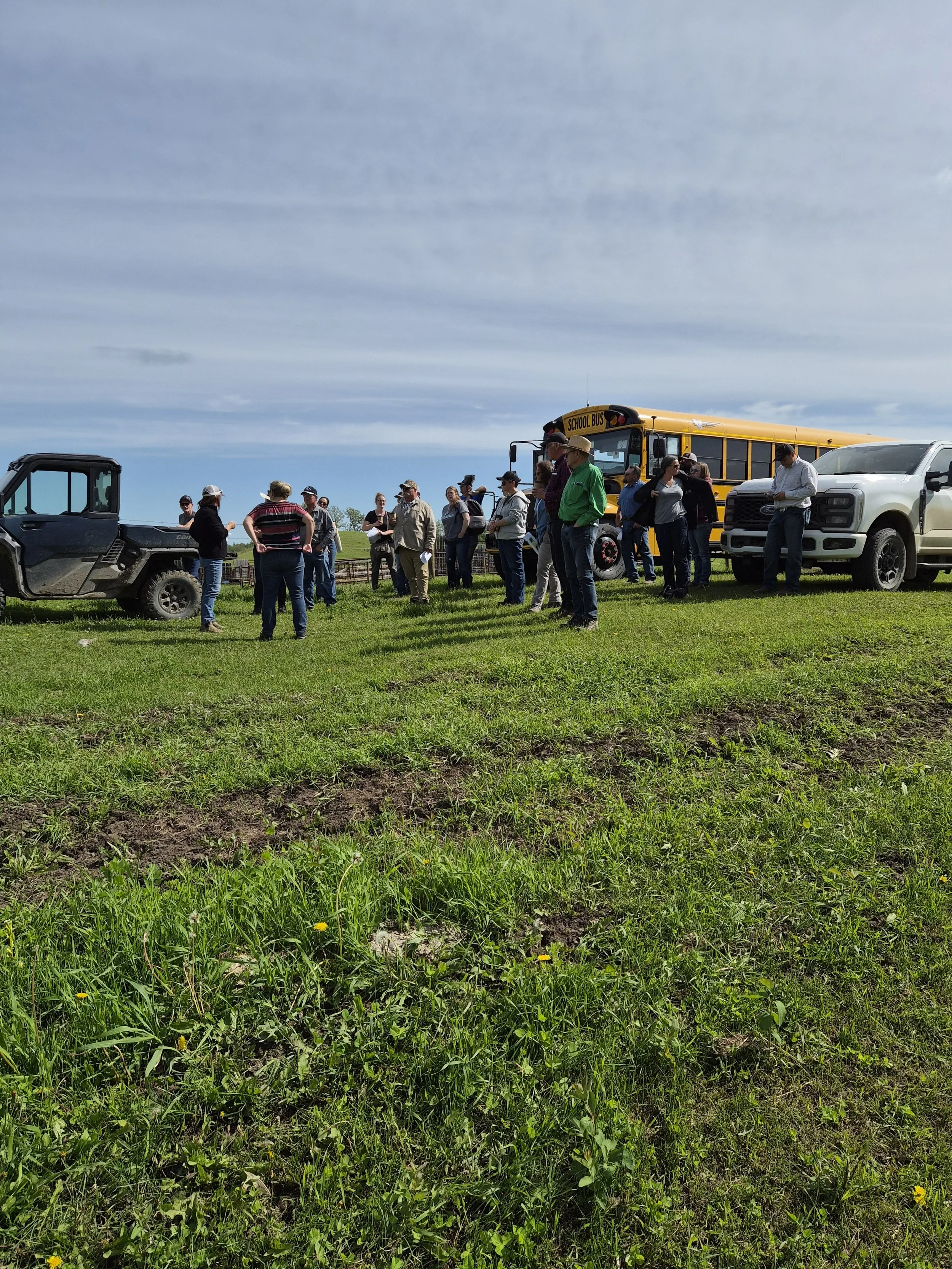
The tour began at the farm of local producer Leslie McEachern, who has been trialing Gallagher eShepherd virtual fencing collars for the past three weeks. Rather than hearing a sales presentation, participants had the opportunity to hear firsthand what it has been like learning a completely new way of managing cattle.
Leslie shared the successes, surprises, and challenges she's encountered while getting started with the technology. Participants watched the cattle interact with the virtual fence as the collars issued an audible warning when an animal approached the boundary, followed by a low-energy electrical pulse only if the animal continued forward. It was fascinating to watch the cattle quickly learn to respond to the sound cue and change direction, although we did observe one receive a pulse during the demonstration.
Joining the discussion was Mike Hittinger, who has been using Halter virtual fencing collars for approximately six months. His longer-term experience provided valuable perspective on how the technology performs over time, how cattle adapt, and how it changes day-to-day grazing management. With two different systems represented, participants were able to compare the technologies, ask detailed questions, and hear honest feedback from producers already putting them to work.
Recognizing the interest in virtual fencing, Farming Forward has purchased 36 virtual fencing collars that will be available for members to trial beginning next year. The goal is to give producers the opportunity to experience the technology on their own operations before deciding whether it is a good fit. Anyone interested in participating is encouraged to contact Farming Forward.
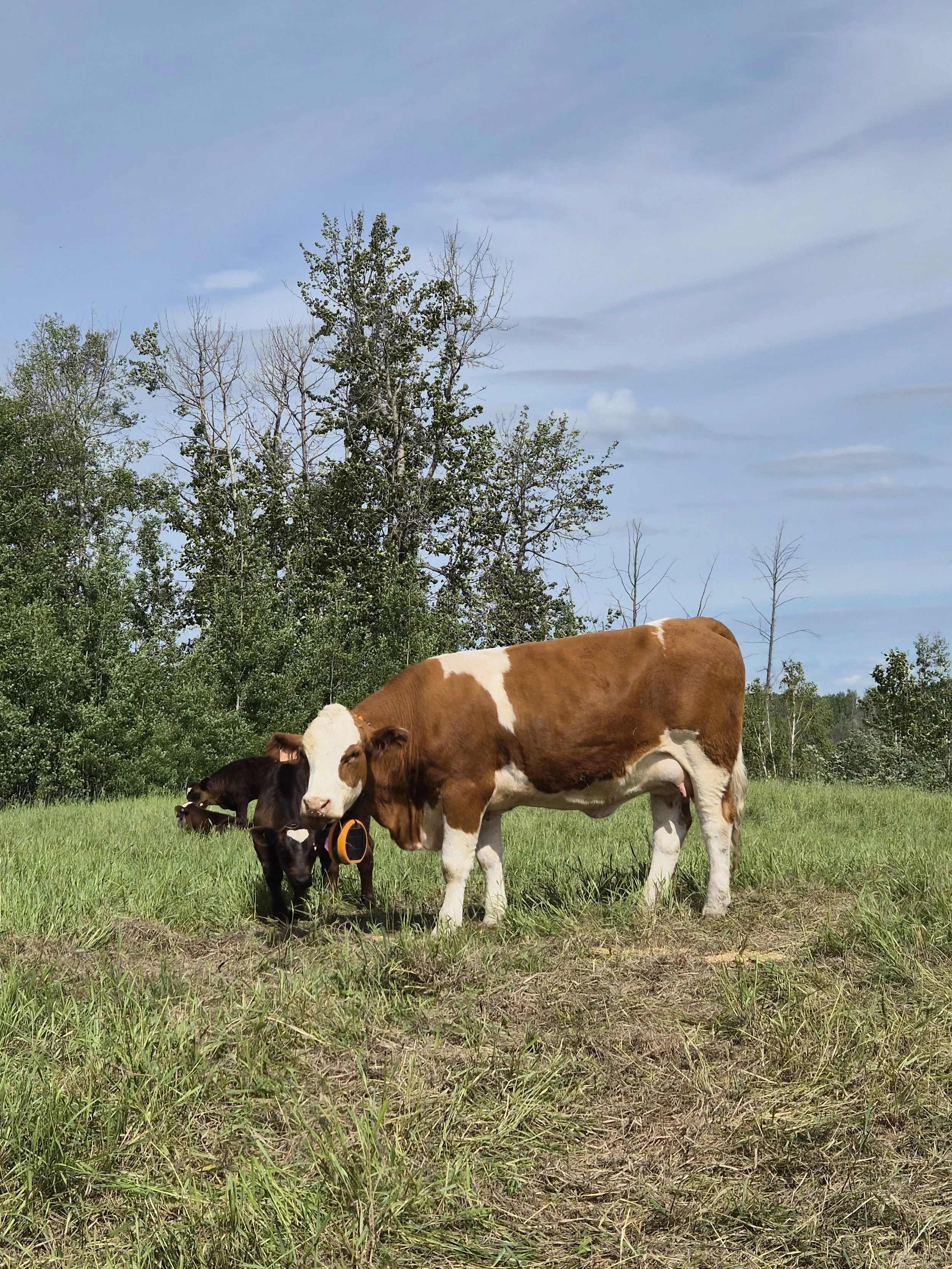
Networking Over Lunch
Following the morning demonstrations, participants gathered back at the shop for lunch and networking. Conversations continued well beyond the presentations as producers compared experiences, discussed ideas for their own operations, and shared questions sparked throughout the morning. The enthusiasm around the tables made it clear that peer-to-peer learning remains one of the greatest strengths of these events.
Goats at Work: A Biological Approach to Brush Management
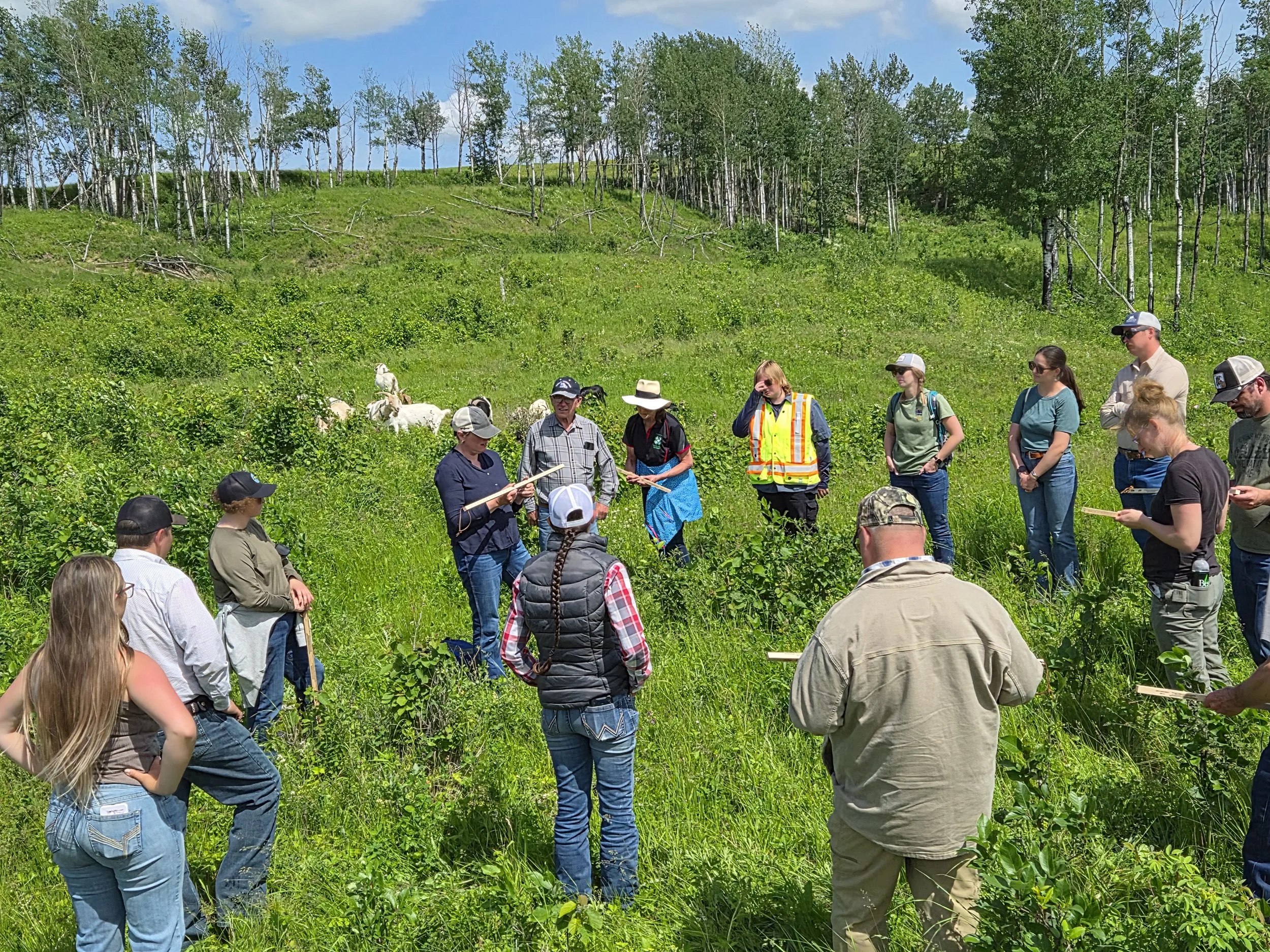
The afternoon took participants to Farming Forward's Targeted Goat Grazing for Brush and Invasive Species Control demonstration, funded through Alberta's Rangeland Sustainability Program.
For many cattle producers, brush encroachment gradually reduces available forage by competing with grasses for sunlight, moisture, and nutrients. Mechanical clearing and herbicide applications can be effective, but targeted goat grazing offers another management option by using the animals' natural browsing behaviour.
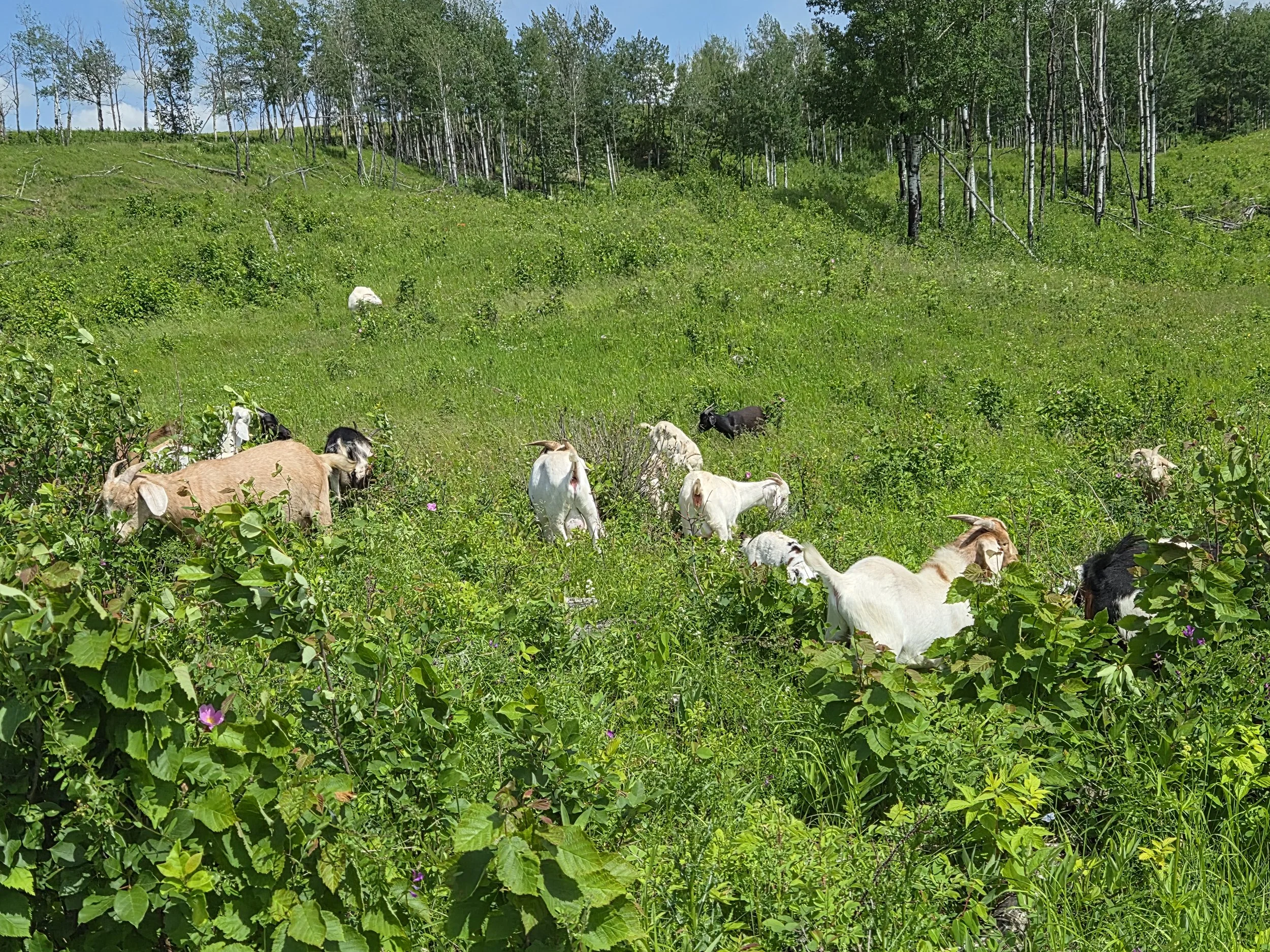
Unlike cattle, goats preferentially consume woody shrubs, brush, broadleaf weeds, and many invasive species before they choose grasses. By repeatedly browsing these plants, goats reduce their competitive advantage, allowing desirable forage species to recover and increase productivity over time. As the goats move across the pasture, they also return nutrients through manure and urine while their hoof action lightly disturbs the soil surface, helping stimulate biological activity and nutrient cycling.
The results were already becoming visible at the demonstration site. Exclusion cages protecting ungrazed vegetation remained dense with brush and weeds, while the surrounding grazed areas showed noticeably less woody growth and a thicker, darker stand of grasses.
Participants spent time watching the goats feed and discussing their behaviour. One observation that surprised many people was just how selective the animals were. It was estimated that only about two out of every ten bites contained any grass at all, with the majority of bites consisting of shrubs, leaves, and broadleaf plants. One goat was even observed readily consuming Canada thistle, a plant few producers expect livestock to target.
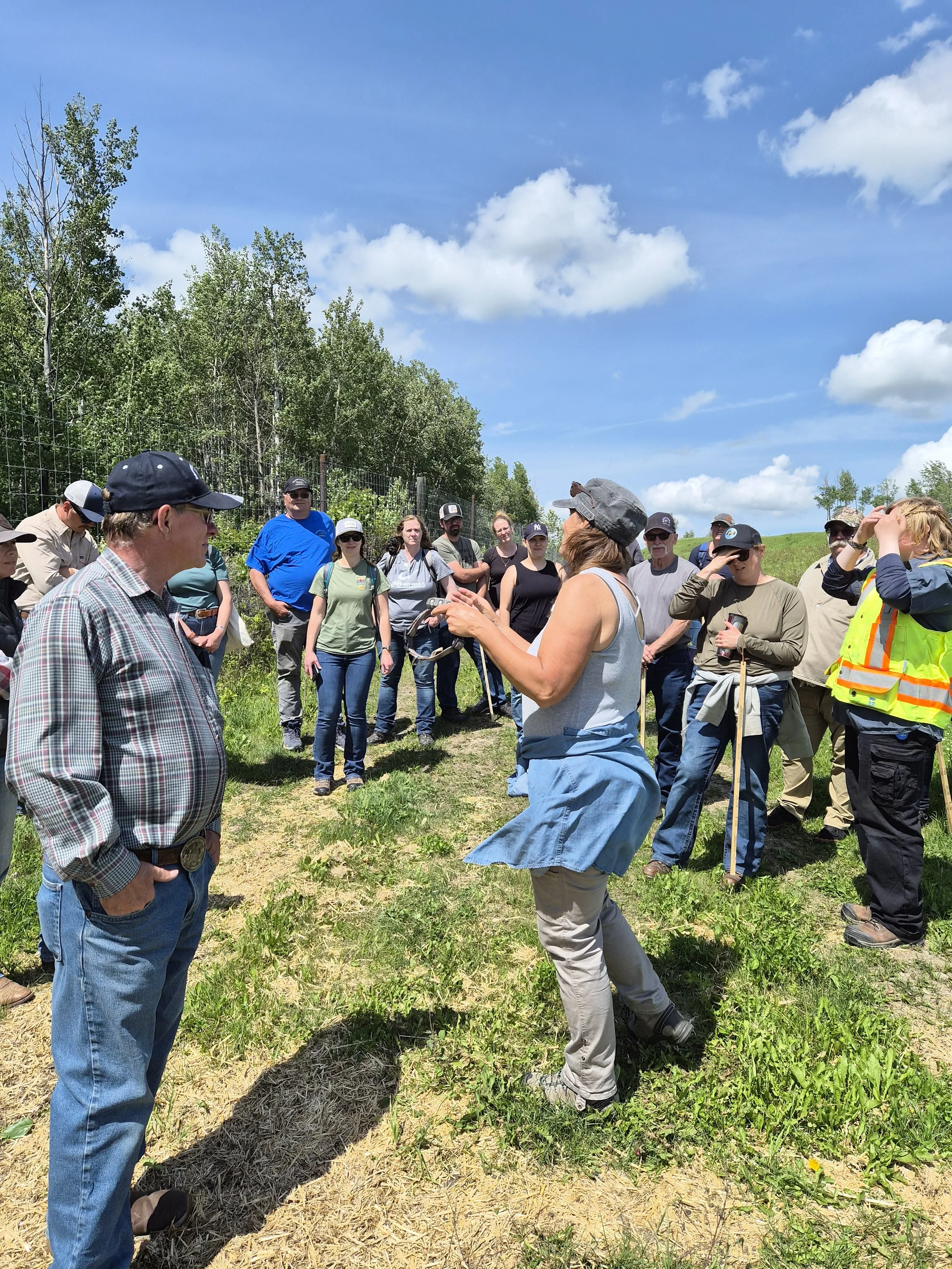
Looking Beyond the Grass
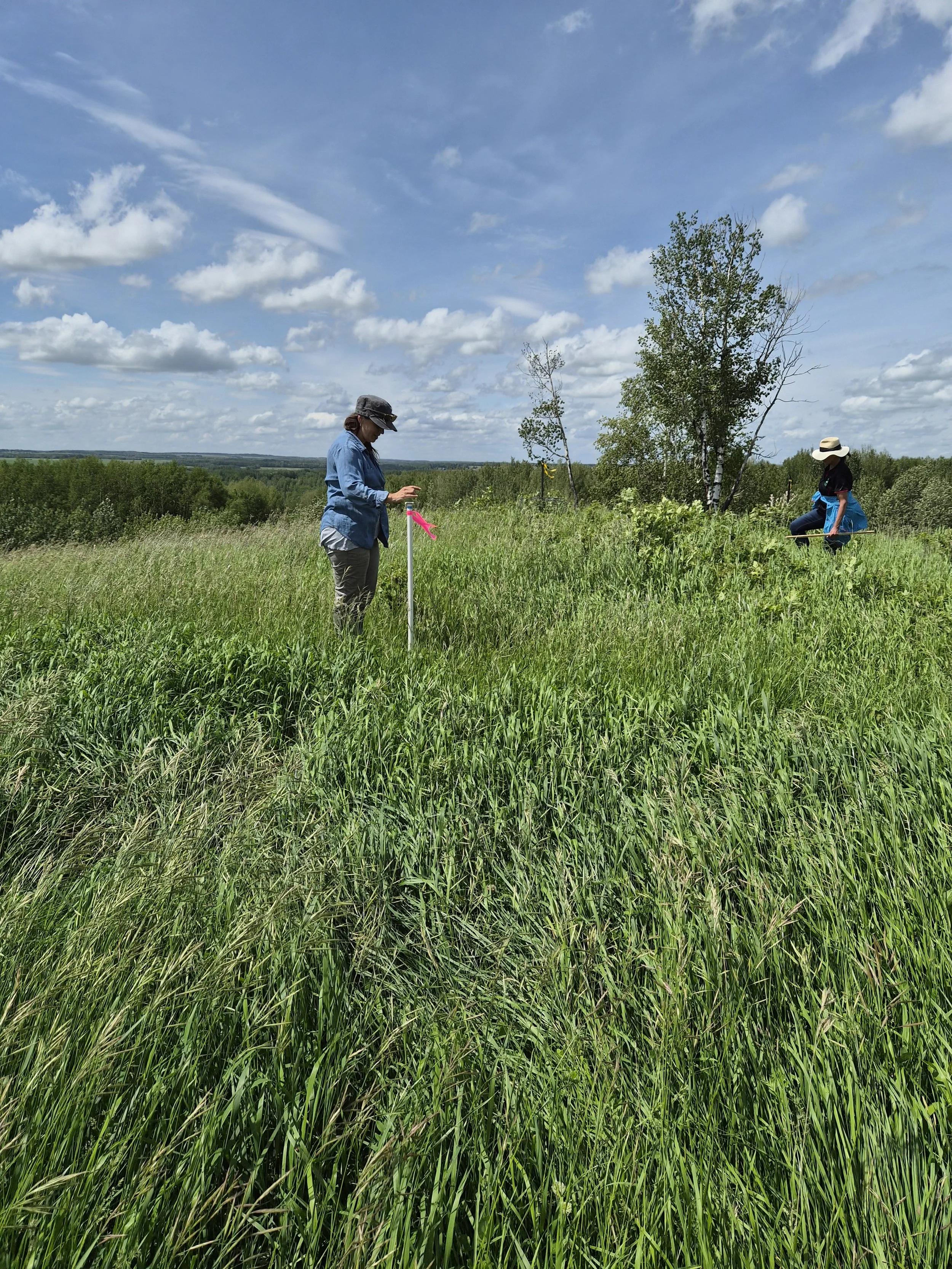
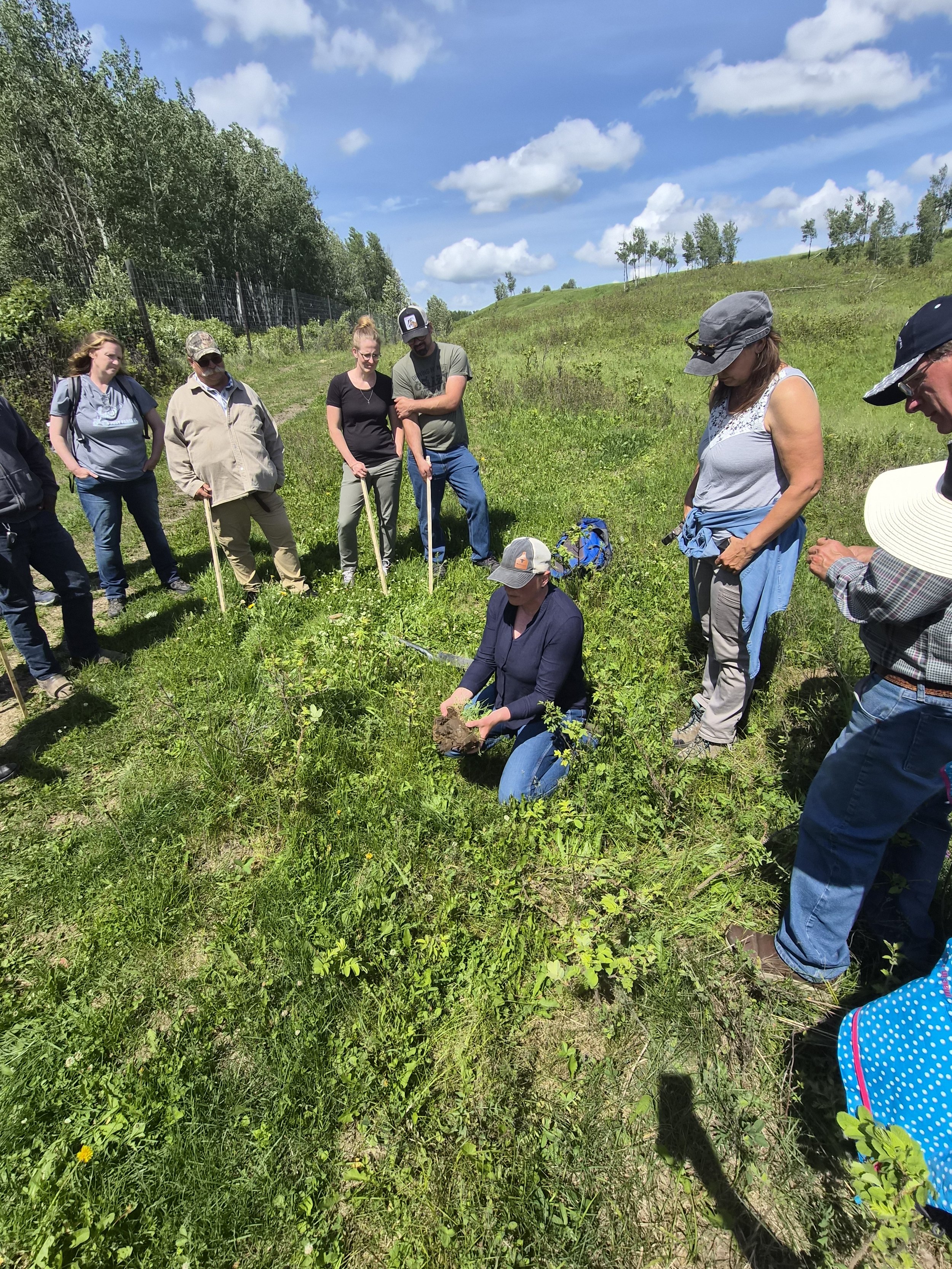
Throughout the afternoon, Dana Penrice of Holistic Management Canada introduced participants to Ecological Outcome Verification (EOV), an approach that evaluates how well a grazing system is functioning by measuring ecosystem processes rather than focusing only on plant species.
Participants learned about three of the key ecological systems that support healthy pastures:
The water cycle
The mineral cycle
The energy cycle
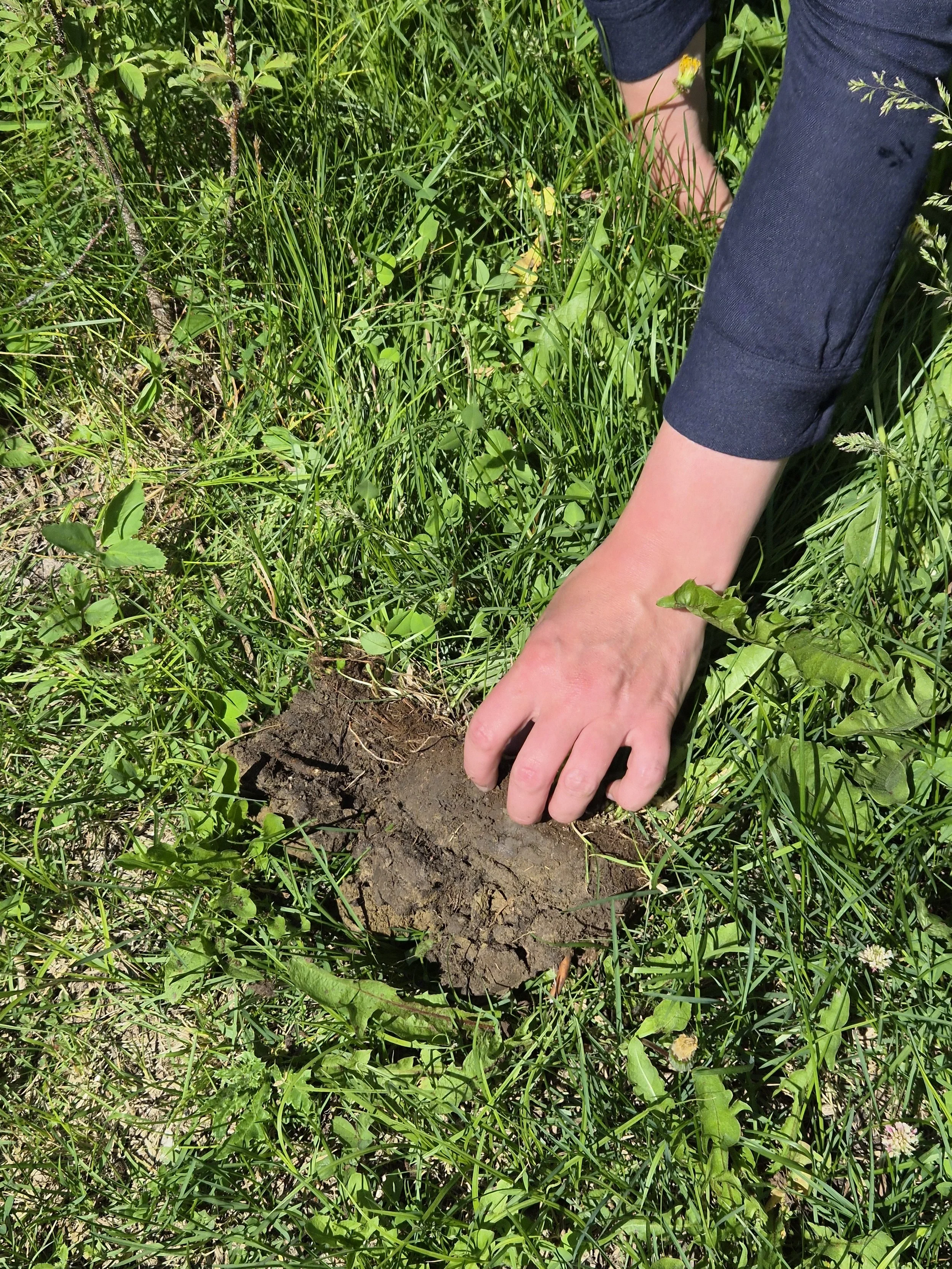
Using simple field observations and easy-to-build monitoring tools, Dana demonstrated practical ways producers can begin evaluating these systems on their own operations.
Dana also explained the Ecological Outcome Verification program, which provides standardized pasture assessments over a five-year period. Annual monitoring generates detailed reports that allow producers to track whether their land is regenerating or degrading and measure how management decisions influence ecosystem function over time.
Learn more about Ecological Outcome Verification at:
https://holisticmanagement.ca/
Understanding What Your Pasture Wants to Become
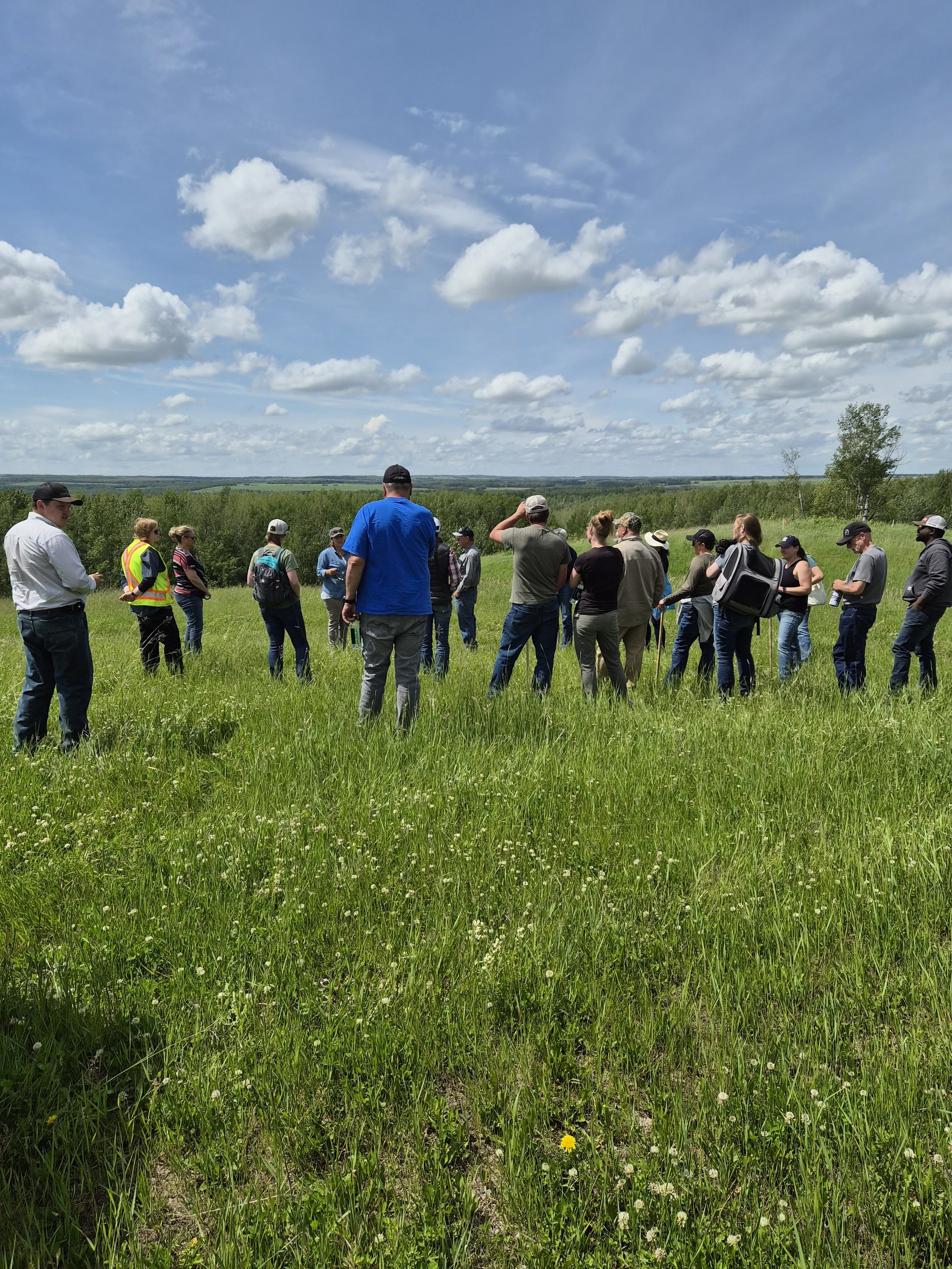
Area Range Management Specialist Zoey Archibald from the Government of Alberta helped participants view the site through a different lens.
She explained that the demonstration pasture is naturally attempting to return to the forest ecosystem that once occupied the landscape. Without active disturbance such as grazing or fire, shrubs and trees gradually reclaim these sites. Understanding this natural ecological succession helps producers make informed management decisions when their objective is to maintain productive grasslands.
Zoey also highlighted several valuable resources available through the Government of Alberta, including the Rangeland Health Assessment for Grassland, Forest & Tame Pasture field workbook and information about Alberta's Rangeland Sustainability Program, which supports projects that improve the long-term health and productivity of rangelands.
Rangeland Health Assessment Field Workbook:
https://open.alberta.ca/publications/rangeland-health-assessment-for-grassland-forest-and-tame-pastureRangeland Sustainability Program:
https://www.alberta.ca/rangeland-sustainability-program
Looking Forward
By the end of the day, participants had explored emerging technology, observed innovative grazing practices, and gained practical tools for evaluating pasture health. More importantly, they had the opportunity to learn directly from producers and specialists who are actively testing new approaches on the ground.
Whether it was virtual fencing, goats tackling brush, or learning to read the health of a pasture through ecological processes, the tour encouraged everyone to look at grazing management a little differently, and perhaps discover the next step for their own operation.
We want to thank the Rangeland Sustainability Program, CFGA, and RDAR for their financial support of these projects and activities. We are grateful for their investment in Alberta's agriculture sector.