Flock Fundamentals: Building a Strong Foundation for Sheep and Goat Production
Whether you're thinking about adding a few sheep or goats to your acreage or already managing a flock, there's always something new to learn. That was the focus of Farming Forward's Flock Fundamentals Workshop, held July 14 at Wye Community Hall in partnership with Strathcona County.
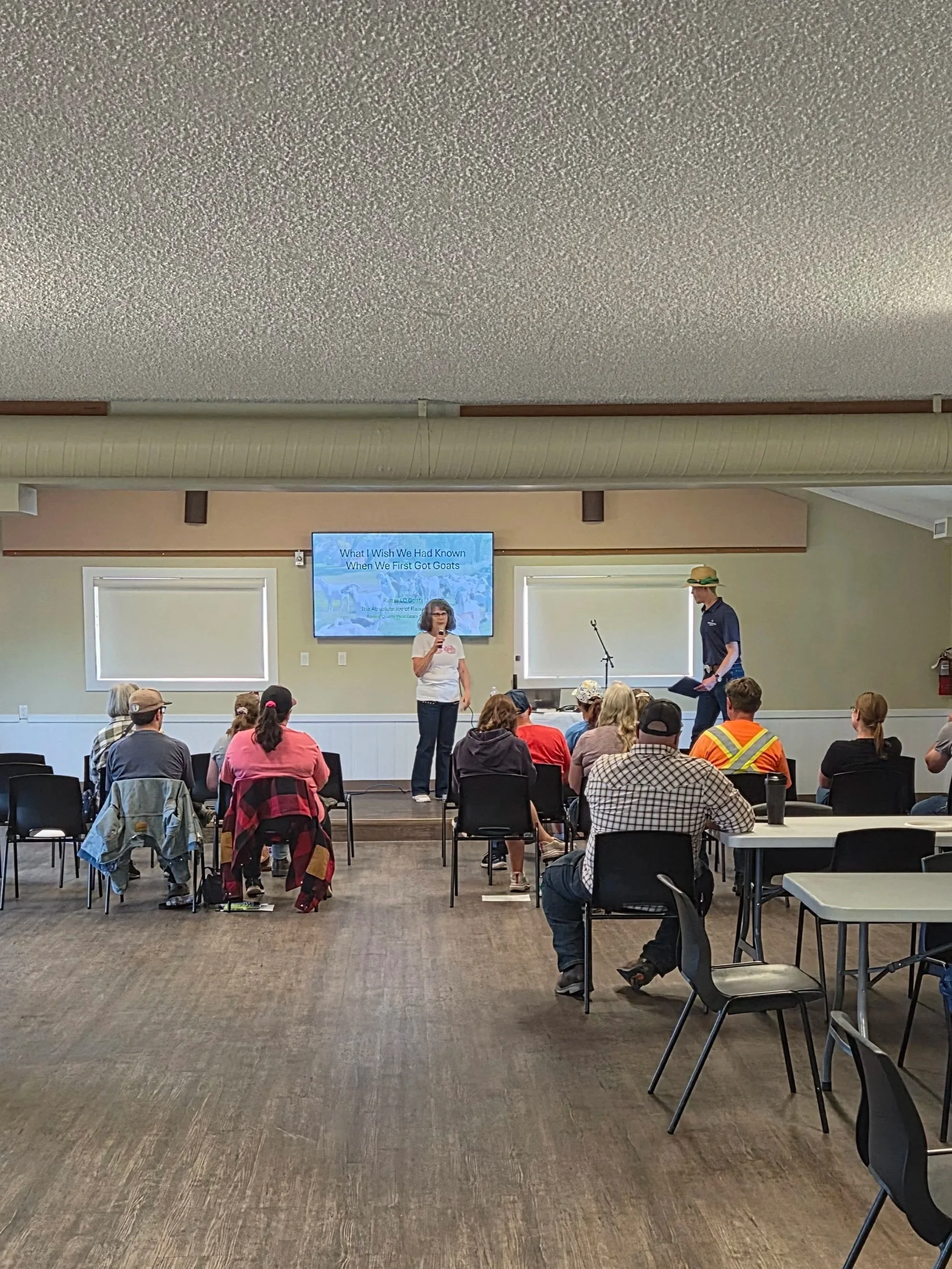
Throughout the evening, three producers shared practical advice drawn from years of experience, covering everything from choosing the right animals and feeding them well to keeping them healthy, managing predators, and marketing livestock. Rather than focusing on textbook recommendations, the speakers shared real experiences, practical lessons, and even a few mistakes they've learned from along the way.
Every Flock Starts with a Plan
Before purchasing animals, the speakers encouraged producers to think about what they wanted their flock to accomplish. Whether the goal is producing meat, raising breeding stock, fibre production, or simply keeping a few animals on an acreage, having a clear plan helps guide every decision that follows.
Les shared how his family got started with One Buck Farm in 2021 and has since grown a herd of approximately 30 to 40 Boer goats. He explained that building a successful operation doesn't happen overnight. Taking time to research markets, choose breeds that suit your goals, and understand your long-term plans will set you up for greater success than buying animals first and figuring things out later.
One important reminder throughout the evening was that goats are not small cows. Their nutritional, behavioural, and management needs are different, so producers should take the time to understand those differences before getting started. Attendees were also encouraged to ask questions, visit other farms, and learn from multiple producers, recognizing that every operation is unique and there is rarely one "right" way to do things.
Feed What They Need, Not What You Think They Need
Nutrition was one of the biggest topics of the evening, and the message was simple: test your feed.
Rather than guessing whether hay is meeting your animals' needs, feed testing provides the information needed to build balanced rations and identify nutritional deficiencies before they become problems. The speakers discussed how nutritional requirements change throughout the year, particularly for breeding females, growing lambs, and young kids, making it important to adjust feeding programs as animals move through different stages of production.
Producers were encouraged to work with someone who can help interpret feed test results and build a mineral program that complements both their forage and their production goals. Water quality was another topic producers were reminded not to overlook, as poor-quality water can reduce feed intake and animal performance just as quickly as poor-quality feed.
The discussion also touched on practical ways to improve feed efficiency. Something as simple as choosing the right feeder can reduce wasted feed, while understanding the nutritional differences between barley, oats, and wheat helps producers make informed feeding decisions. Marketing plans also influence feeding strategies, with examples shared of how December lambing can help producers reach desirable market weights before summer demand.
Spend Time Watching Your Animals
If there was one piece of advice repeated throughout the workshop, it was to spend time observing your animals.
Changes in body condition, behaviour, feet, eyes, coat quality, or udders are often the first signs that something isn't quite right. Knowing what is normal for your flock makes it much easier to recognize when an animal needs attention.
Rather than relying solely on routine treatments, herd health decisions should be based on what producers are seeing in front of them. Charlie described this approach as "low intervention, high observation," encouraging producers to let daily observation guide management decisions rather than simply following the calendar.
Good genetics were also highlighted as an important part of herd health. Selecting breeding stock with sound feet, good structure, longevity, and strong maternal ability helps build healthier, more productive flocks over time. Likewise, animals with poor feet or structural faults should not be kept simply because they are otherwise productive.
Managing Parasites Before They Become a Problem
Parasite management continues to be one of the biggest challenges for sheep and goat producers, and both speakers emphasized the importance of using a long-term strategy.
In fact, participants heard that parasites often pose a greater challenge than predators. Rather than routinely deworming every animal, producers were encouraged to use treatments strategically to slow the development of resistance. Rotational grazing, regular observation, and learning to recognize the signs of heavy parasite burdens all play an important role in keeping flocks healthy.
The Alberta Goat Association's FAMACHA training was also highlighted as a useful tool for helping producers assess parasite pressure and make informed treatment decisions.
Good Biosecurity Starts at the Gate
Protecting flock health begins long before new animals arrive on the farm.
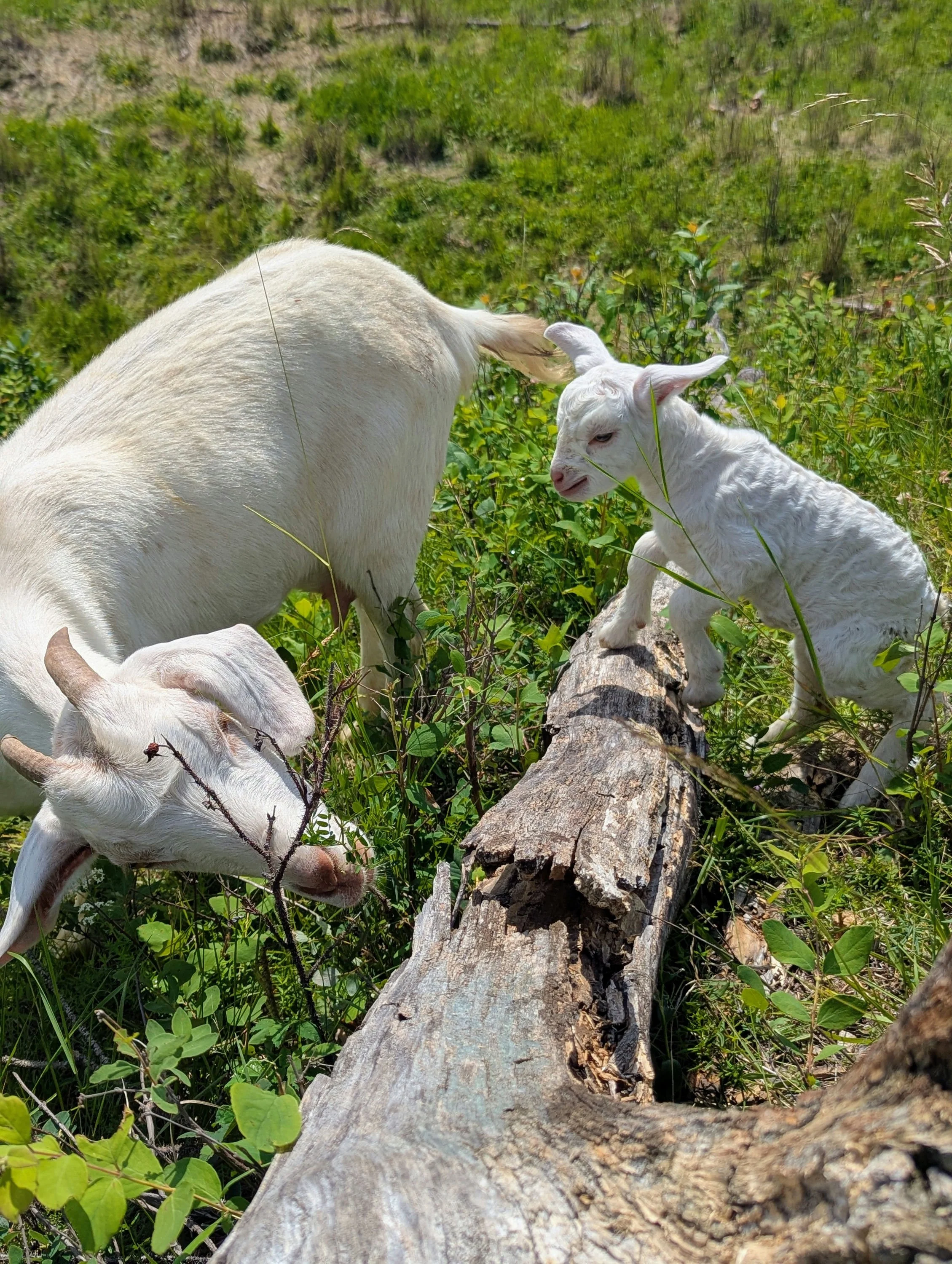
The speakers encouraged producers to visit farms whenever possible before purchasing animals, ask questions about herd health history, vaccination and parasite management programs, and observe how animals are managed in their home environment. Seeing animals in person often tells you far more than photos or online advertisements ever can.
Biosecurity also extends beyond new livestock. Knowing who and what comes onto the farm, carefully managing new arrivals, and maintaining clean facilities, feed bunks, and equipment all help reduce the risk of introducing disease into an existing flock.
Protecting Your Investment
Predator management generated plenty of discussion throughout the evening.
Livestock guardian dogs remain one of the most effective predator management tools when properly trained, but they require patience, perimeter training, and time to mature before they become reliable. The discussion also covered fencing options, including page wire combined with electric fencing and chain-link panels, with producers encouraged to invest in good fencing from the beginning, especially since goats have a reputation of being escape artists!
As with many aspects of livestock production, there isn't a single solution that works for every farm. Good fencing, well-trained guardian dogs, and sound management practices all work together to protect livestock.
Learning From Other Producers
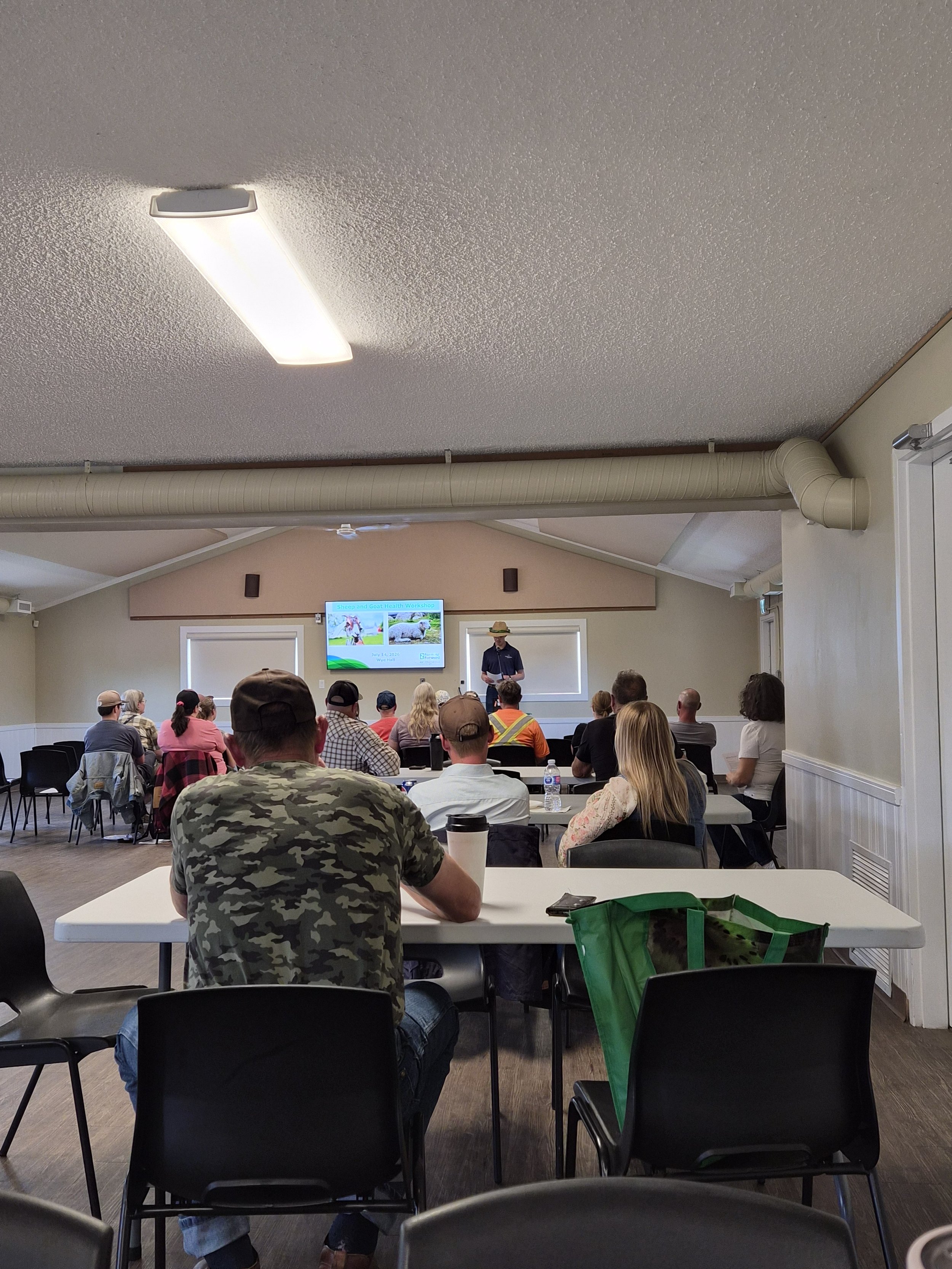
One of the highlights of the evening was the open conversation between presenters and attendees. Questions were welcomed throughout the workshop, creating opportunities for producers to compare experiences, discuss challenges, and learn from one another.
Charlie, Les and Melodi were open about sharing not only what has worked on their operations, but also the lessons they've learned through trial and error. They encouraged producers to continue learning through workshops, podcasts, producer organizations such as the Alberta Goat Association, Alberta Lamb Association and by building relationships with other producers.
Workshops like Flock Fundamentals remind us that successful sheep and goat production isn't built around one management practice. It comes from combining good nutrition, thoughtful herd health, sound biosecurity, effective predator management, and careful daily observation. Most importantly, it comes from being willing to keep learning and adapting what works best for your own operation.
A sincere thank you to Charlie, Les, Melodi, Strathcona County, and everyone who joined us for an evening of great discussion and practical learning. We look forward to seeing you at another Farming Forward event soon!