Growing Data: A Low-Cost Agricultural Moisture Sensor for Alberta Farms
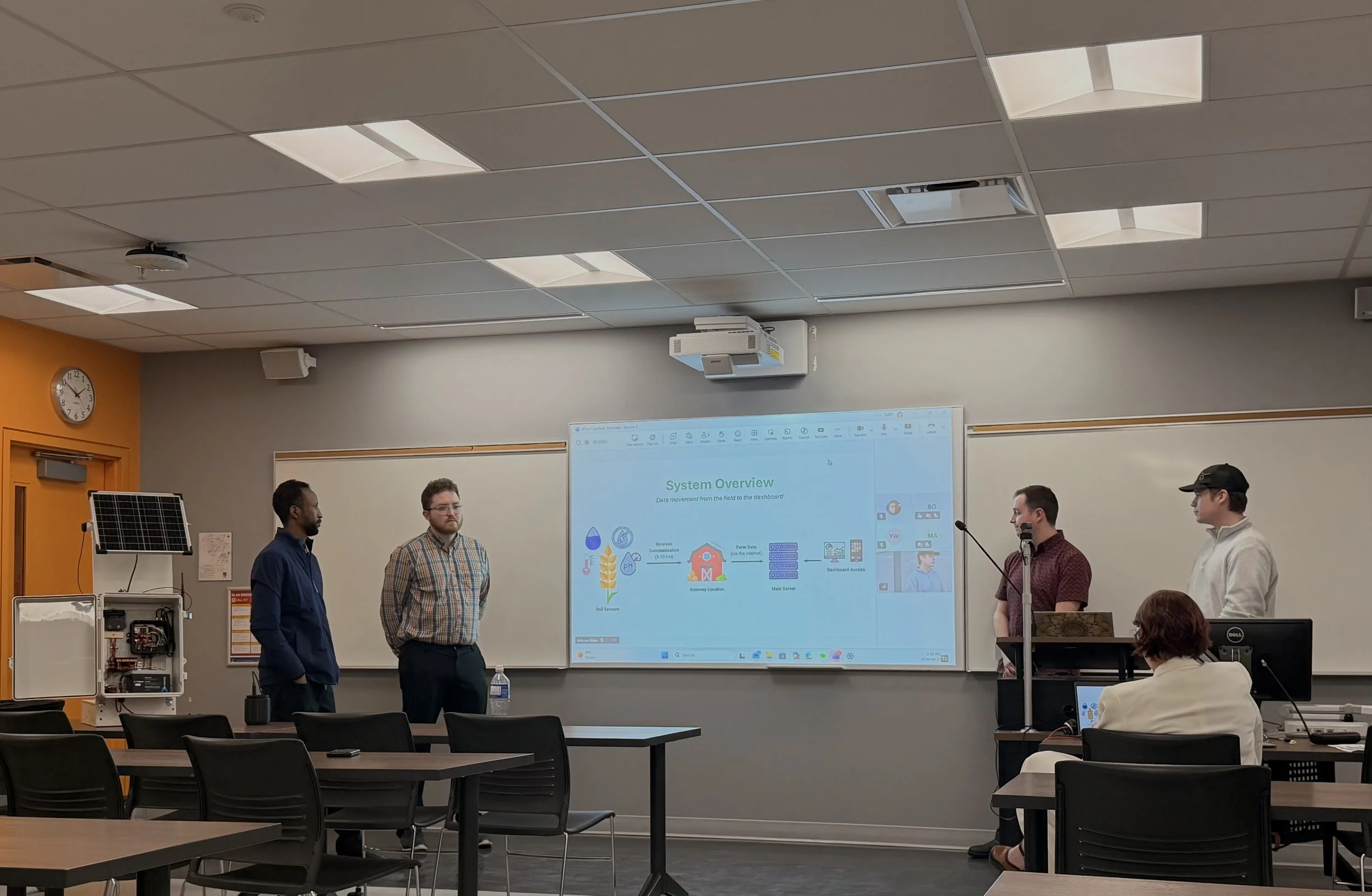
What if you could monitor soil conditions across your farm in real time, without a major investment? That’s exactly what a NAIT capstone team set out to explore in collaboration with Farming Forward, developing a low-cost, practical soil monitoring system designed with Alberta producers in mind, and on Friday, April 10, we attended the team’s final project presentation at NAIT.
A Practical Approach to Soil Monitoring
The goal was to create a system that is affordable, easy to use, and capable of collecting real-time data. The final design measures soil temperature, moisture, humidity, and pH, then wirelessly transmits that data back to a central hub.
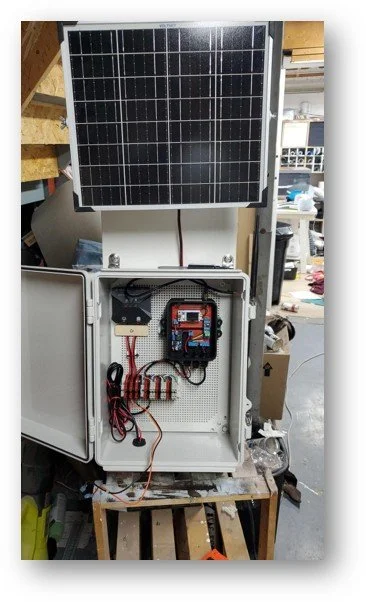
Each unit is built for remote use, powered by solar charging and designed with low energy consumption in mind. After sending data, the system enters a deep sleep mode to conserve power.
Built for the Field
Durability and reliability were key priorities. The units are weather-resistant and capable of transmitting data over distances of more than 7 kms. To prevent data loss, each unit stores information locally during outages and automatically uploads it once the connection is restored. The system also uses GPS-based timing to assign each unit its own communication window, helping avoid signal congestion when multiple units are in use.
User Friendly and Adaptable
The system can be configured through a phone using Wi-Fi, making it accessible without specialized technical knowledge. Each unit is housed in a 3D-printed enclosure, allowing for easy adjustments and future improvements. Cost was a major focus throughout the project, with units estimated at approximately $535 each, or $408 per unit when produced in batches.
Looking Ahead
One of the most promising aspects of the system is its flexibility. Future possibilities include handheld probes for spot checks and additional sensors for monitoring conditions like wind speed, daylight, or even grain bin storage.
For a closer look at how the system works and the full project details, watch the full presentation on our youtube channel.