ARECA Associations Bring Applied Research to the Legislature
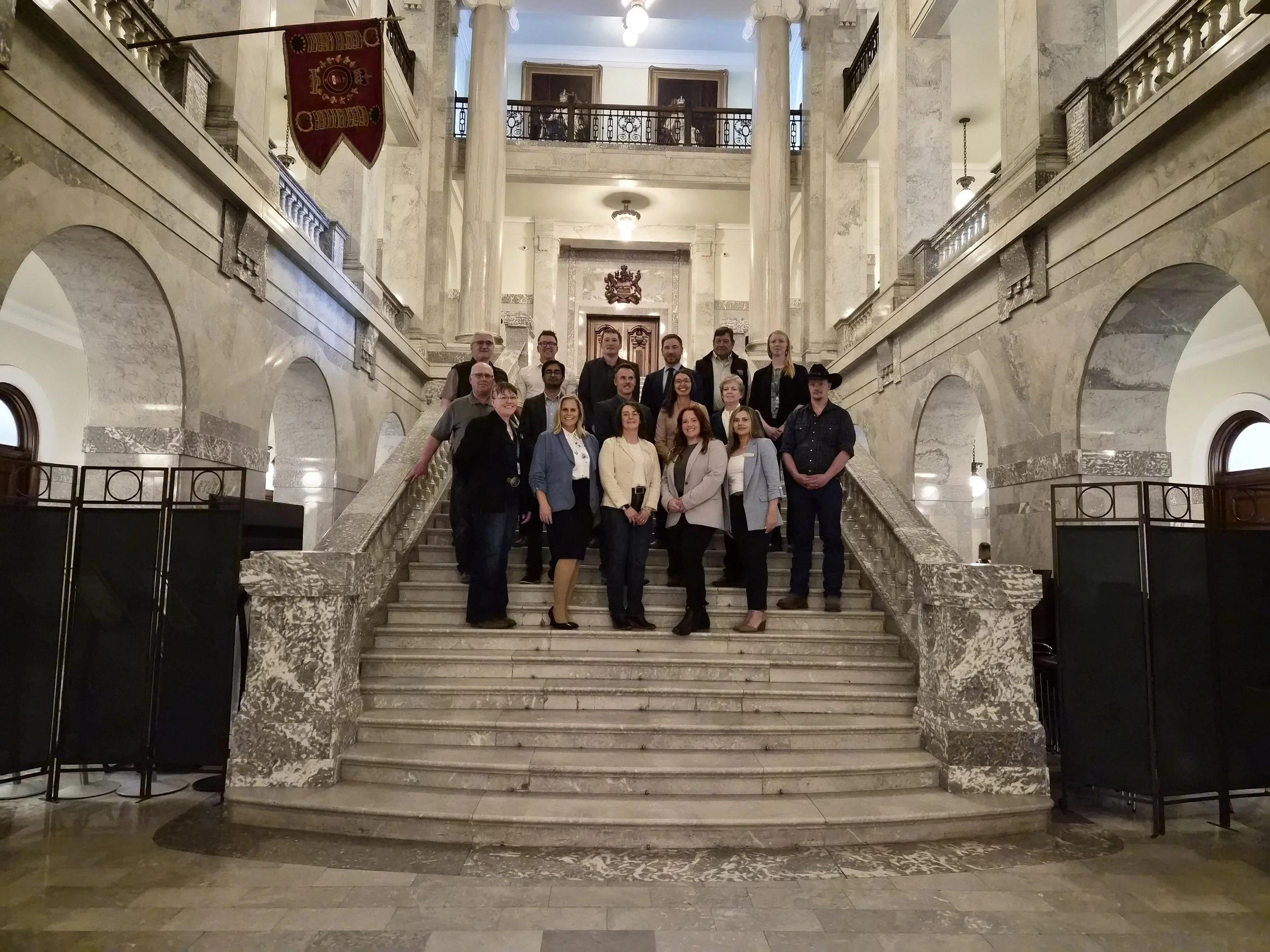
On Tuesday, May 12, representatives from Alberta’s Applied Research and Extension Council of Alberta (ARECA) member associations gathered at the Alberta Legislature for a day focused on advocacy, education, and connection. Participating organizations included Farming Forward Association (FFA), Gateway Research Organization (GRO), Central Alberta Livestock and Forage Association (CAFLA), Chinook Applied Research Association (CARA), Foothills Forage and Grazing Association (FFGA), Mackenzie Applied Research Association (MARA), North Peace Applied Research Association (NPARA), and Battle River Research Group (BRRG).
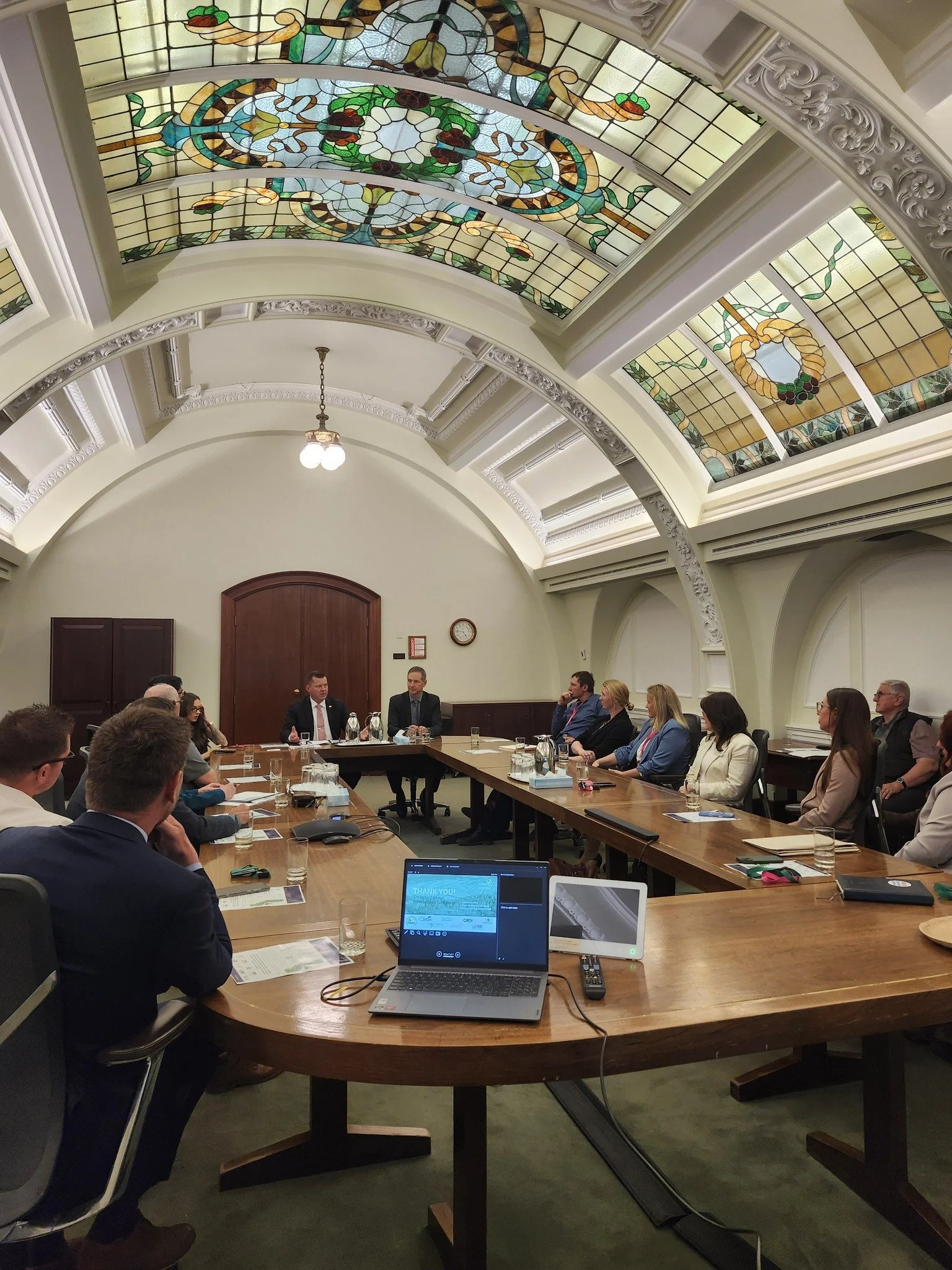
The visit provided an opportunity to showcase the important role Applied Research Associations play in strengthening Alberta agriculture through practical research, extension, and producer support. The group toured the Legislature, attended Question Period, and met with Alberta’s Minister of Agriculture and Irrigation, the Honourable RJ Sigurdson, Deputy Minister Jason Hale, and Chief of Staff Darby Crouch.
Bridging Research and the Farm Gate
A key focus of the discussion was the role Applied Research Associations play in connecting scientific research with real world agricultural practices. Across Alberta, these organizations work directly with producers to ensure research findings are not only accessible, but also adapted to the province’s diverse regional growing conditions, production systems, and environmental challenges.
Minister Sigurdson expressed strong support for the importance of research and extension in Alberta agriculture. Conversations emphasized how sustainability and profitability must work hand-in-hand for producers, and how organizations like ARECA member associations help bridge that gap by turning research into practical, usable solutions on the ground.
Farming Forward appreciated the opportunity to engage with the Minister and provincial leadership and values their continued commitment to Alberta’s agriculture industry.
A Walk Through Alberta’s Agricultural History
The Legislature tour itself offered a fascinating glimpse into Alberta’s history and the agricultural roots that helped shape the province.
Participants heard stories about the founding of the United Farmers of Alberta (UFA) in 1909 and its remarkable influence on provincial politics. The organization produced three Alberta premiers:
Herbert Greenfield (1921–1925)
John Edward Brownlee (1925–1934)
Richard Gavin Reid (1934–1935)
Portraits of these former premiers still hang proudly within the Legislature building today, serving as a reminder of agriculture’s lasting impact on Alberta’s development.
The tour also included a stop at the Legislature’s historic brass elevator, still marked by bullet damage from the tragic 1988 shooting incident that took place in the building. The elevator doors were never repaired, preserving a visible piece of Alberta’s history within the Legislature walls.

Moving Forward Together
The day built on the strength of collaboration between Alberta’s Applied Research Associations and government leadership. By continuing to support research, extension, and producer-focused innovation, Alberta’s agriculture sector remains well-positioned to meet future challenges while building a sustainable and profitable industry for generations to come.
Strychnine Use for Richardson’s Ground Squirrel Control
One important topic raised during the meeting was the reinstatement of 2% liquid strychnine for the control of Richardson’s ground squirrels. Minister Sigurdson advocated on behalf of Alberta producers during negotiations that resulted in approval for use between March 30, 2026, and November 1, 2027.
As part of the agreement, Alberta producers must follow specific stewardship, documentation, and reporting requirements. Access to strychnine will be limited to producers who complete mandatory training through the Saskatchewan Association of Rural Municipalities (SARM).
Producers interested in participating are encouraged to complete the training early:
SARM Strychnine Stewardship Training:
Additional information regarding procedures and regulatory requirements can be found on the Government of Alberta website:
Government of Alberta – Richardson’s Ground Squirrel Control:
Strychnine will be distributed through municipal Agricultural Fieldmen. Due to limited product availability, allocations will be restricted per applicant. The first shipment is expected in June, making early training an important step for producers who wish to access the program.
What is Strychnine?
Strychnine is a highly toxic alkaloid poison traditionally used as a pesticide for controlling burrowing rodents, particularly Richardson’s ground squirrels (“gophers”). It affects the central nervous system, causing severe muscle contractions and respiratory failure in animals that ingest it.
Strychnine occurs naturally in the seeds of plants native to India and Southeast Asia. While naturally derived, commercial strychnine products used in agriculture are highlyconcentrated and tightly regulated due to their toxicity.
The product is manufactured and distributed in Regina, Saskatchewan. The Saskatchewan Association of Rural Municipalities (SARM) plays a major role in stewardship and mandatory training programs associated with the product’s controlleduse.
Due to increasing international restrictions on toxic rodenticides, Canada’s supply chain for strychnine has become limited, which is one reason product availability remains restricted and carefully monitored.
Benefits of Strychnine Use
Effective Ground Squirrel Control: Richardson’s ground squirrels reproduce rapidly and can devastate hay land, pasture, cereals, and specialty crops. Strychnine is highly effective at reducing populations during outbreaks.
Reduced Crop Losses: Ground squirrels consume and damage crops directly while also creating burrow systems that interfere with seeding, harvesting, and irrigation.
Livestock Safety: Burrows create hazards for livestock, particularly horses and cattle, which can suffer leg injuries stepping into holes.
Lower Fuel and Equipment Costs: Compared to repeated mechanical control methods, chemical control can reduce repeated field passes and labour requirements.
Important During Population Peaks: In outbreak years, producers argue that alternative control methods alone are often insufficient at large scale.
Dangers and Concerns
Extreme Toxicity: Strychnine is poisonous to humans, pets, livestock, wildlife, birds and scavengers. Even very small quantities can be fatal.
Secondary Poisoning: Predators and scavengers can be poisoned by consuming contaminated rodents. This has been a major concern raised by conservation groups.
Animal Welfare Concerns: Strychnine poisoning causes severe muscle spasms and convulsions before death, making it one of the more controversial pesticides from an animal welfare perspective.
Environmental Risks: Improper bait placement or spills can contaminate soil and expose non-target species.
Human Safety Risks: Handling concentrated products requires training, protective equipment, careful storage, and accurate recordkeeping.