The 2025 AquaHacking Prairies Challenge Expedition — A Watershed Moment for Prairie Agriculture at Beautiful Dorothy Lake
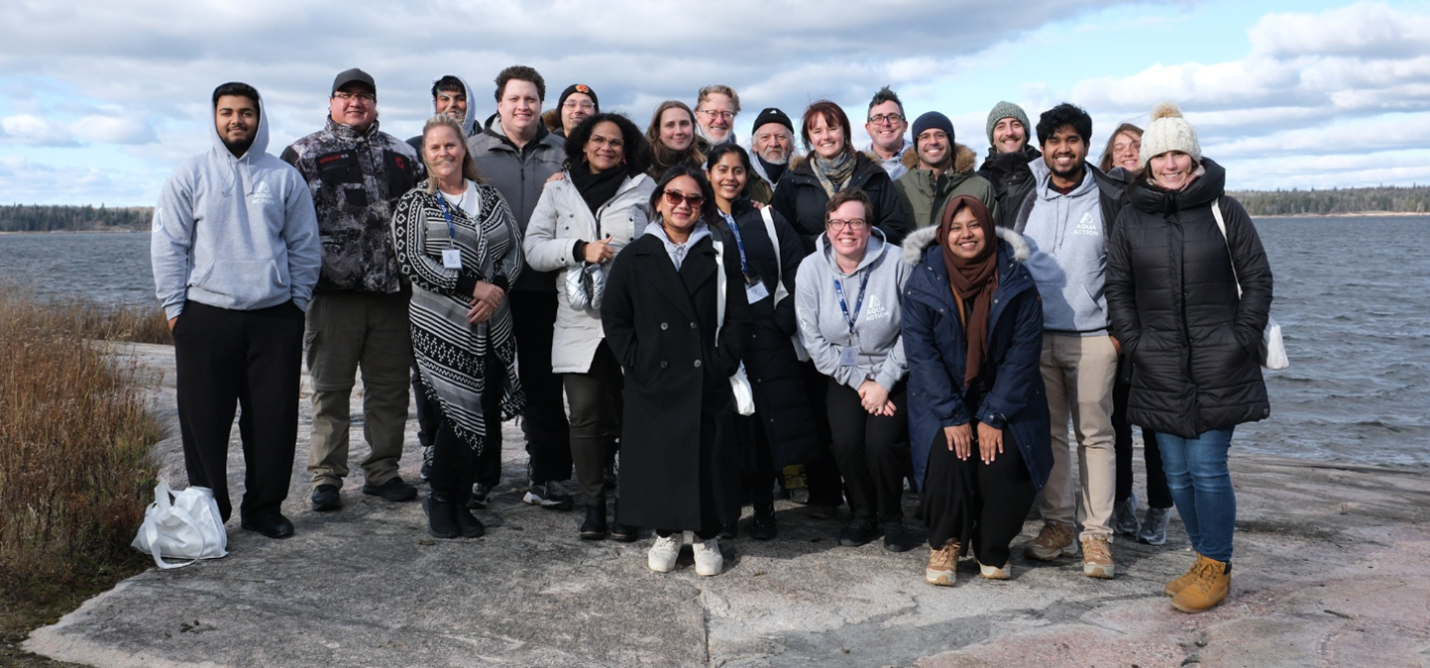
On November 15, 2025, I had the privilege of joining the top five AquaHacking Prairies finalists, Water Issue Leads, and Indigenous Knowledge Holders at Dorothy Lake, just outside Winnipeg. We gathered to learn, collaborate, and reflect on freshwater challenges facing the Prairie provinces. As the Water Issue Lead for the small-scale agriculture stream, I was proud to bring forward the realities farmers face daily—from drought-stressed dugouts to declining water quality—and to witness how today’s innovators are stepping up with tangible solutions.
Three Challenge Streams, One Shared Goal
The Prairies 2025 AquaHacking Challenge invited teams to choose one of three critical water-issue streams:
Small-scale agriculture water challenges
Invasive species detection and management
Community decision-making tools for extreme water events
Each team selected one focus stream and built a solution tailored to that problem. This framework created space for collaboration across disciplines while keeping each innovation deeply grounded in real-world needs.
Meet the Top 5 Finalists
The five finalist teams selected by AquaAction are already making their mark on water innovation across the Prairies. According to AquaAction, these finalists are leading the way toward a more sustainable blue economy.
NAID Solutions (Network Aid & Incident Data) - Bridging the Information Divide & Data Fragmentation
This startup is creating a web-based application that transforms local knowledge and real-time community reports into verified, geolocated evidence on an interactive map, ensuring urgent environmental warnings are seen and acted upon. By combining live reporting, sentiment analysis, and an accountability ledger, it preserves traditional knowledge and connects people facing shared challenges with those who can help.
Consilience – Drift-Eye Swarm (Autonomous Invasive Species Detection)
Deploying cost-effective autonomous devices that continuously monitor waterways and identify invasive species threats.Erilae – ReverBio (Bioacoustic Monitoring for Aquatic Invaders)
Using underwater microphones and AI to detect and track invasive species before visual identification is possible.Purus Aqua – Runoff Filtration Device
A passive trench-based filter designed to intercept agricultural contaminants and improve water quality feeding into dugouts and waterways.Tetra – Solar-Powered Water Purification Unit
An off-grid system capable of providing clean drinking water to remote or underserved communities.
Each solution aligns with one of the three challenge streams, and many offer potential cross-over benefits for Prairie agriculture, particularly in water quality monitoring and risk reduction.
Inside the Dorothy Lake Expedition
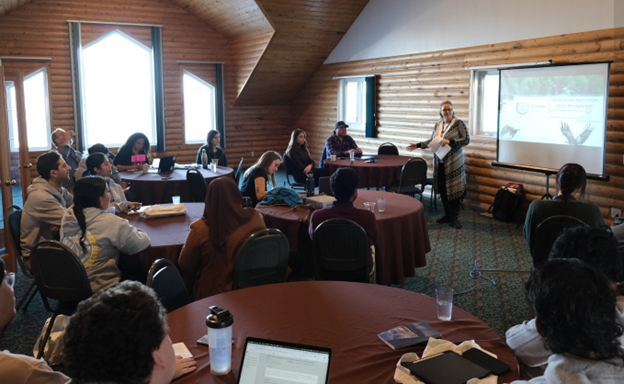
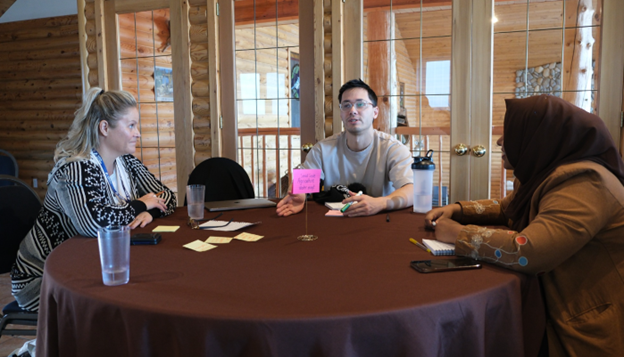
The three-day expedition blended field experiences, knowledge sharing, and hands-on learning. What stood out most was the integration of Indigenous Knowledge Holders, whose teachings on water stewardship, interconnectedness, and responsibility grounded the entire experience.
As the Water Issue Lead for small-scale agriculture, I shared insights from Prairie producers—everything from dugout evaporation and nutrient loading to barriers in water testing. In return, I learned from innovators refining their prototypes, Knowledge Holders offering place-based wisdom, and water experts helping teams strengthen their technical and social impact.
The entire gathering was an example of what collaboration should look like: respectful, solutions-focused, and rooted in multiple ways of knowing.
Why This Matters for Prairie Farmers
Today’s farmers are managing unprecedented water variability. Many are navigating:
Multi-year drought
Rapidly changing runoff patterns
Decreased recharge in dugouts and wells
Rising contamination risks
Limited tools and accessible information
The innovations emerging from this challenge have the potential to give farmers new, affordable, and practical tools—whether that’s testing water quality, identifying harmful blooms early, reducing contaminants, or understanding watershed risks.
This challenge is more than a competition. It’s a pipeline for real solutions that can strengthen farm decision-making and long-term water security.
Looking Ahead: Finals in Calgary
The five finalist teams are now preparing for the Grand Finale this February in Calgary, where they’ll present their evolved solutions and compete for seed funding and ongoing support.
Farming Forward will be watching closely—and exploring how these innovations can be connected with farmers across Alberta, Saskatchewan, and Manitoba. There is real opportunity here to pilot solutions, build partnerships, and help producers address their most pressing water challenges.
Personal Reflections
Representing small-scale agriculture water issues in this challenge has been deeply inspiring. These innovators are not only technically skilled—they are passionate, thoughtful, and committed to making water management more accessible for all.
The combination of Indigenous knowledge, entrepreneurship, and community-driven problem-solving gives me genuine hope for the future of Prairie agriculture. After spending time on the land at Dorothy Lake, listening, learning, and exchanging ideas, I left feeling optimistic: we’re moving toward a future where farmers have the tools they need to make informed water decisions, protect their operations, and strengthen our shared water systems.
Carri St. Pierre
Executive Director