Pioneer Corn Summit: Small Details, Big Imapct on Silage Quality
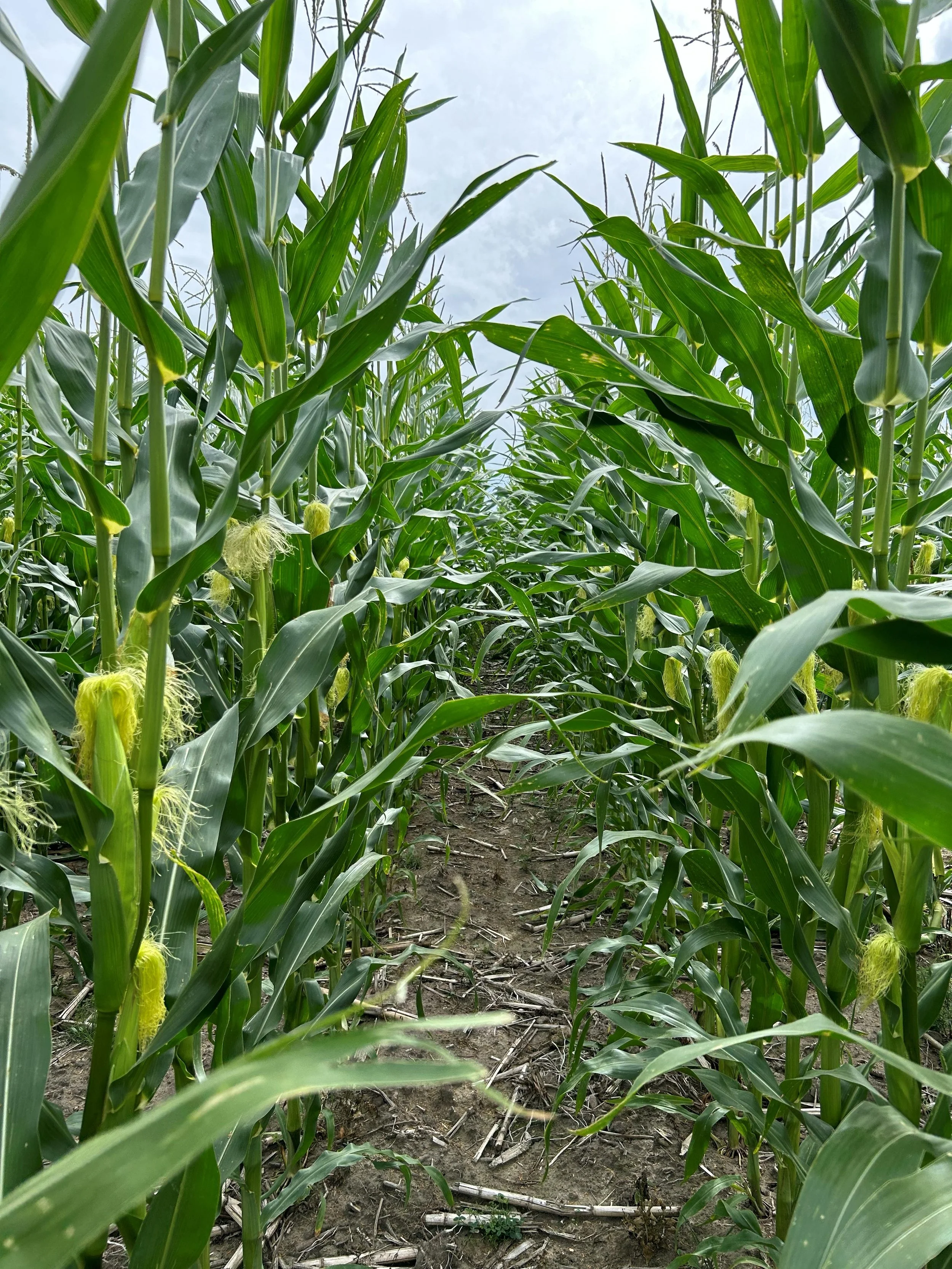
I had the chance to attend the Pioneer Corn Summit in Stony Plain on March 25, and it was one of those days where you come away with a notebook full of ideas, but more importantly, a clearer picture of how all the pieces fit together.
There were three main themes that stuck with me throughout the day:
Choose the right hybrid,
Get your crop established properly
Manage for feed quality right through to feeding.
Here are a few of the key takeaways I brought home.
It starts with choosing the right hybrid
Lloyd Van Eeden Petersman from Pioneer kicked things off with a focus on hybrid selection, something that sets the direction for the entire crop.
His message was straightforward, optimize photosynthesis by choosing a corn variety that fits your available heat units.
Corn is efficient at capturing sunlight, but only if it has enough time and heat to fully develop. In our region, that window can be tight. If a hybrid needs more heat than we can realistically provide, it won’t reach its full potential, especially when it comes to starch development.
And that matters because starch is where the energy is.
Research supports this connection between maturity and feed value (Allen, 2009). As corn matures, sugars are converted into starch, increasing energy content, but if maturity goes too far, digestibility can start to drop as kernels harden (Allen, 2009).
So really, hybrid selection is about balance, enough maturity to build starch, but not so much that you lose digestibility.
Getting the crop off to a uniform start
One of the most practical parts of Lloyd’s presentation was around seeding. These are the details that are easy to overlook when you’re busy, but they’re also the ones that can quietly cost you yield.
Key points he emphasized:
- Aim for about 30% moisture for germination
- Place the seed tip down, with the kernel perpendicular to the row
- Seed at a minimum depth of 1.5 inches
- Maintain even spacing across the row
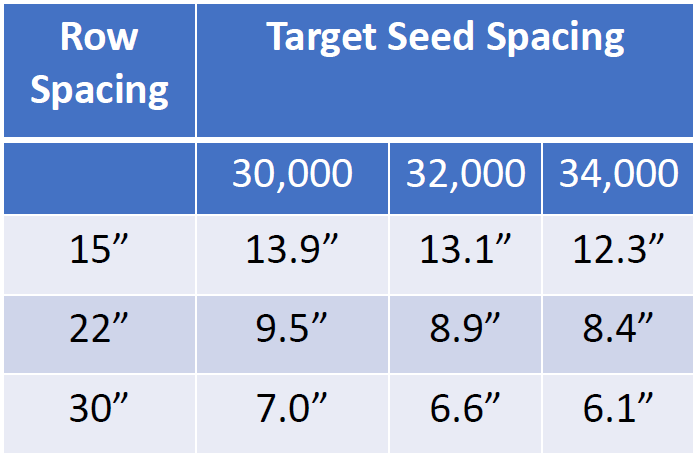
Suggested Seed Spacing
Adjust seed spacing according to row spacing and the number of plants you want to target.
The goal behind all of this is uniform emergence. If plants come up at different times, they compete with each other. Some dominate, some fall behind, and you end up with uneven maturity across the field. That shows up later as inconsistent silage quality.
Uniform crop, uniform feed, better results.
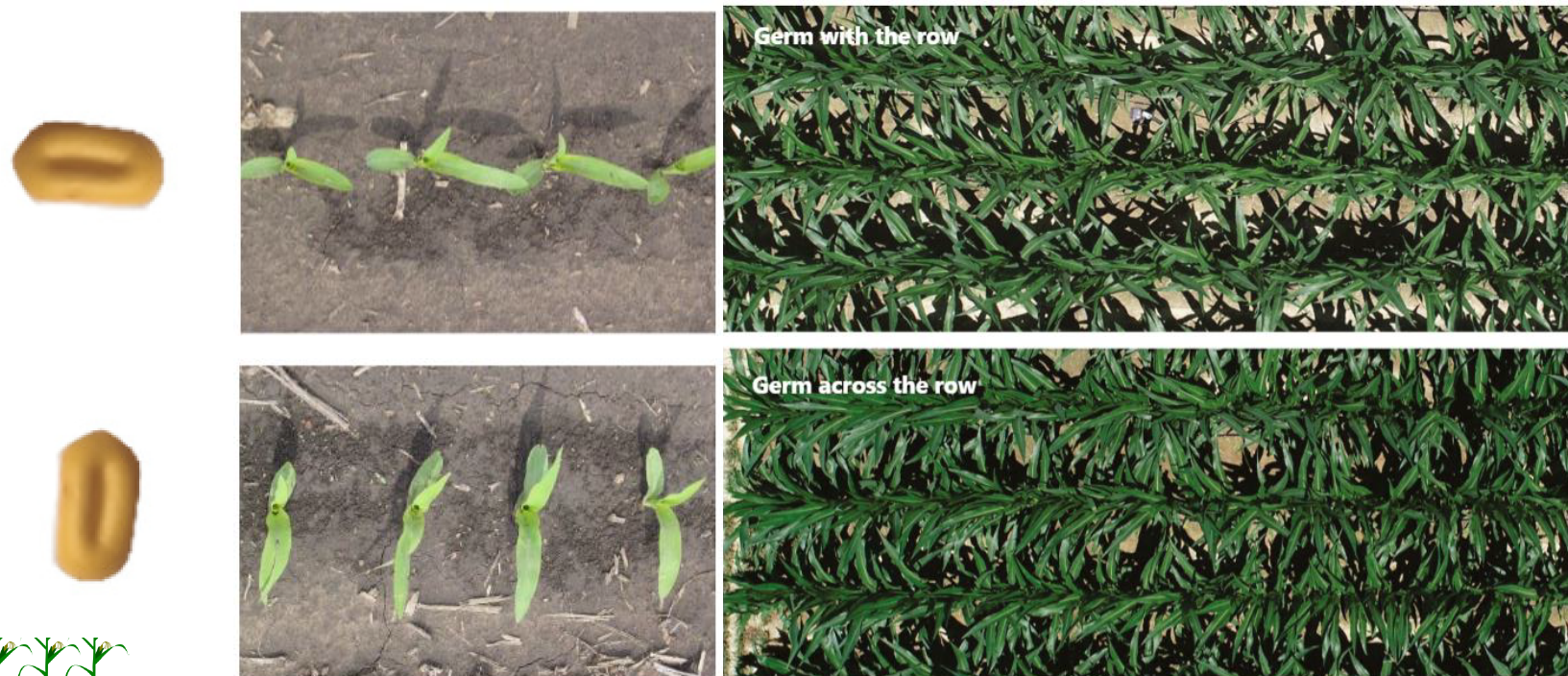
Image courtesy of Lloyd Van Eeden Petersman
Seed alignment to the row shows perpendicular placement covers a greater space and allows the plant to access more sunlight.
Where the value in corn silage really comes from
Mykala Davis, a ruminant nutrition consultant with Kickstart Nutrition Consulting, shifted the conversation from agronomy to feed.
One point that really stuck with me, about 60% of the dry matter in corn silage comes from the ears and kernels. That’s where the starch is stored, and that starch is the main energy source for livestock.
There’s also a strong relationship between dry matter and starch levels. As dry matter increases, starch content tends to increase as well, up to a point (Lauer, 2022).
So managing for both yield and quality really means managing for starch.
Hitting the right dry matter at harvest
Mykala recommended targeting 32–35% dry matter (DM) at harvest for optimal fermentation. That aligns well with research, which shows that corn silage harvested in roughly the 30–40% DM range results in better fermentation and overall feed quality (Garcia et al., 2003) . In addition, starch digestibility improves when silage is harvested and processed within this range (Golombeski, 2018).
If you harvest too wet:
You risk poor fermentation and nutrient loss
Too dry:
- Kernels harden
- Starch becomes less digestible
- Packing becomes more difficult
It’s a narrow window, but hitting it makes a big difference.
Don’t rush feeding, storage time matters
Another key takeaway was patience. Mykala recommended allowing corn silage to sit at least 6 months in storage before feeding. That might feel like a long time, but there’s a good reason for it.
During storage, fermentation continues to break down the protein structure around starch in the kernel, making that energy more available to the animal. Longer storage has been shown to improve starch digestibility and overall feed efficiency (Friedrichsen, 2023).
So even though it’s tempting to feed it early, there’s real value in waiting.
One size doesn’t fit every operation
Mykala shared a set of target nutrition goals to aim for when ensiling corn, along with typical ranges to help guide harvest and feed quality decisions.
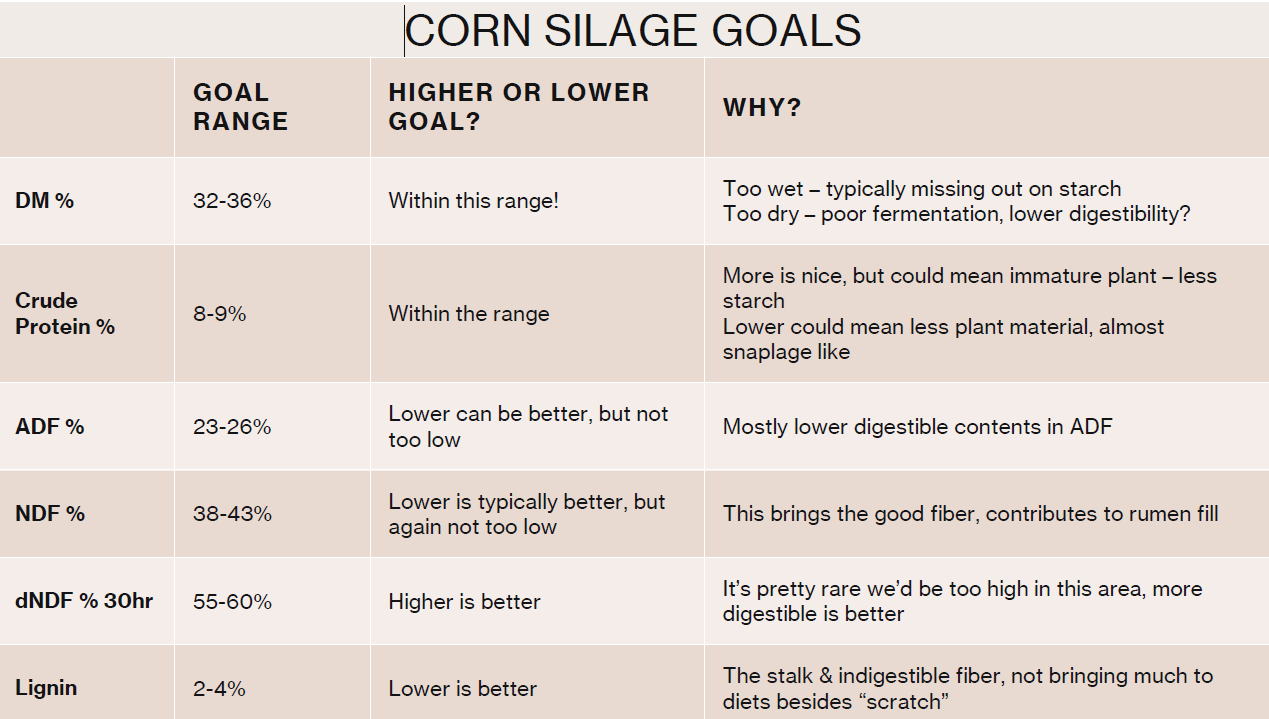
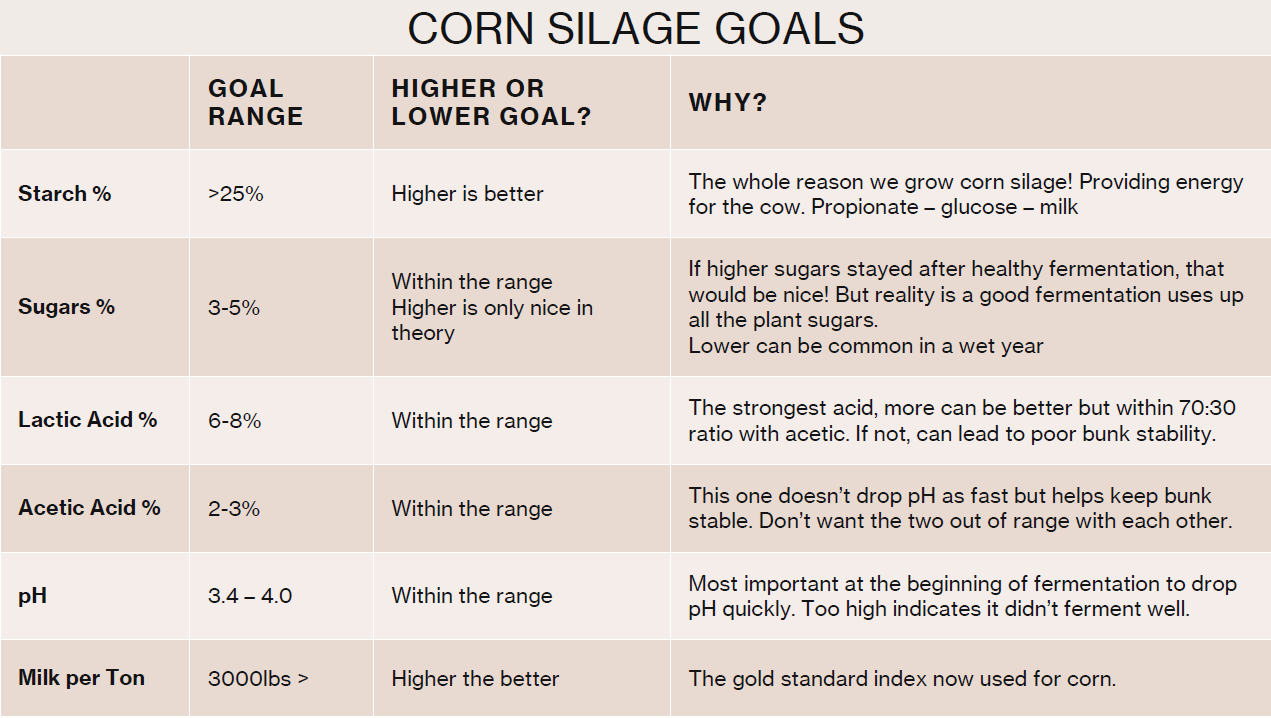
Images provided by Mykala Davis of Kickstart Nutrition, “Always work with your own nutritionist to fine-tune those targets.”
One thing I appreciated was that Mykala didn’t present these numbers as rigid rules. She noted:
“It’s important on the goals that sometimes you might want higher or lower depending on your operation, dairy vs beef for example. Also, labs might have a different way of calculating these, but they should be relatively the same.”
And that’s worth repeating. Your target dry matter, starch levels, and feeding strategy should match your system.
Contact Mykala Davis at Kickstart Nutrition Consulting
Earlage: a different way to harvest value
Kelly Olsen of Ole Farms in Westlock shared his experience with earlage, which is something we don’t always hear about locally.
Earlage is made by harvesting and ensiling the corn ear, including the grain and cob, rather than the whole plant.
According to NDSU (Hoppe & Tobin, 2024), earlage:
- Is a high-energy feed source
- Can increase feed yield by about 20% compared to grain alone
- Eliminates the need for grain drying
- Can be handled using similar equipment as silage
It’s also more energy-dense than traditional corn silage, though not quite as high as dry grain.
For producers looking to increase energy in rations, reduce purchased feed, and make use of existing silage equipment…it’s an option worth exploring.
It’s all connected
Looking back, the biggest takeaway from the day wasn’t any one number or recommendation. It was how everything builds on everything else.
- Hybrid selection affects maturity and starch
- Seeding affects uniformity and yield
- Harvest timing affects fermentation
- Storage affects digestibility
- Feeding strategy affects performance
You can’t really separate one from the other. And that’s what makes corn both challenging and exciting, there’s a lot of opportunity to improve results just by tightening up the details.
References:
Allen, M. (2009). Maximizing digestible intake of corn silage-based diets (Part 2). Michigan State University.
https://www.canr.msu.edu/uploads/234/76578/Maximizing2.pdf
Lauer, J. (2022). Corn silage starch content & dry matter relationship. University of Wisconsin–Madison.
https://www.midwestforage.org/pdf/1569.pdf.pdf
Hoppe, K & Tobin, C. (2024). Harvesting, storing and feeding corn as earlage. North Dakota State University Extension.
https://www.ndsu.edu/agriculture/extension/publications/harvesting-storing-and-feeding-corn-earlage
Garcia, A., Thiex, N., Kalscheur, K., & Tjardes, K. (2003). Interpreting corn silage analysis. South Dakota State University Extension. Extension Extra / Open PRAIRIE Resource
https://openprairie.sdstate.edu/cgi/viewcontent.cgi?article=1124&context=extension_extra
Friedrichsen, A. (2023). Make these adjustments for dry corn silage. Hay & Forage Grower
https://hayandforage.com/article-4618-make-these-adjustments-for-dry-corn-silage.html
Wisconsin Corn Agronomy. Silage quality and feeding
https://corn.agronomy.wisc.edu/Silage/S006.aspx
Golombeski, A. (2018). Maximizing corn silage qualtiy by monitoring dry matter. Hubbard Feeds.
https://www.hubbardfeeds.com/blog/maximizing-corn-silage-quality-monitoring-dry-matter?utm_source=chatgpt.com
This article also includes insights from presentations at the Pioneer Corn Summit (Stony Plain, AB), including speakers from Pioneer and Kickstart Nutrition, alongside extension and research sources.