Small Herd, Big Impact: What Are Goats Doing to the Brush?
Farming Forward's targeted goat grazing demonstration is showing how browsing can influence woody vegetation and potentially make more pasture available for cattle.
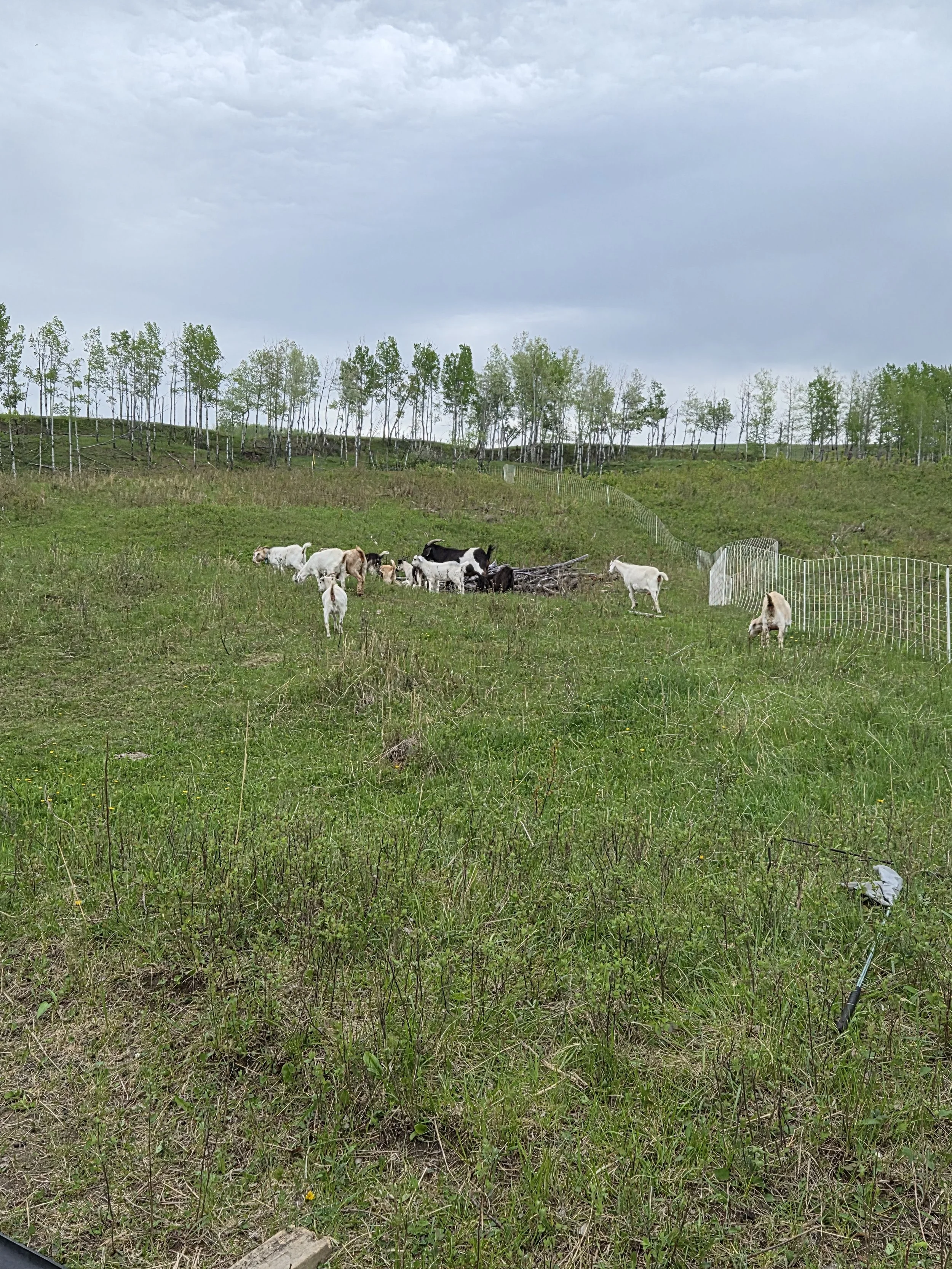
Can goats help manage unwanted brush and bring underused pasture back into production? That's what Farming Forward set out to explore through a targeted goat grazing demonstration near Sangudo, Alberta.
Working with local goat producer Tamara Salmon, the project is examining how goats can be used to manage woody vegetation in areas where dense brush has limited cattle access. Rather than relying on mechanical clearing or herbicides, the demonstration is exploring whether goats can help control unwanted growth while maintaining the diversity of plants already growing in the pasture.
Throughout the growing season, Farming Forward monitored vegetation in areas accessible to goats and compared them with protected areas where goats could not browse. By tracking stem counts over time, the project provides a closer look at how vegetation responds to grazing and how that response varies across the landscape.
What Did We See Across the Four Sites?
Study Site 1: A Growing Difference
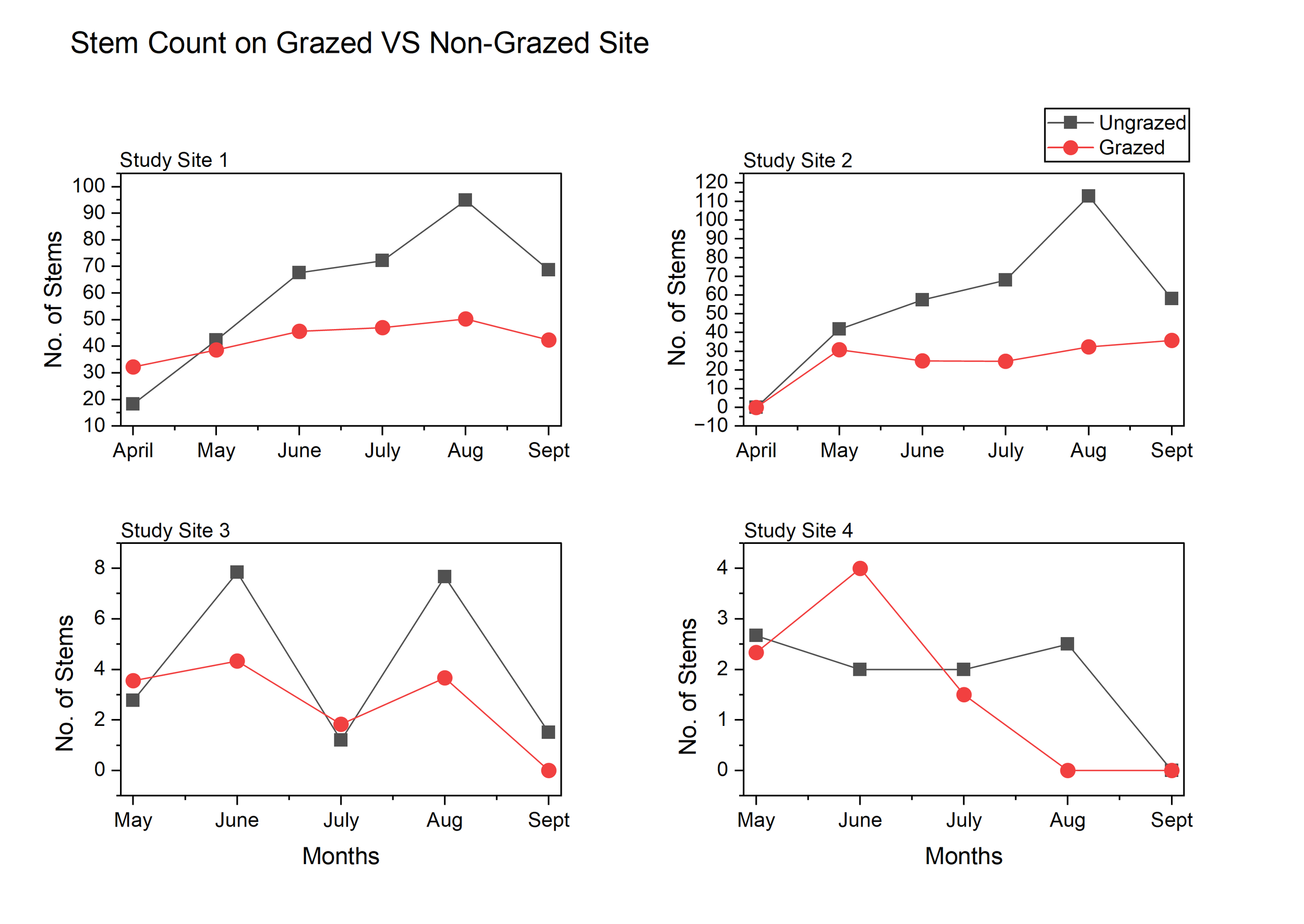
At the beginning of the season, stem counts were relatively similar between the grazed and ungrazed areas. As the summer progressed, however, the difference became much more noticeable.
In the ungrazed area, stem counts increased from approximately 18 in April to a peak of 95 in August before declining to around 69 in September. Meanwhile, the grazed area remained comparatively steady, generally ranging between 32 and 50 stems.
By late summer, the ungrazed area had nearly twice as many stems as the grazed area. This suggests that goat browsing may have helped limit the increase in standing stems as the season progressed.
Study Site 2: The Clearest Response to Grazing
Site 2 showed the largest difference between the two treatments.
Both areas started with very few stems in April. By August, the ungrazed area had increased to approximately 112 stems, while the grazed area remained around 32.
Although stem counts in the ungrazed area declined in September, they were still considerably higher than in the grazed area.
This site provides a particularly good example of how goats may help manage vegetation growth. Repeated browsing can remove new shoots and leaves, potentially reducing the ability of woody plants to continue growing vigorously.
Study Site 3: A More Variable Response
Unlike the first two sites, Site 3 showed much lower stem counts and greater fluctuations throughout the season.
In the ungrazed area, counts rose in June, dropped sharply in July, increased again in August, and declined by September. The grazed area followed a different pattern, with generally lower fluctuations and no stems recorded in September.
While the ungrazed area had more stems during June and August, the difference was not consistent across every month.
These observations highlight an important point: not every part of a pasture responds to grazing in the same way. Existing vegetation, plant species, growing conditions, and how frequently goats visit an area can all influence the results.
Study Site 4: Little Difference Between Treatments
Site 4 had the lowest stem counts of all four locations, with fewer than five stems recorded during each monitoring period.
Both grazed and ungrazed areas showed relatively small changes throughout the summer. The grazed area reached its highest count in June before declining to zero by August, while the ungrazed area remained around two to three stems until both reached zero in September.
With so few stems present, there was less opportunity to observe a substantial difference between the treatments.
This suggests that the benefits of targeted browsing may be easier to observe in areas with heavier woody vegetation than in areas where stem counts are already low.
What Does This Mean for Producers?
Across the four monitoring sites, the most noticeable differences occurred where vegetation was more abundant, particularly at Sites 1 and 2. In both locations, ungrazed areas experienced substantial increases in stem counts throughout the summer, while grazed areas remained comparatively lower.
The demonstration also reinforces the importance of matching grazing management to the conditions of the pasture. Areas with dense woody vegetation may offer the greatest opportunity for goats to make a visible difference, while areas with limited brush may show a smaller response.
For cattle producers, the potential benefit goes beyond reducing unwanted vegetation. Dense brush can restrict cattle movement and leave otherwise productive grass difficult to access. By browsing shrubs and opening up these areas, goats may help make more forage available for cattle.
As Salmon describes it, goats and cattle can complement one another by selecting different parts of the pasture's vegetation. Goats are particularly well suited to browsing shrubs and broadleaf plants, while cattle make greater use of grasses.
A Promising Start, With More to Learn
The first season of monitoring provides encouraging observations, particularly in the areas with heavier vegetation. However, stem counts alone do not tell the whole story. Changes in stem numbers can reflect seasonal growth, plant differences, and grazing pressure, and fewer stems do not necessarily mean the brush has been permanently controlled.
The real test will be how the vegetation responds over time. Will heavily browsed shrubs return with the same vigour next spring? Will additional grass become available for cattle? And can these benefits be achieved with a practical amount of labour and fencing?
These are the questions Farming Forward hopes to better understand through continued observation and producer feedback.
For now, the demonstration is showing that a relatively small herd of goats can make a visible difference in brush-heavy pasture. For producers looking for another way to manage difficult acres, targeted goat grazing may be a tool worth considering.
Sometimes, making more room for grass starts with putting goats to work on the brush.