What The Frost Seeding Plots Told Us
Frost seeding sounds simple: broadcast seed onto frozen ground and let spring do the rest. Our August 18 tour near Mayerthorpe explored what happens next. The Frost Seeding Project is a producer-led cooperator project with Raymond Chittick. Farming Forward is assisting with the work and the project is funded by Results Driven Agriculture Research (RDAR).
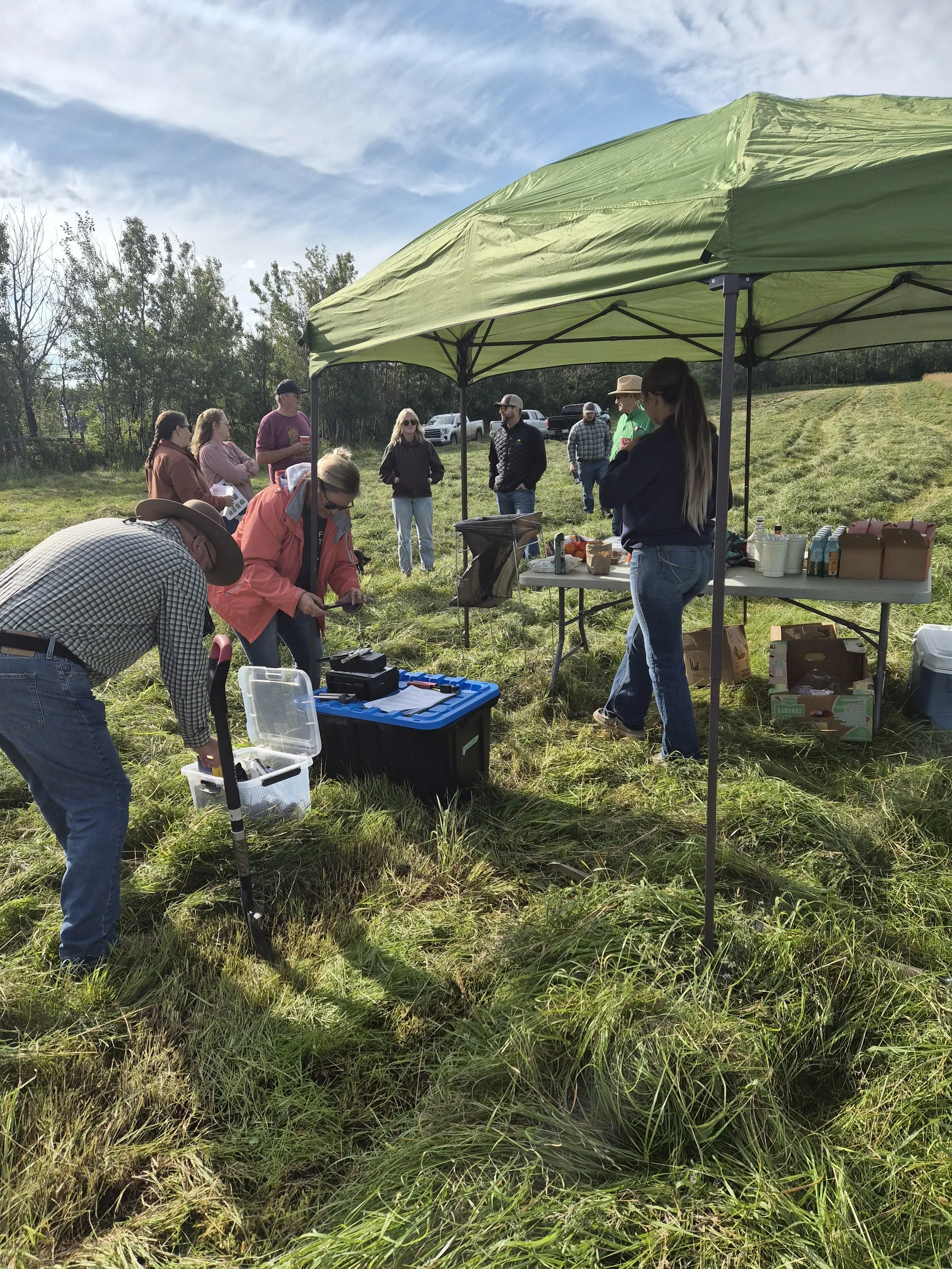
Raymond’s question: what will grow here?
Raymond approached the project as a question, not a recipe. The trial compares dormant seeding in December with spring seeding in April, and EcoTea-treated seed with untreated seed. The blend was broadcast with a Valmar at about 18 pounds per acre. The rate was increased to account for losses from surface broadcasting.
The 15-species blend was chosen for functional group, season hardiness, and benefits to either soil or animal health:
Legumes: birdsfoot trefoil, red clover, cicer milkvetch, hairy vetch, sweet clover and Persian clover
Grasses: perennial ryegrass, meadow fescue, orchardgrass and Melpetra ryegrass
Broadleaves and brassicas: chicory, forage collards, plantain, purple top turnip and phacelia
We don't expect to see many of the species seeded this year until next year. However, Hairy vetch was easy to find, clovers were becoming more visible and a few chicory seedlings had appeared. Orchardgrass was harder to judge because it was already growing and reseeding itself in the pasture. Raymond noted that a wet year will favour different plants than a dry one. Diversity gives the field more ways to respond and provides optimal nutrition to supercharge the soil microbiome.
“If you want to change one thing on the farm, it’d be diversity. Because without even knowing what you’re doing, you’re going to see improvements.”
Raymond Chittick
Read what the field is showing you
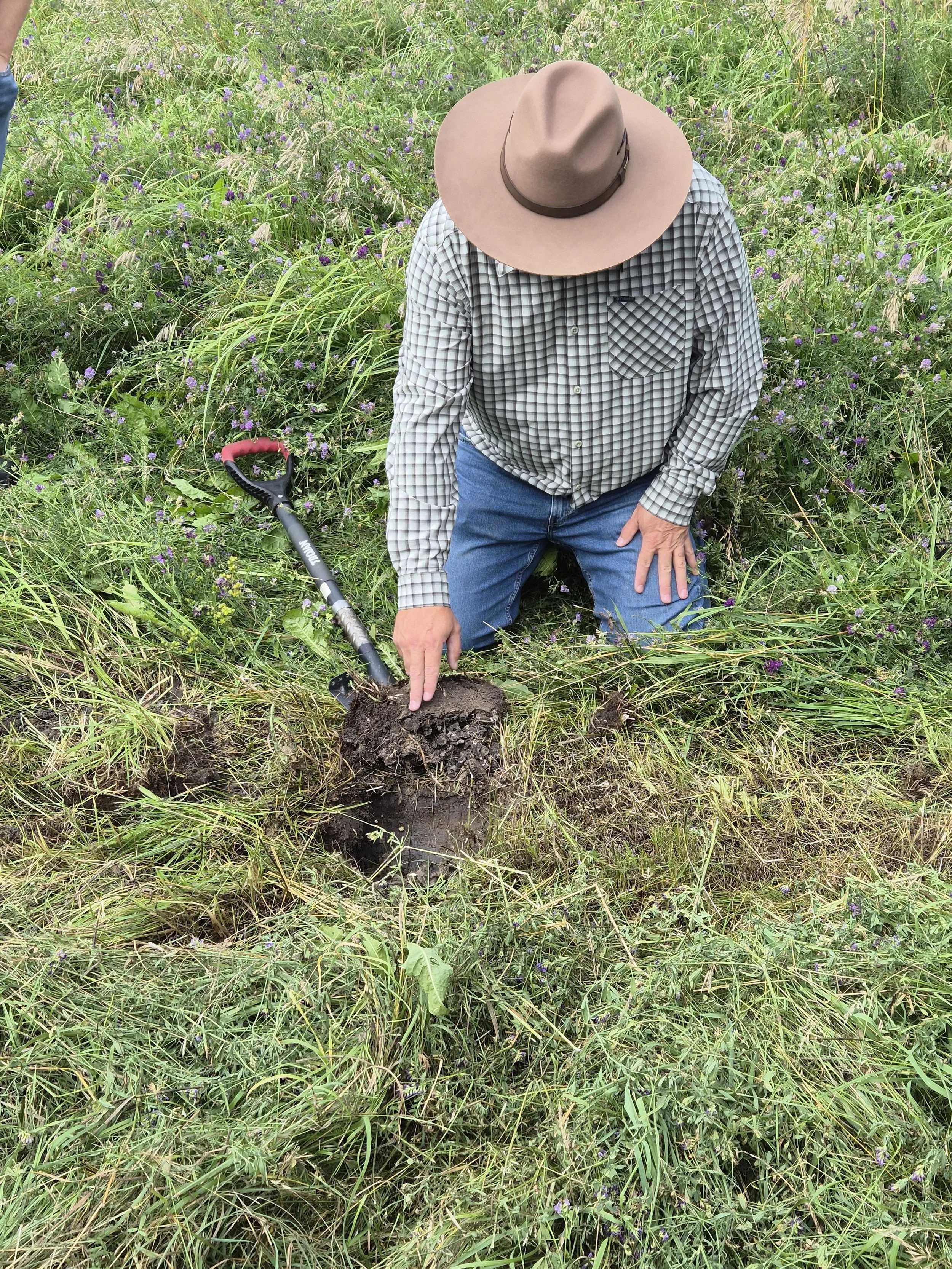
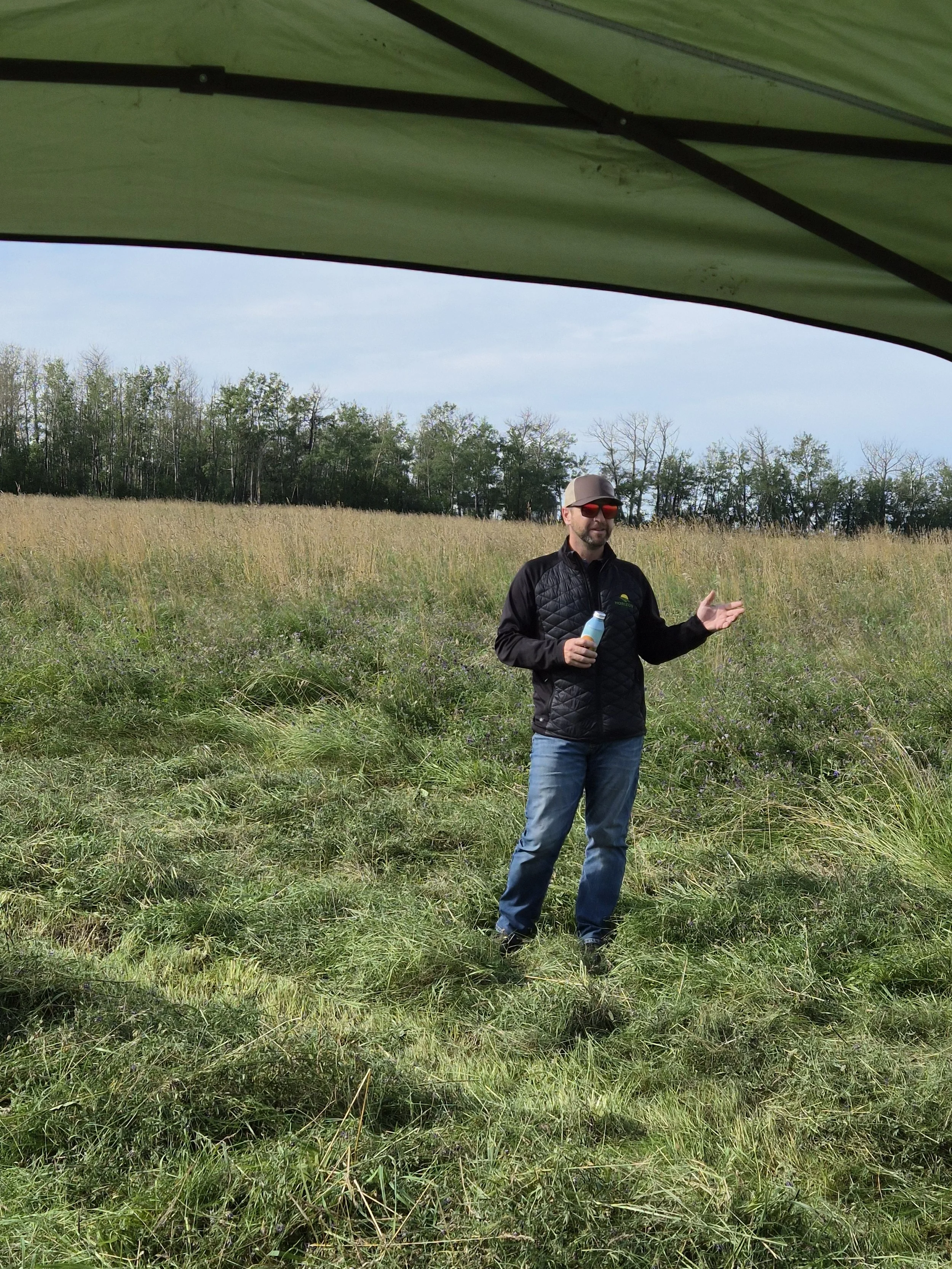
Guest speaker Kevin Elmy began with a shovel. He asked producers to look at root direction, old root channels, aggregation and residue breakdown. He also demonstrated aggregate stability, Brix and microbiometer testing. A number, he explained, becomes more useful when it helps compare treatments or track change over time. Kevin also encouraged the group to notice which plants and weeds were thriving. A patch of clover, a bending root or a recurring weed may offer clues about fertility, compaction, moisture or soil biology. The observation is not an answer on its own, but it can point producers toward a better question and narrow down what the soil requires.
“Let your field do the talking.”
Kevin Elmy
The questions kept coming
Producers asked about forage mix species selection, biological seed treatments, grazing timing and how to set seeding rates in a diverse blend. Kevin encouraged the group to think in seeds per square foot, then adjust for seed size, plant shape, expected mortality and seeding method. One brassica seedling occupies far more space than one small grass seedling, so pounds per acre does not tell the whole story.
Hairy vetch raised another question about farm fit. It established well in the plots and can offer late-season feed and nitrogen fixation, but it may also reseed. That can be welcome in a perennial pasture and less welcome before a cash crop such as canola.
Grazing management was part of the conversation too. Raymond rests this pasture through August and much of September, which gives perennial plants time to rebuild reserves before cattle return after dormancy. That rest may help explain why orchardgrass has continued to spread through natural reseeding.
The tour did not produce one frost seeding formula; it reinforced the value of observing, comparing and adjusting. Farming Forward will follow the treatments to see what establishes, what persists and how the plots respond next season.
“We’re always learning. There is no finish line.”
Kevin Elmy
Kevin’s books, Not Just Dirt and Cover Cropping in Western Canada are available on his website here: http://www.covercropping.ca/