So Much to See, So Much to Sort Through: Our Final Takeaway from Ag in Motion
You can look at the Ag in Motion map before you arrive, make a list of stops and think you have a pretty good idea of what you're walking into. Then you get there.
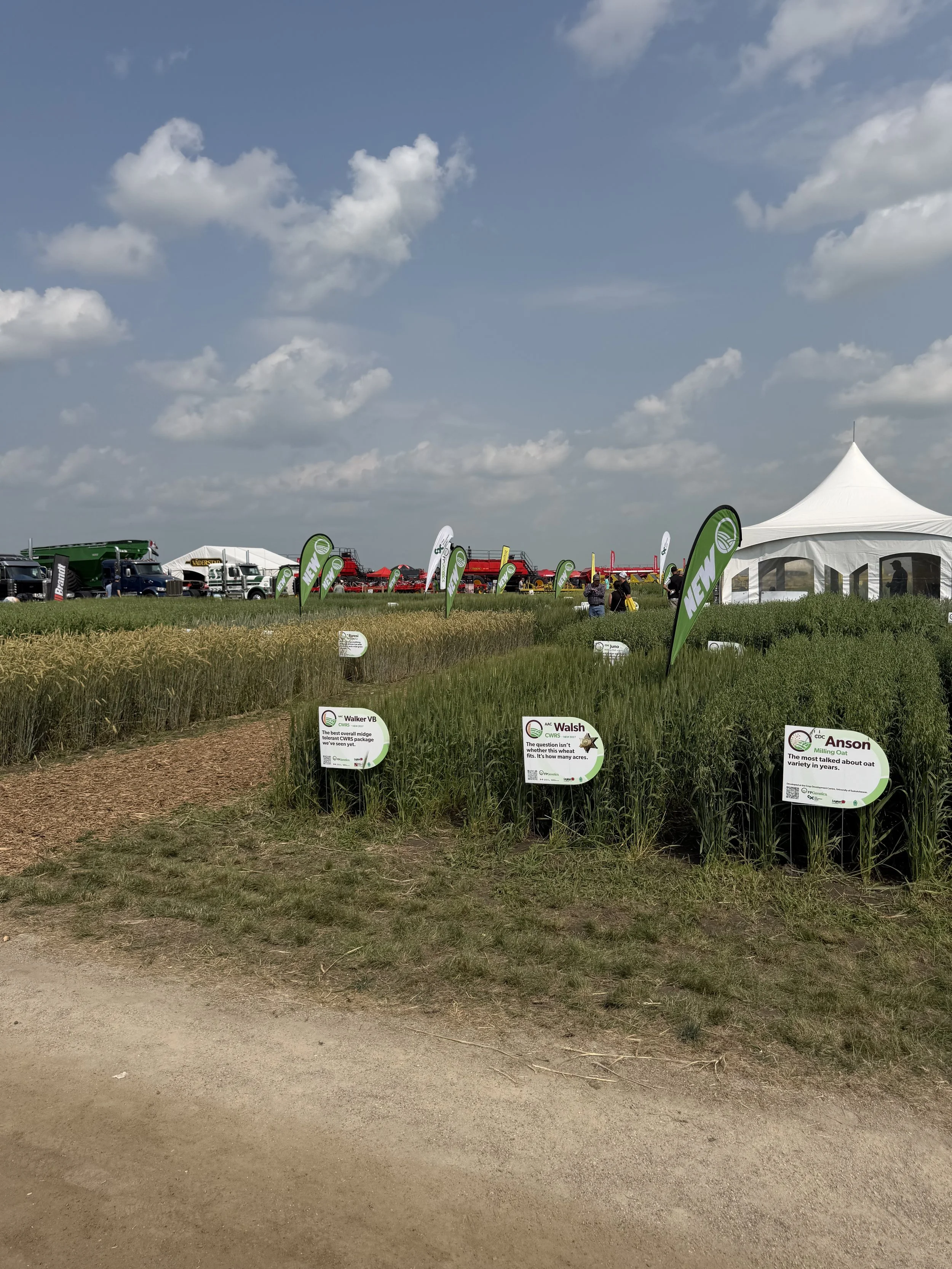
The sheer size of Ag in Motion was probably one of my biggest takeaways from our trip to Langham, Saskatchewan this summer. Everywhere we turned there was another piece of equipment, crop plot, company, demonstration or technology to investigate. Ag in Motion describes itself as Western Canada's largest outdoor farm expo, attracting more than 30,000 attendees and 550 exhibitors.
It is one thing to read those numbers. It is another to start walking. We didn't make it to everything, and I don't think you really can. Instead, we wandered, stopped when something caught our attention and had conversations with people working on everything from crop nutrition and biologicals to new technology and equipment.
That ended up being one of the best parts of the experience.
Agriculture Has a Lot of New Tools
There is no shortage of new technology being developed for agriculture.
The 2026 Ag in Motion Innovation Program alone recognized technologies involving autonomy, drone swathing, precision fertility, farm management software, biological seed treatments, feeding equipment and some very large machinery.
Walking the grounds made the pace of that development much more tangible.
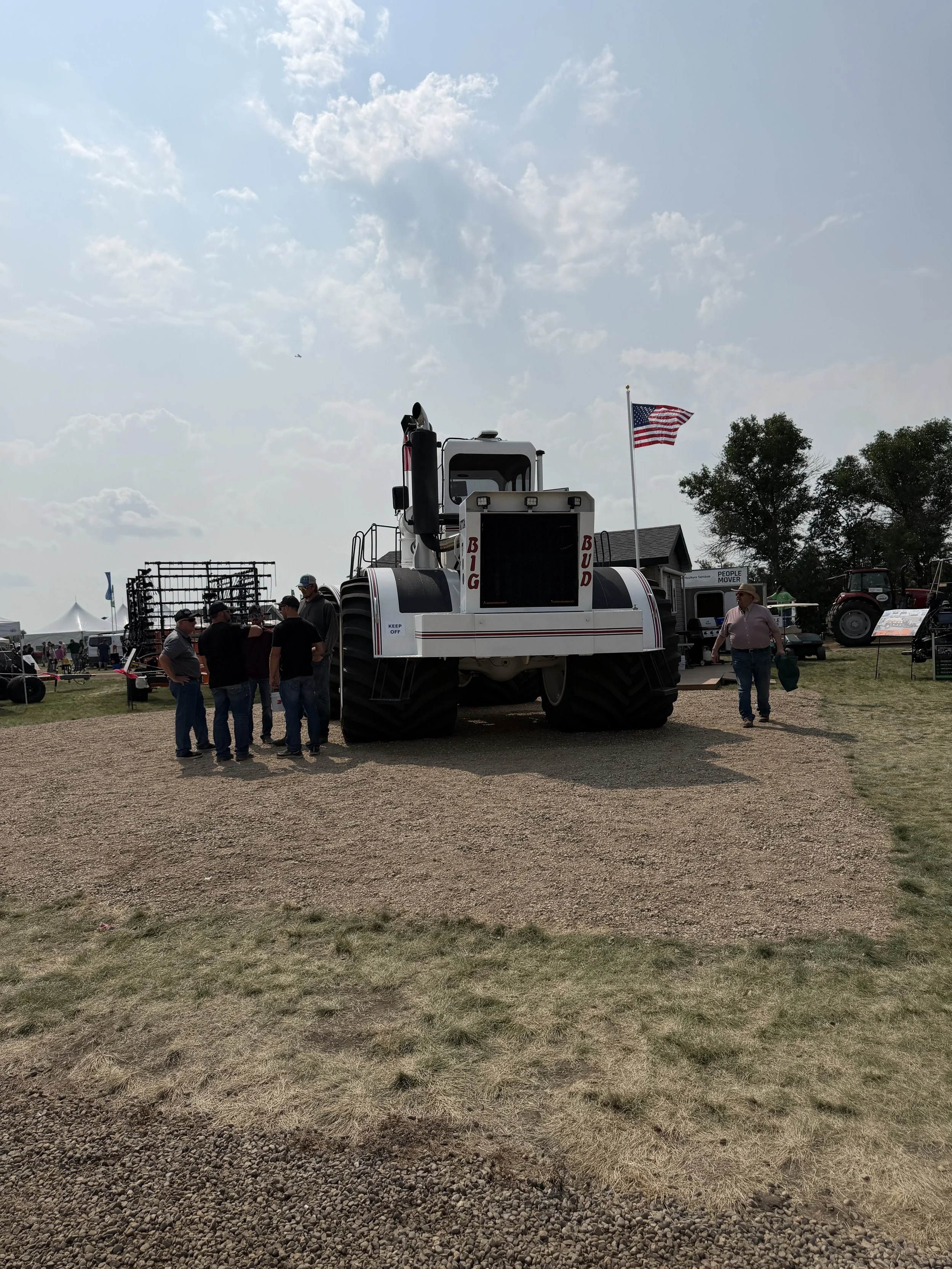
There were the things you couldn't miss. Big Bud attracted plenty of attention and cameras, and massive equipment displays made it pretty easy to get distracted while walking from one place to another.
But some of our most interesting stops weren't necessarily the biggest or flashiest.
We had a great conversation with the team at Trinity Biochem and spent time at the ATP Nutrition plots, where we looked at different approaches to crop nutrition and tools being developed to help producers make fertility decisions. The ATP tissue testing technology was particularly interesting from an extension perspective because it raised the possibility of getting useful plant information into producers' hands faster.
Those experiences reinforced something for us: innovation isn't valuable simply because it's new. Its value starts to show when it helps answer a question or solve a problem on the farm.
How Do You Decide What Is Worth It?
That may have been the bigger takeaway from the trip.
When you're surrounded by hundreds of exhibitors, it becomes obvious how much information producers are being asked to sort through. A new product might promise better nutrient efficiency. Another collects more field data. Another reduces labour. Another changes how an operation approaches a job altogether.
Some of those technologies could become incredibly useful. Others might make sense for one operation and have very little value on another. And with that much available, simply knowing that a technology exists isn't enough. What does it cost? What problem does it solve? Is there research behind it? Does it work under our growing conditions? Does it save enough time, inputs or money to justify adopting it? And perhaps most importantly, does the information it provides lead to a better management decision?
Those aren't questions that can always be answered standing at a trade show booth.
That is also where we see an important role for applied research and producer extension. There is value in finding promising ideas, bringing them back home and putting them in front of producers under local conditions. Sometimes the answer will be that a technology has real potential. Sometimes it may be that it isn't quite there yet. Both answers are useful.
Worth Getting a Little Lost
Looking back, some of the best parts of Ag in Motion were the conversations we had with people along the way.
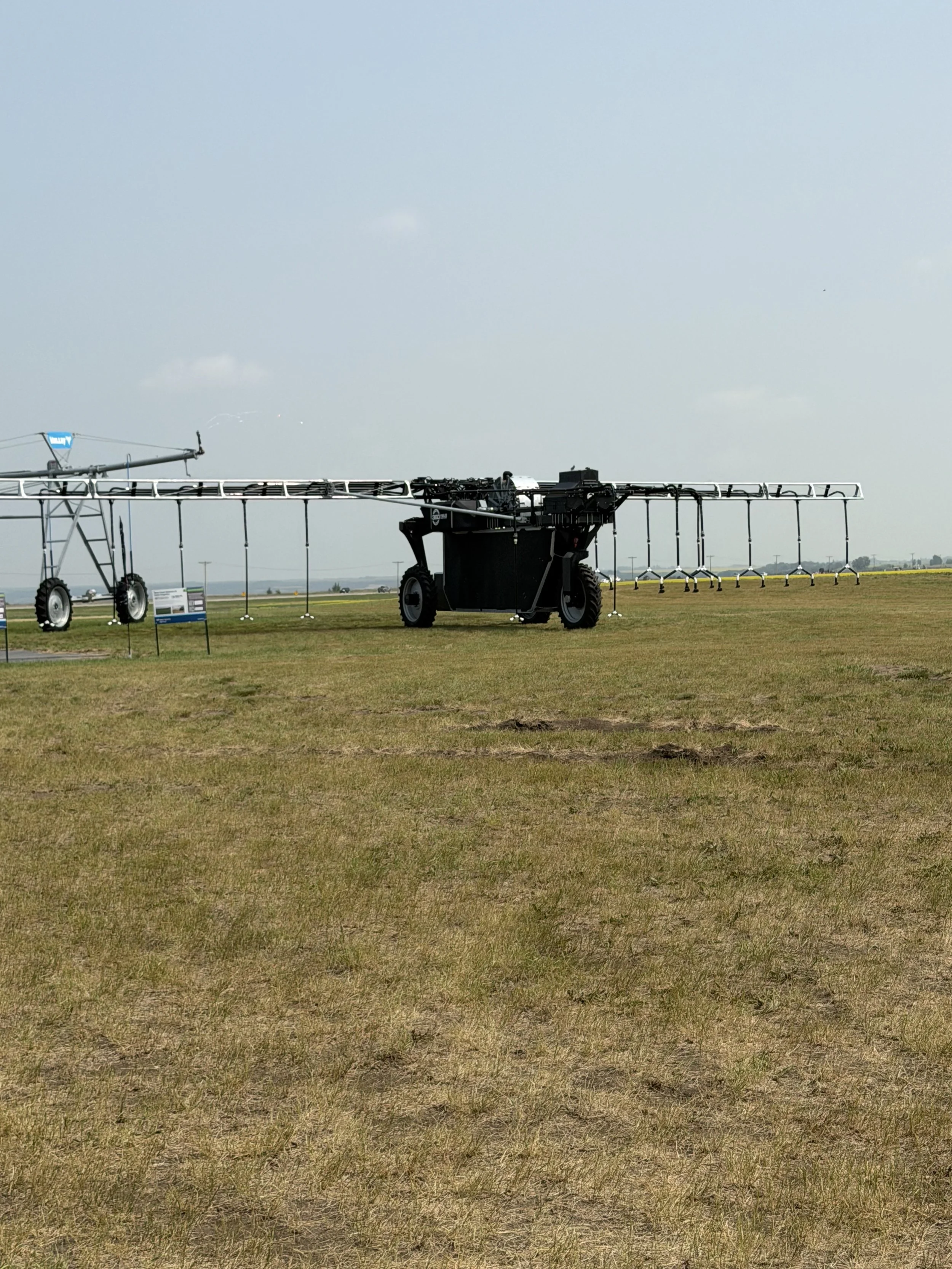
The show is designed around seeing agriculture in action. Crop plots allow visitors to compare management approaches in the field, while equipment demonstrations give producers an opportunity to see machinery work rather than only looking at it on a showroom floor.
We went looking for interesting ideas and came home with more questions than answers. I don't think that's a bad outcome. If anything, Ag in Motion was a reminder of just how quickly agriculture continues to change. There are a lot of smart people working on new ways to grow crops, manage inputs, collect information, reduce labour and make better decisions. The challenge isn't finding something new, It's figuring out which of those new ideas deserves a place on the farm.