Looking Beyond the Numbers: Soil Tests, Marginal Acres and Plant Diversity with Joel Williams
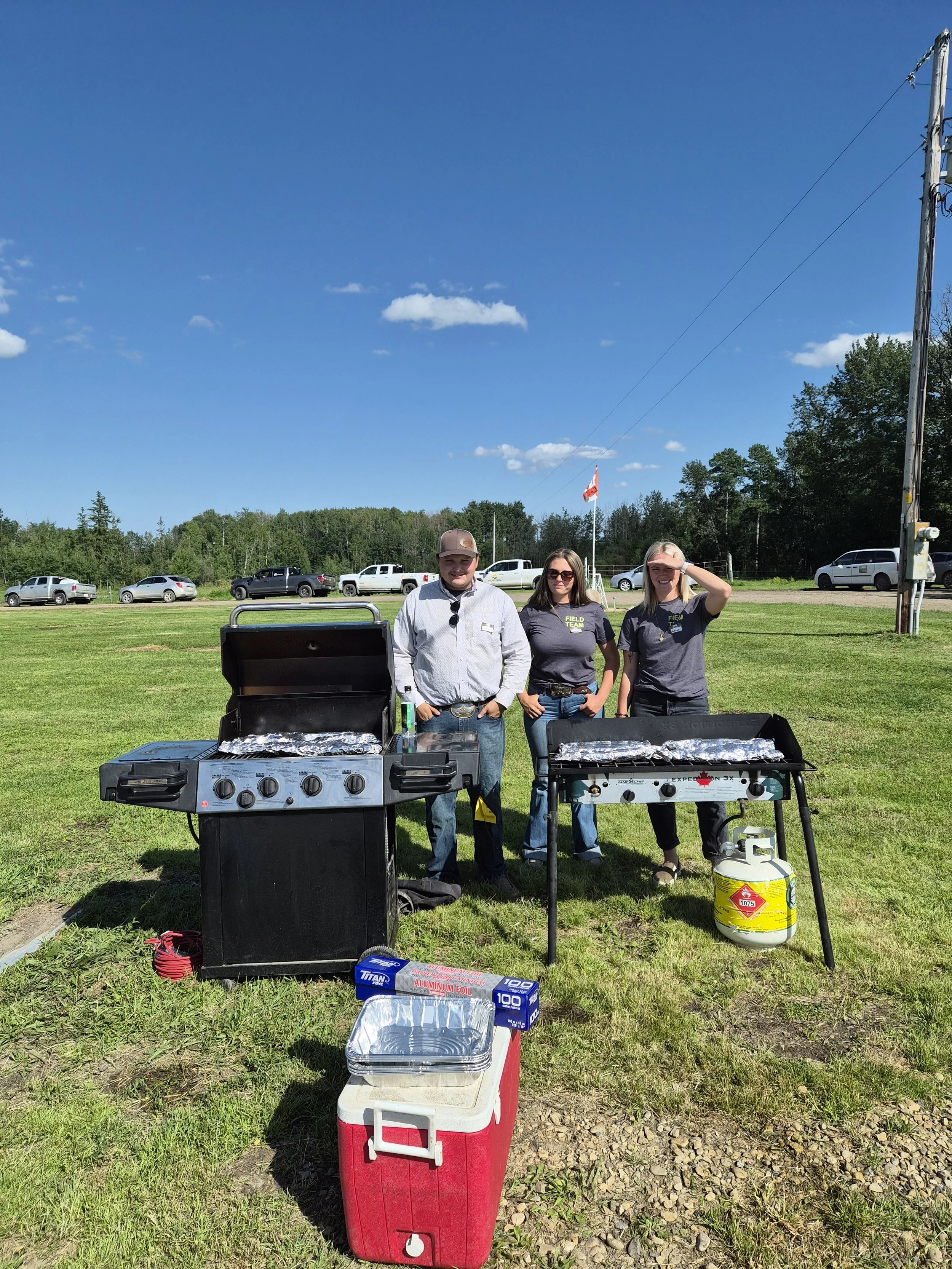
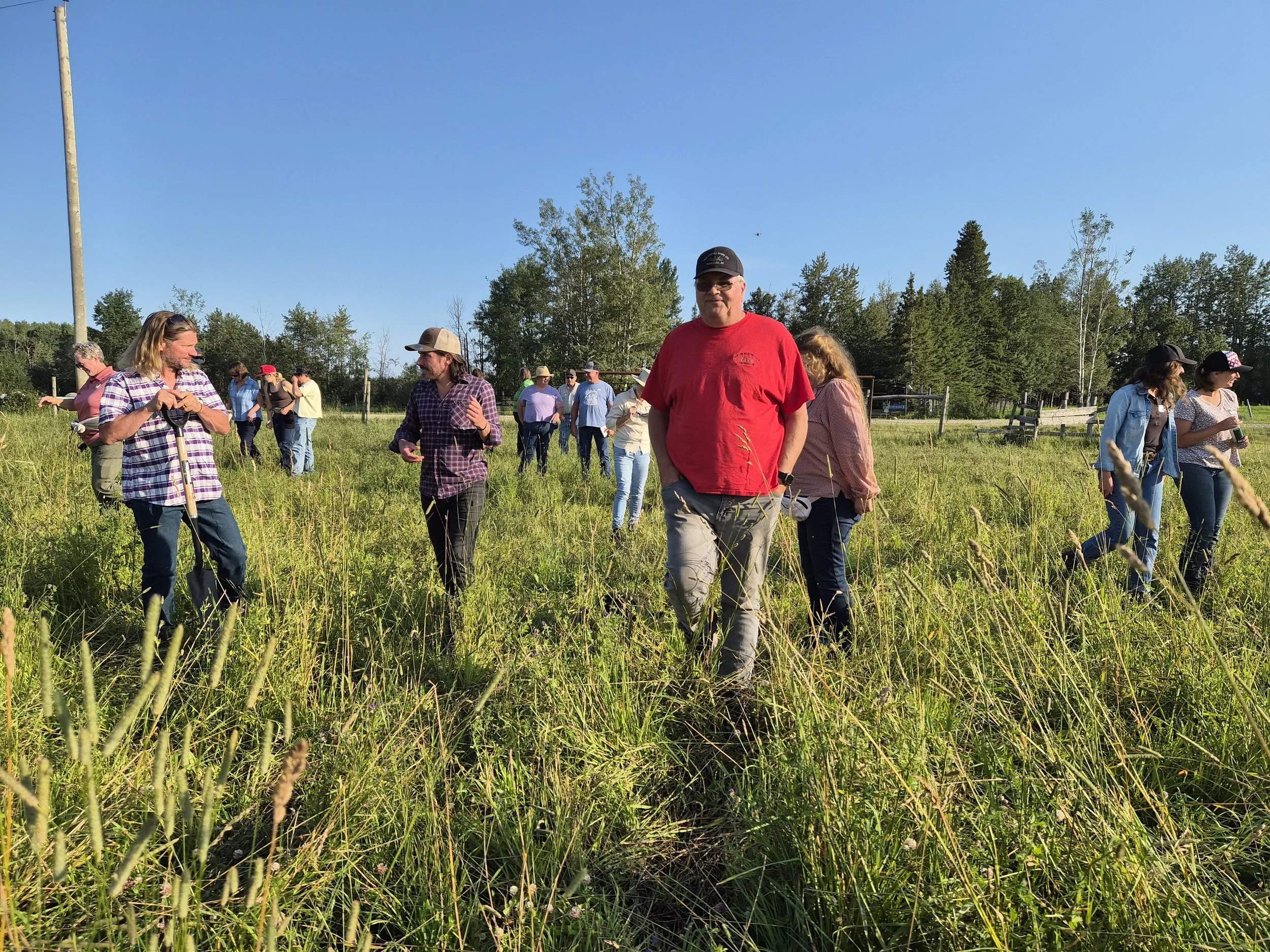
We were thrilled to host Joel Williams alongside Gateway Research Organization (GRO) for an afternoon of engaging conversations about soil testing, plant diversity and making better use of marginal acres.
Farming Forward’s producer hosts for the day were Gerald and Elizabeth Ropcean. We are incredibly grateful for their hospitality, for welcoming everyone to their farm and for giving us the opportunity to learn from their land and experiences.
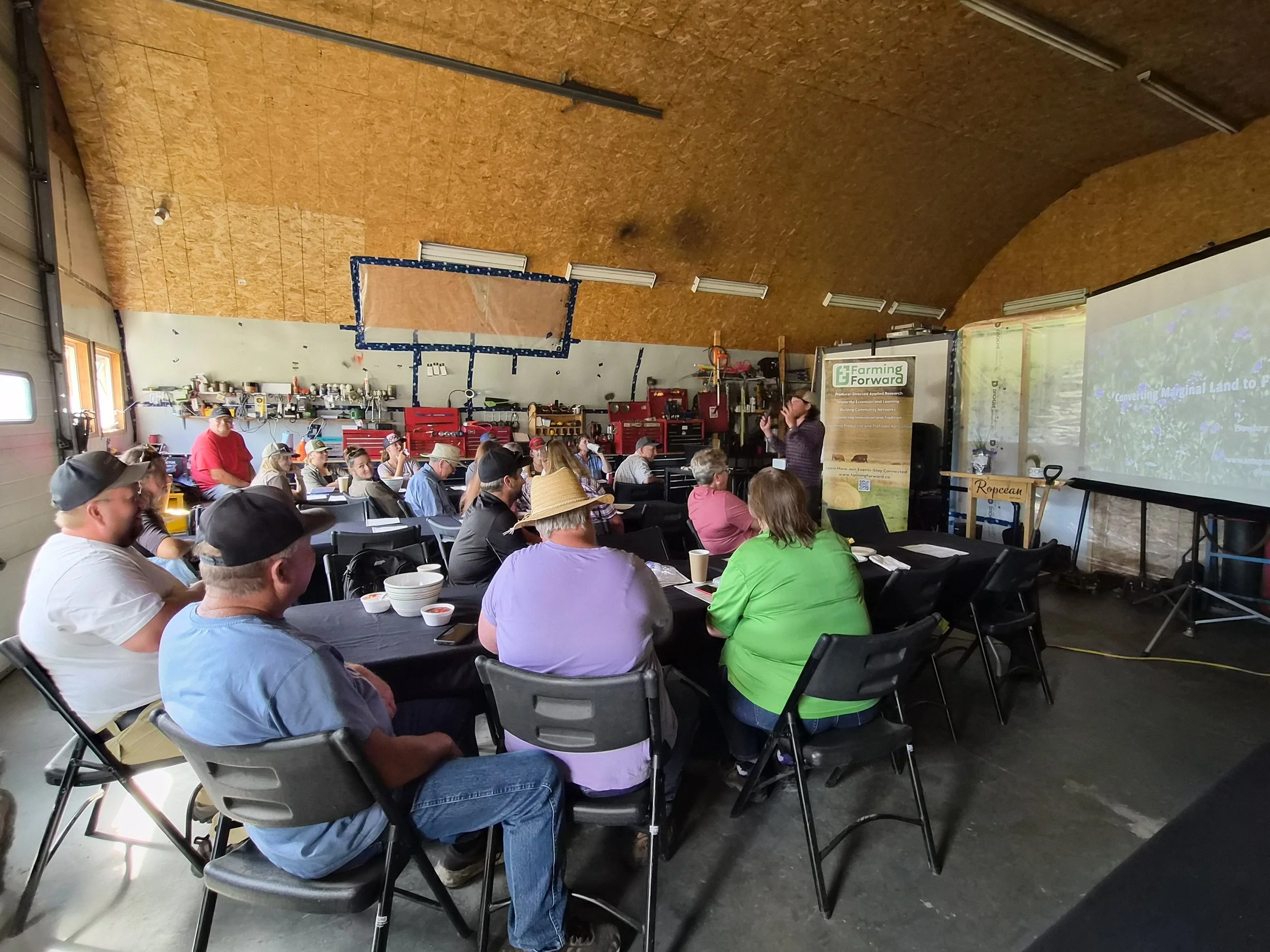
Joel was touring Alberta and visiting several of the ARECA Applied Research Associations with support from Organic Alberta and the Canadian Forage and Grassland Association. During our stop near Evansburg, the conversation focused on two main topics: interpreting soil test results and converting marginal grainland to perennial forages.
Stewardship Alliance for Conservation Agriculture (SACA)
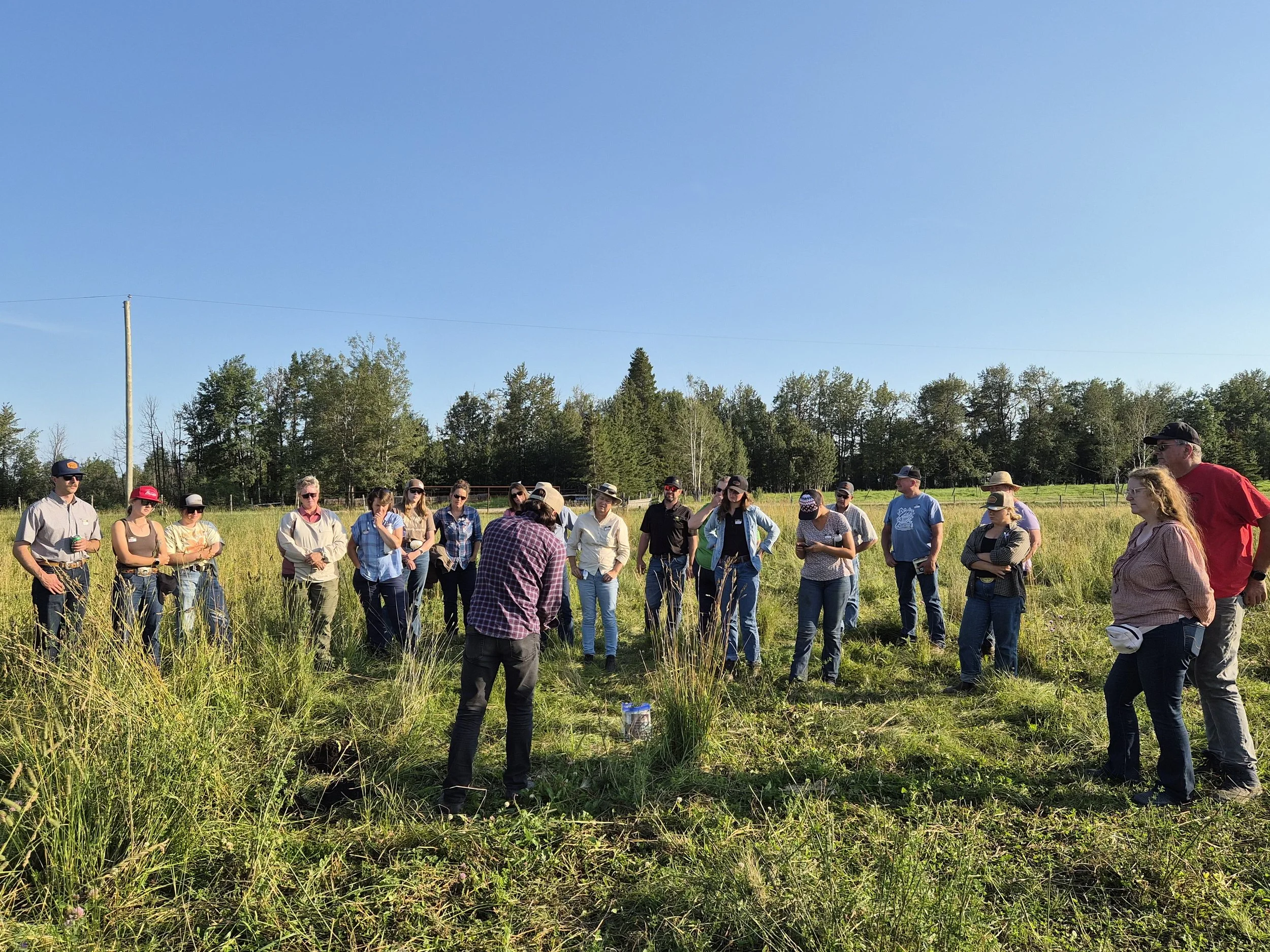
This event was brought to you by the Stewardship Alliance for Conservation Agriculture (SACA), a partnership between Farming Forward, Yellowhead County and Woodlands County. Through local demonstrations, events and producer resources, SACA supports practical conservation agriculture and encourages practices that strengthen soil, water and the long-term resilience of farms in our region. The partnership has supported stewardship work in West-Central Alberta for many years, including projects focused on riparian health and water quality. Learn more about SACA’s past stewardship work.
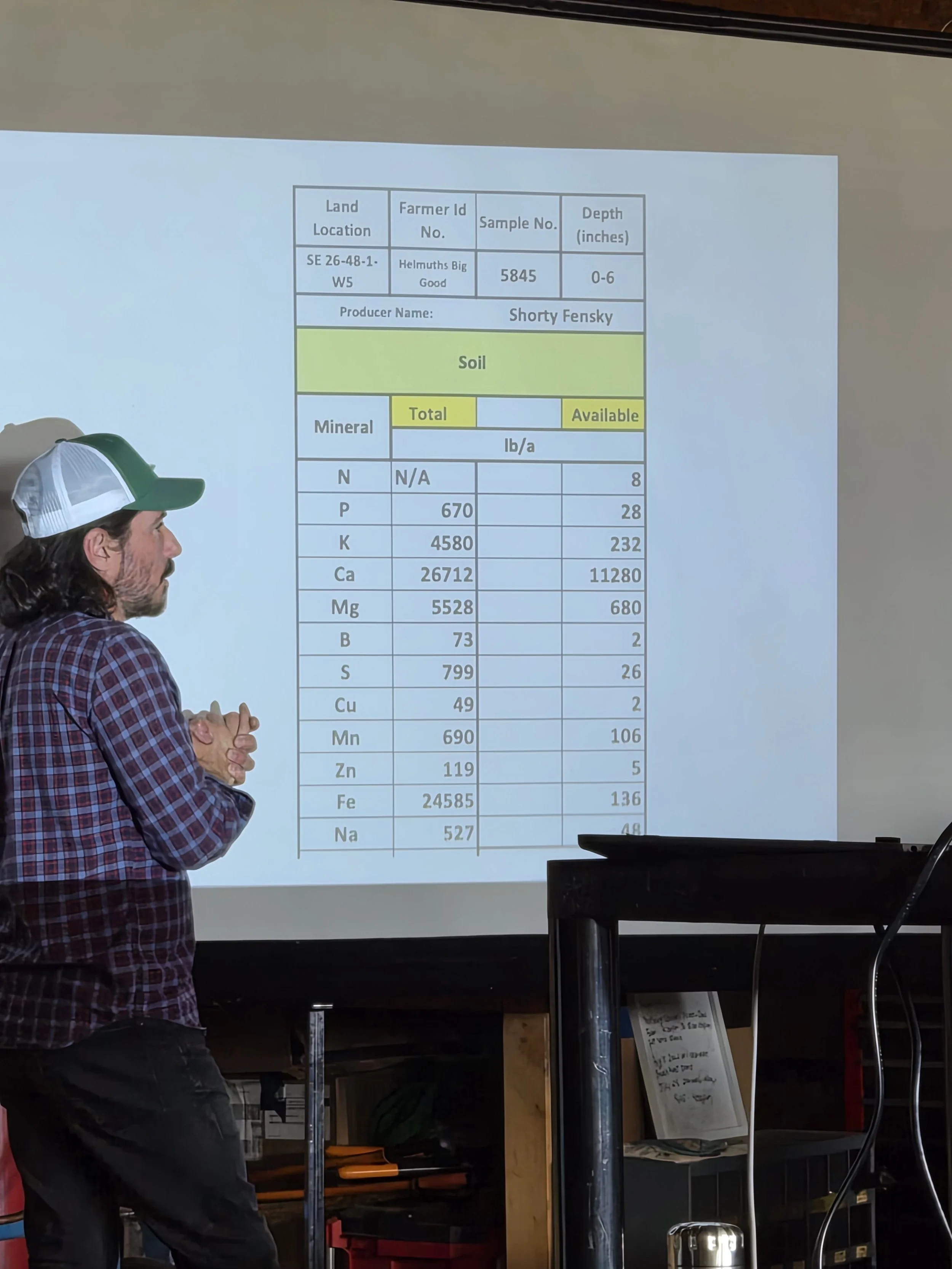
A soil test is only one piece of the picture
Soil tests give us useful information, but Joel encouraged producers to look beyond soil chemistry alone.
We often focus on nutrient levels and fertilizer inputs to give plants what they need to photosynthesize, produce a strong crop and maintain quality. However, a soil test does not always tell us how effectively those nutrients are cycling or whether plants can access them.
A more complete assessment considers three connected parts of the soil system:
Chemistry, including pH, nutrient levels, salinity and cation exchange capacity
Physical properties, including soil texture, aggregates, porosity, bulk density, compaction and surface sealing
Biology, including plant roots, fungi, bacteria and the other organisms involved in nutrient cycling
Looking at these pieces together can help explain why two areas with similar soil test results may perform very differently.
Landscape position matters too. A low, wet area, an eroded knoll and a level section of the same field will have different soil characteristics and management needs. Zone sampling and variable-rate mapping can help identify those differences instead of relying on one field-wide average. Plant tissue testing can add another layer of information by showing what nutrients are actually making it into the plant. This can help determine whether a nutrient is truly deficient or simply present in the soil in a form the plant cannot access.
Unlocking what is already there
Soil contains a reserve of nutrients that are unavailable to the crop. Joel explained that improving biological activity and nutrient cycling may help plants access even a small portion of those reserves. That small change could provide as much benefit as adding more fertilizer in some situations. This does not necessarily mean eliminating fertilizer. Instead, it means balancing short-term nutrient requirements with longer-term improvements to soil structure and biological function.
Plants and livestock both have a role to play. Living roots feed soil organisms through root exudates, while grazing animals return nutrients and organic material to the soil. Together, they can influence soil chemistry, biology and physical structure.
Matching the plant to the problem
Marginal acres are not all the same. Wet areas, saline patches, acidic soils, drought-prone knolls and low-yielding corners each present different challenges.Joel discussed several forage options that may suit different conditions, including brome grasses, timothy, tall fescue, reed canary grass, tall wheatgrass, alfalfa and different clovers. Soil pH, moisture, salinity, intended use and grazing management should all guide species selection.
Timing also matters. Spring seeding often offers better soil moisture for germination and establishment, although weed pressure can be higher. Fall seeding may suit some consistently wet areas, while late-summer seeding is more dependent on timely rainfall and suitable temperatures.
The goal is to choose plants that suit the site and provide useful differences in rooting depth, growth pattern, nutrient use and seasonal production.
Diversity is about function—not just species count
One of the strongest messages from the day was that plant diversity involves plant families and functions as well as the number of species in the field. Different plants contribute different root structures and root exudates. When complementary plants grow together, they can support a broader microbial community, improve nutrient cycling and help build more stable soil aggregates.
Joel shared research in which a 16-species mix outperformed monocultures in measurements such as soil carbon, microbial biomass and aggregate stability. He also discussed how greater plant diversity can increase carbon dioxide uptake through photosynthesis, with larger effects on microbial biomass, microbial activity and the length of time carbon remains in the soil.
Diversity can also support pollinators. One figure Joel shared suggested that increasing pollinator habitat by 10% could lead to a 37% increase in pollinator abundance.
Legumes do not all behave the same way
Legumes are valued for their ability to fix atmospheric nitrogen, but not all legumes share nitrogen in the same way. Alfalfa is a powerhouse nitrogen fixer, but white clover may be the better “leaky legume,” releasing more nitrogen through fine-root turnover, decomposition and root exudates. In the case of Alfalfa, effective nitrogen sharing depends partly on strong colonization by arbuscular mycorrhizal fungi. Nitrogen may move between plants through root exudates, decomposition and fungal associations.
Differences also exist among annual legumes. Joel noted that faba beans generally retain strong nitrogen-fixing ability, followed by peas, chickpeas and soybeans. Some crop breeding has prioritized yield and other characteristics while unintentionally reducing biological nitrogen fixation.
What does diversity mean for livestock performance?
Some producer shared observations of livestock on diverse forages showing better body condition, shinier hair coats, faster gains, lower mineral use and fewer cases of pneumonia in calves. Diverse diets may also expose livestock to a wider range of beneficial plant compounds that can influence animal health and the nutritional characteristics of meat and milk.
Start with the goal
Whether the goal is better drainage, improved soil structure, more grazing days, pollinator habitat, reliable forage production or bringing an unproductive area back into use, the mix should be designed around the problem being addressed.A few well-chosen species may offer more value than an expensive, highly complex mix that is poorly suited to the field. Starting small gives producers an opportunity to compare establishment, feed value, livestock performance and cost under their own conditions.
Our biggest takeaway from the day was that soil health works in both directions. Management below ground affects what happens above it, while plants and livestock can build soil function from the top down.
Thank you to Joel Williams, Gateway Research Organization, SACA, Organic Alberta, the Canadian Forage and Grassland Association and everyone who joined us for the conversation.